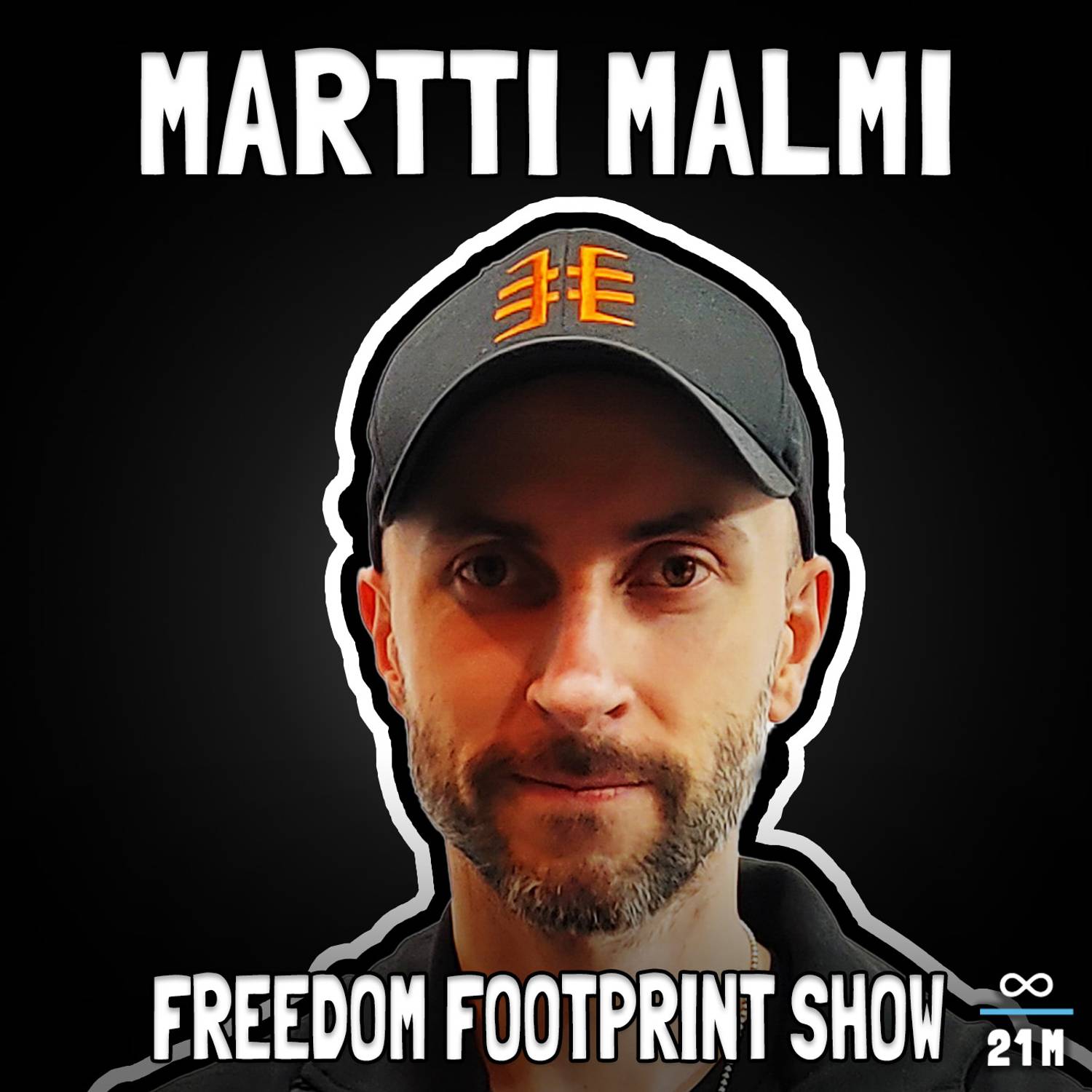
Martti Malmi - From Second Bitcoin Dev to Early Nostr Contributor - FFS #115


 Fountain

 YouTube

 Spotify

 Apple Podcasts

 RSS Feed
Martti Malmi is the second Bitcoin developer ever, working with Satoshi himself from 2009 to 2011. Now he's working on Nostr, building the protocol into the decentralization of everything! Filmed in person during BTC Prague 2024!
Highlights:
🔹Martti Malmi's emails with Satoshi have been used to take down Faketoshi in the recent COPA trial
🔹Martti bought an apartment near Helsinki by selling 10000 Bitcoin
🔹Bitcoin solves decentralized money; Nostr solves decentralized everything
🔹Finland may have been uniquely positioned for Bitcoin adoption in the early days as a result of the Nokia tech boom
🔹Martti is working on Iris.to, a Nostr client and related Nostr projects
🔹Stay tuned for Martti at future Satoshi Rockamoto events!
Connect with Martti:
https://iris.to/sirius
Connect with Us:
https://www.freedomfootprintshow.com/
https://twitter.com/FootprintShow
https://primal.net/freedom
https://twitter.com/knutsvanholm
https://primal.net/knut
https://twitter.com/lukedewolf
https://primal.net/luke
JOIN US IN RIGA!
We're launching Bitcoin: The Inverse of Clown World, on Infinity Day, and we'll be in Riga for the launch party! Join us for the whole Riga Bitcoin Week! Use code FREEDOM for a discount!
https://baltichoneybadger.com/
Thanks to our sponsors - check out there websites for info:
BitBox: https://bitbox.swiss/freedom
Bitcoin Adviser: https://content.thebitcoinadviser.com/freedom
Support the Show:
If you value what we do here at the Freedom Footprint Show, consider sending us some value back. You can send us a boost or stream us some sats on Fountain. Check out https://www.fountain.fm/
You can support us directly with Bitcoin on Geyser Fund: https://geyser.fund/project/freedom/
The Freedom Footprint Show is a Bitcoin podcast hosted by Knut Svanholm and Luke de Wolf.
In each episode, we explore everything from deep philosophy to practical tools to emit freedom dioxide to expand your freedom footprint. This isn't a show for bitcoin news or analysis - we dig into the deep topics that are important to us and to our guests. Join us if you want to go deeper down the rabbit hole of Bitcoin and related freedom-go-up technologies and ideas!
The Freedom Footprint Show is a Bitcoin podcast hosted by Knut Svanholm and Luke de Wolf.
In each episode, we explore everything from deep philosophy to practical tools to emit freedom dioxide to expand your freedom footprint!
00:00 - Welcoming Martti Malmi
01:32 - Martti's Background, and Contact with Satoshi
08:47 - Buying an Apartment With Bitcoin
10:57 - Early Bitcoin History
12:33 - Bitcoin Today
15:30 - Discovering Bitcoin
22:00 - Decentralized Social Networks
24:08 - Nostr
28:18 - The Pirate Bay
29:32 - Decentralized Toolkit
32:33 - COPA Trial, Anonymity
37:55 - Bitcoin Revealing Truth
40:20 - Bitcoin in Finland
48:40 - Martti's Current Projects
50:20 - Centralization and Decentralization
59:50 - Breaking Nostr
01:04:40 - Nostr and Bitcoin
01:06:45 - Nostr Algorithms
01:09:45 - Competition
01:12:20 - Wrapping Up
0:00 All right, Martti, thank you for joining us. Welcome to the Freedom Footprint Show. Thanks for having me. Yeah, Marty is a, for those of you that don't know, Marty is a true legend in the space. Uh, you had contact with Satoshi himself back in the day, did you? Did you not? Yeah. On the BitcoinTalk forums, I guess. Yeah. Actually email before that. Oh, yeah, yeah, yeah. So there's, uh, and you re quite recently, like a couple of months back, released, uh, a couple of, uh, email, um, back and forths that hadn't been released before. Yes. Uh, so what's the story that, why did you do that?
0:40 Yeah. So I was asked to be a witness in the Craig Wright trial, Wright versus Copa trial in the UK. Mm-Hmm, So I shared my emails for that one. I just didn't feel, I had been asked to share them before, but I didn't feel comfortable. Like sharing private correspondence, but this seemed like a worthy cause. Okay. And, and what was the, the, what was like the TLDR on the information that came out there? That Maybe, I'm not sure if I'm the best person to answer that because it's more interesting what other people get out of it because it's been on my mind all the time. So maybe others have made better like rehashes of that all.
1:24 maybe we should go all the way back to the, the beginning. how did the, how did the contact start and, and maybe just a little bit about your, your background. Yeah, so in 2009, I was a computer science student at Helsinki University of Technology. Um, but I, I didn't waste time studying too much. Um, so I had a lot of free time. To think about the world and everything, um, I'm quite passionate about liberty, like many of us Bitcoiners, but I wasn't inspired by politics at all, instead I was inspired by making a difference through technology. without asking the boomers for permission, most of people are not libertarians and we will not be able to convince them to vote libertarian.
2:12 So, I was thinking what would be the most impactful thing you could change, and I figured it would be money, because everything runs on money. And if you give government and central banks control over our money, they have too much control over our lives. So, I went looking for alternatives. There had been alternative monies like e gold and pekunix and something like that. Liberty dollar was maybe a few years later, I'm not sure. But they were all centralized in some way. But then I was googling around for something like peer to peer currency, and Bitcoin came up. It had just been released.
2:54 It was April 2009 when I found it, and it had been released just earlier. I took some time to read the white paper and think about it, and I wrote about it on Twitter. Some forums, antistate. com and free domain radio forums asking what they think. Satoshi later found those and joined the threads. Um, then I sent email to Satoshi. That's how it started. Okay, so, yeah, so what's the first email you sent to Satoshi? What was in that and what's the reply you got? Uh, I was mentioning, I started those, those threads on those forums and I was saying, um, I want to help Bitcoin if there's something I can do.
3:39 And, uh, he, he, uh, asked me to do some writing. He said like, there's not much that's easy to do on the coding side. I was a junior developer at the time. So I helped him first writing and I started writing an FAQ. He sent me some, some, uh, replies he had, sent to some people to help me with the FAQ. It's quite interesting to read. and did you ever have any, uh, of these other things before Bitcoin? Like, did you ever own any Liberty dollars or e cash or Egold or whatever they were called. Mmm. I remember I, I, was about to buy.
4:24 Pecunix at some point. I'm not sure if it was before or after Bitcoin, but the whole process was so shady. You were supposed to wire money to Hong Kong and something like that. So I just canceled it. All right. And, and then, after the FAQ phase, like, how did you continue working on Bitcoin? Like what, Yeah. So he also gave me access to bitcoin. sourceforge. net. And eventually, I don't recall the exact, uh, order of. Events, but eventually I also was managing bitcoin. org and the site over there. We made experiments with different forum software, very interesting, technical, like configuration discussions you can read in the emails.
5:13 And we settled on simple machines, forum software. And Satoshi was even himself doing some, some PHP configurations like custom captcha, so spam bots would not find their way there. what's your, what's your like feeling towards Satoshi? Like what was he like in your mind? Like, what, what is this person? Like, do you have a vision in your Yeah. Well, first I thought he's Japanese because of the name and on some social profile, he mentions he's a man from Japan, but I had my doubts because his English was so perfect and that's not usually the case, maybe.
5:55 Well, when Dorian Nakamoto surfaced or was doxxed, I was like, this is how I imagined Satoshi to look like. I'm not sure if that's actually, if I actually did, or if it's like after the fact. No, no, maybe I think of something like that. All right. And do you think it's a single person or maybe a group of people? that's the impression you get if you read our correspondence. That it's a single person. Yeah, I think, uh, many other, many others have also, um, come to the conclusion from the correspondence.
6:36 All right. But yeah, that's what I always thought. Also, the theory is that Satoshi's CIA or whatever, I think, are pretty much debunked by our correspondents. Unless they're like playing 4D chess. Yeah. Do you have a, like a, a candidate you can disclose or would you rather not? I mean, I don't have any secret insights. Sabo is an interesting, like, candidate and everything. I don't really know. Yeah. Even, even if you would have answered here, we would have cut it out probably. No, it is Knut's, right, because, because I, I, I think this has been coming up a, a, a lot in the space is the, the idea of anonymity or pseudonymity and how important it is to maintain that and let people.
7:24 Maintain that, like how danger dangerous it is for people who are developing in the space, but for whatever reason want to stay private and, and then people getting doxed accidentally. So yeah. What, what do you think should satoshi remain anonymous? Uh, pseudonym. It's more interesting if he's unknown. Yeah, absolutely. Uh, so we wrote a bit about this in the book about the, because there's a part, uh, there's a, uh, one part of the Bitcoin community who wants to, uh, like that sees Satoshi as this messianic figure and wants to put him on a pedestal and make him to this superhero, which is very understandable because, because of the, Supposed, uh, act of martyrdom that he did, like, just disappearing and not taking the opportunity to become the richest man in the world, it was just, it's a biblical story.
8:21 so, so, but I see a danger in, in, in, like, hero fying him too much, though, because that creates, creates like a, a, a, it makes us more into a cult, Yeah, that's true. This is what Jesus would say. okay. Yeah. Yeah. Is it what Craig would say? Yeah. Yeah, I Probably not. yeah. Anyway, so there's, there's, there's a lot, there's a bunch of more Bitcoin history attached to you. Like, uh, uh, we have a Bitcoin pizza day, for instance, where, where I, um, Laszlo bought two pizzas for 10, 000 Bitcoin.
9:02 And you did a similar thing just, uh, like a year later, or maybe two years later. Yeah. And I was there congratulating Laszlo on the next post after him. I was there. Um, yeah. So I, in 2011, I sold over 10, 000 BTC. It was a bit over half of what I had. So maybe 20, 000 left. So I sold a bit over half of it when the exchange rate peaked. around 15 to 30 dollars that year. So, yeah, so I bought an apartment near Helsinki, in London, studio apartment.
9:43 Pretty nice, but today you would buy the whole district. Yeah, you could buy Helsinki with the money. Like in 10 years from now, you can probably buy Finland with Who knows? yes, as I always say, at least I got more than two pizzas. Do you regret that? Or is that like, uh, I have a good story. yeah, yeah, Of course would be Um, fun to be, be a billionaire or something, but, uh, that was not the point when we started working on Bitcoin and I, I can't, um, it's not like I've lost anything on this journey. Quite that contrarian. yeah, yeah, that's the right attitude, I guess. I, I, I mean, Yeah, it's such a strange phenomenon because like sooner or later, uh, you get Helsinki apartment Bitcoin parity where it's one to one and that's pretty close.
10:38 It's like, we were talking about this just before, it's like four Bitcoins for the same apartments today, right? So what's that? A 2, 500 X price increase? Yeah. Yeah. And, uh, Yeah, number go up, technology persists, so it can happen again and again and again. Yeah. So, so a little, a little more about the, the early days. Like what, what, what else did you get up to then, and, and how long were, were you really involved in the Bitcoin development community? Uh, I was like really active from 2009 to maybe 2010. 2009, I was. Making some, some contributions to the Bitcoin software.
11:21 I think I made my last push to the repository in 2010 early, but in, I needed a real job and Bitcoin was not a real job at that time. So I got my first real job in 2010. So from then on, I had less time to contribute. To beat Bitcoin. I am, I think I managed the forums for a few more years. Um, usually I say from 2009 to 2011 was my contribution. What was the last contribution? mostly with the forums, but uh, I also. I had bitcoinexchange.
12:02 com for some while, 2010, um, the first like semi automated, uh, Bitcoin exchange site, uh, where you could buy and sell Bitcoins from me. And it would give you a quote automatically pricing. But I lost like 30, 000 Bitcoins. I wasn't running it like a business, just wanted to. Bitcoin faucet. That's at least six pizzas, like, so, so, uh, uh, yeah, so, so what's your view on Bitcoin nowadays? Like, are you happy with how, how the project has evolved over the years and like, Yeah, yeah, I'm very happy.
12:43 You walk around here in BTC Prague, you see all the amazing things people are building and walking in a mining container. Maybe that's something you wouldn't have imagined back in 2009. Or when I first went to like a professional mining operation in 2014, you know. Or yeah, 14. In Finland, um, some of the first ASICs that my friends were bringing to Finland, they had an old steel factory with like a 10 megawatt power line and full of these miners. And it was surreal. Bitcoin existed only in the virtual space for me for such a long time.
13:24 Now it's real and it's changing the world and I'm, of course, they are, we are living, um, critical, interesting times, with all the corporate Bitcoin stuff going on, but yeah, I've been following on the sidelines, but I'm, I'm quite happy. do you see any, any threats to the project? And I guess like the KYC versus non KYC Bitcoin split seems like a risk. Yeah. Oh, what about, what about the spam? Do you have any opinions there about like people putting other stuff on Bitcoin?
14:04 I don't have a strong opinion. Um, it's a bit annoying, I guess. Feels unnecessary to me, but they're paying transaction fees and Bitcoin is still working on a lightning network is working and I'm, I'm using it a lot with Nostr these Yeah, yeah. Let's not segue to Nostr just yet, but let's get there, of course. The original tone of the project back in early days, how would you compare that to now, in terms of the difference between how people were talking about it, thinking about it, acting about it, and yeah, this day and age?
14:45 It was a bit different in the very early days when Bitcoin had no value, basically. Um, maybe I liked it more back then. It was only idealistic, um, and maybe late 2010 or something when GPU mining started and like the 2010s. Thanks. We had an influx of people who were only interested in mining and making money. Nothing wrong with that per se. It's like Bitcoin's incentives are working. Non Bitcoiners are adopting Bitcoin, which is a good thing, but the vibe changed a little bit.
15:30 Well, so, so the original goals of the, the project then back before it had a value that that's, it's like the cypherpunk mentality, but you came at it from the money angle. Is that, is that right? Yeah, yeah, I was never like an OG cypherpunk. But, but you were, you were convinced by the, the project pretty quickly, right? That, that it was going to do, do what, what were you thinking about, uh, before finding Bitcoin? Like the, what were you thinking about the, the money system? Because I'm, I'm interested that, that, You know, were, were you thinking about other people? What, whatever about the, the problems with the, the money system already way back then.
16:11 Because one angle about the cipher punk stuff is that they weren't really thinking about solving money. They were thinking about solving payments. What, what is there, is there any truth to that? What, what were you thinking about that, that got you into the project? Yeah, well, it was both payments, payments over the internet. You could send money as easily as email with no middlemen, uh, but also about the money itself. I had, well, I was 20 years old at that time, so I, I wasn't that wise yet, but I had looked into currency a little bit and like, uh, silver and gold money standards. I think it wasn't really until like 2016, 17, when, uh, uh, especially Seyfriedin's book, uh, uh, popularized it, but it wasn't until somewhere there that people started to take this Austrian economics angle to its full extent and talk about sound money and number go up and stuff like that.
17:11 Yeah, was that angle present at all, uh, back early days, even in your thinking, did you come across any of that? Uh, you mean sound money? Yeah, exactly. Yeah, of course, that's the whole point. The government Uh, yeah. Well, Hal was onto it, like Hal Tweeted, uh, wrote, or not tweeted, but , um, he tweeted running Bitcoin, but he, he, he hinted at Bitcoin going to, uh, a million dollars very early on. Right. Hmm. Yeah, I guess I like realized in theory, this could have a lot of value. I didn't have a life experience to tell me that good theories can become true. And who knows? Maybe most ideas.
17:52 So, so what? Did you ever have a shit coining face? Yeah. Yeah. Unfortunately, uh, Not, not seriously, but like, well, I was, um, in 2015, I think Goldman Sachs started pushing this, uh, meme. It's it's blockchain. It's not Bitcoin. Like they could not discredit the entire thing, but they didn't like Bitcoin back then. Yeah. I never believed in it. There was this, all this blockchain hype and I was like, it's the Emperor's new clothes. Um, I went to Satoshi Roundtable a couple years ago. I guess that's when shit coinery struck me. I thought it was, it's like, everyone's doing this stuff. Um, not like seriously or scamming, but, um, we, a couple of years ago, we had this social nouns project.
18:38 So if you know, there's. A DAO called Nouns on Ethereum, so every day they generate, the smart contract generates these random pixel dude avatars on chain and auctions them. They were selling for crazy amounts, like a hundred F and they had like $30 million in their treasury. And, um, the NFTs would be shares of the DAO. So DAO kind of interesting idea. We forked, um, nouns and made like a finished culture themed version of it. Was movements ? No. It's like, okay. Yeah. and everything.
19:18 Um. So we ran that for a while with the mission to fund, uh, decentralized social networking initiatives. It was like, I was about to, so I had been working for decentralized social media for a while. I was about to quit because it wasn't like, um, it wasn't gaining traction. So that was like the last effort. We ran the DAO for a while. But we didn't feel like continuing it, so we shut it down and returned the funds to the buyers. So it wasn't decentralized or and autonomous then if you could shut it No, because we had the majority of the tokens, so we could vote Alright, alright.
20:01 Yeah. return the funds. Well, so, so, okay, um, shitcoining aside, and, I mean, that's the single most interestingly, at least, branded cool project I've heard of, so that's funny. I'll give you Because of the costing cover. Because of Kostka and Korra. Yeah, Exactly.
22:00 So, what gave you the idea about decentralized social network? What was, yeah, the original thought behind that? that's something that crossed my mind pretty soon after Bitcoin. I was like, what would be the next most important thing we should decentralize? And I thought it's, well, actually first it wasn't even social media. It was like reputation and identity. That I was thinking about, uh, so I was thinking we need an alternative, like, um, um, social force for good, like, um, an alternative to government courts.
22:41 so like, like we have this rating system, some Uber and Airbnb and whatever, and sometimes they work pretty well. But I was thinking we should have like a decentralized version of this, um, and also an alternative to centralized identity like domain names or phone numbers or whatever. Yeah, and so, okay, this is actually an interesting point here. Was doing this on or around Bitcoin ever in the discussion or was this always through some other, you know, Ethereum or whatever it is? Yeah. And no, I, I didn't ever think we would need a blockchain for that.
23:24 Okay, so, so yeah, I get this. So this is, this is an interesting, interesting ideas, right? Because why, what's the, what's the thought process about blockchain versus no blockchain or, or using, using some kind of DAO versus not? What, what was your thought process there? Because, um, blockchain is necessary to prevent the double spending problem. And if you need a global consensus, but In a reputation system or in a social network, you don't actually want an expensive and a slow, um, and low bandwidth global consensus. No. So cryptography is enough in this sense, I Yeah. just a public key based peer to peer system like, like Nostris now.
24:09 Yeah. And you're, you're working on Nostr now, right? Uh, working for Snort. Is that right? yeah, we joined, so I, I've been working on my client named Iris for quite a while, but we joined forces with Snort, another client. Yeah. Yeah. Take us through the whole thing, like, finding Nostr and realizing it was the one. Yeah, so. I started with, so from the reputation thing, I eventually pivoted to social media. I realized it's a more familiar concept to people. It's um, like, um, familiar concept to follow someone instead of giving, uh, like trust ratings or something.
24:50 It used to be called Identify My Identity thing, then I came up with the name Iris, which means rainbow in ancient Greek and kind of symbolizes the plurality of voices and diversity of humanity in a good way. And it's also the Greek goddess of the rainbow and the messenger of gods, so it seemed fitting. In 2019, I think, when I had Iris, the decentralized social network, it was not Nostr back then, it was another, another decentralized system, very similar, public key based, and you would synchronize stuff over web sockets.
25:32 so 2022, it was not gaining traction. I was ready to abandon it, but then the Nostr happened. I think that's when Jack Dorsey joined Nostr in December 2022. And, uh, that's when it started booming. And, um, as it was so similar to my system, it was easy to convert Iris into a Nostr app. So, I got a bit of a head start with that and uh, many people were using Iris back in the day. So Iris is a browser based Nostro client. Very easy to start using.
26:14 Yeah, and so, can you explain what is a client and a little bit about the architecture of Nostr for those who aren't familiar, like, why does it work? Yeah, so Nostris works because it's really simple and it's very easy for developers to work with. So accounts are basically public keys. You don't need a service provider, unlike email or something. It's, it's like Bitcoin. You just generate a public key and that's your account. Permissionless system. Yeah. We had, uh, Miljan from Primal on the show just a couple of weeks back. It was very interesting about, about, uh, like the developments in Nostr. And there's also this Nostriga thing happening in August.
26:57 So, and we're doing a lot of stuff there, uh, as, so, uh, there'll be a big event starting on Infinity Day and then the rest of the week is all Nostr and Bitcoin. Uh, we're looking forward to that a lot. Uh, are you, are you coming to Riga? Yes. Yeah. It's just next doors, right? Yeah. Yeah. So, so, uh, yeah, you can use code Freedom. for 10% off, I think. Yeah. Exactly. Yeah, so, so, okay, Nostr is simple. The relay systems is sort of how it scales. Right? That, uh, individuals don't need to connect to every other individual. They can go through this, this relay system to get connected.
27:38 Yeah. Although I would like to advance the peer to peer side as well. Like, clients connecting directly to each other. There's, relays are a bit difficult, um, for scaling. I mean, like, they're expensive to host. There are some, like, paid relays, but, um, it would be in some ways easier if you connect to your friends. Like, everyone's already paying for storage on their phone and, uh, for their bandwidth with their ISP. I, I remember in the early days of file sharing, there was a program called DC plus Plus. Yeah. I used it. That was, uh, it was before Torrance were a thing, Yeah, that's great.
28:18 But also Pirate Bay was one of my inspirations with Bitcoin. Actually, when I had my BitcoinExchange. com, I used the layout of PirateBay. com as the template for my site. Yeah. I have a bit of, a bit of history with Pyro Bay as well. Uh, I grew up in the same town as one of the three founders. And I was friends with his older brother, I think, because we were a couple of years older. And then we made a music video, uh, like, uh, what can that have been, like 12 years? No, it's like 10 years ago now, something like that. And, uh, uploaded it to, they had something called the Promo Bay. So they promoted local bands. And all of a sudden, our video was on.
29:00 on the front page of the Pirate Bay and and the the views just kept kept rolling in so we got like a hundred thousand views in three days or something and it's like my first experience of something weird happening on the internet to me so like sitting there pressing f5 and like holy shit this is going on as a exhilarating for sure At one point, like, half of the internet traffic was BitTorrent. yeah yeah it's uh yeah super cool and it's i mean it's still working Yeah. Yeah. And, and like, so, so, Bitcoin, BitTorrent, Nostr, all of these decentralized things. Are we there now?
29:40 Do we have the toolkit to be able to get out from the centralized authorities and the centralized services? is, is is it there, even if it's still early, the network effect hasn't really gotten there yet with Nostr, for example, is, is, is there anything, is there anything else needed? Yeah, I think Bitcoin does a good job with money and I think, maybe, I hope Nostr can do everything else. The public key based accounts and the social graph that they form can be used for many kinds of purposes, not just social media. Emilien was saying that it basically solves the spam problem immediately by just taking the accounts that other people follow.
30:25 The spam accounts can't get their own followers. Yeah, web of trust, web of trust was like, One of my core ideas back in 2013 14 when I started the identity thing and I'm so glad it's catching on. Yeah, that's fantastic. Uh, back briefly to the Pirate Bay, did you see the documentary they made about the trial against these three guys? Might have seen. Yeah. that was also like, for me, that's like, uh, some kind of, uh, inflection point or whatever you may call it. Like, uh, uh, it, it really, uh, shone a light on how corrupt the juridical system is and the international courts and stuff, because these people weren't doing.
31:11 They only hosted links. They didn't host anything, really. So it's just links. So they were, they were, Google were just as guilty as they were because they linked to them. So, Like the U. S. media corporations are using the U. S. government to pressure Sweden. yeah, and there were so many really weird things, like the police officer who, who, uh, who had the, uh, what's it called, who knocked on their doors and, yeah, yeah, arrested them. But what's it called when you get, I, I Um, the word, yeah, yeah, the search warrant, uh, to go in and ransack the flat, uh, he, he got a job at some Hollywood studio afterwards.
31:56 So he like moved out to Sweden and got a job with like Warner Brothers or something. It's just so, so corrupt. Uh, but if you haven't seen it, you should. It's called TPBAFK. I've seen it a long time ago. there's a quote from the documentary that they prefer the abbreviation AFK to, to, um. IRL, because I'm just away from keyboard, the internet is the real world, like there's no such thing as IRL and then the internet, it's just away from keyboard or not. So yeah, there's a lot of, yeah, great movie. We're jumping around a bit, but on the topic of court cases, so the involvement in the recent Coppa case, that's what we touched on at the beginning there.
32:46 What made that feel worthwhile to you? Was there a real threat there, did you think? Well, I kind of wanted to. Avoid the whole thing and have nothing to do with it. But, um, sometimes I guess it's important to speak the truth. And I really appreciate Hodlonaut and everyone else who's been doing exactly that. Do you regret that you were always yourself, uh, in, in this space? Well, actually, actually, actually, wait, wait, as opposed to anonymous, you mean? what was the story on, on that? Because I know you, you, you still have, uh, some of the original, the original handle, um, right?
33:27 Do you still go by Sirius, um, Yeah, I was never like, uh, pseudonymous or anonymous. It was just my handle. but, but you, you weren't, you weren't trying to hide your identity or anything. Do, do you have any, any regrets about that? Yeah. not at all. So what's, what's your thinking, uh, on that? The, the, um, the benefits, um, versus the drawbacks of, of being anonymous. What, what do you think about that? No, I guess you, if you want to be like truly anonymous and stay, stay hidden, you need to go to, um, links like Satoshi. Yeah, You store everywhere and be really careful.
34:08 Um, there'll be many people who have been doxxed like the Nostr founder recently. I guess, I guess, um, like the lawsuits have shown that. It has its advantages to stay anonymous sometimes and like, um, yeah, yeah. And recently the maybe samurai wallet or yeah, yeah. but it's, you need to be really careful. And it's, I, I'm not sure if I would be willing to do that, to take that stress from staying anonymous and hidden. No, the opposite side of that coin is that we need people on the battlefront who are ready to take the, I mean, this whole thing, we, we just saw Erik Cason's opening speech here at the, at the venue.
34:56 It's great speech. Uh, and because, to BTC Prague, it's actually it's absolutely fantastic. And it's so spot on that, like, these people that want to take our stuff against our will. Are the criminals. They are the problem. And if there's a, a juridical system that can, that can, like, make a, a, a great guy such as Hodlonaut have to fight a legal battle for five years, like, he's one of the most ethical, ethical people I know of. And, and, and the Pirate Bay people, and all of this. It's happening in this world we're living in now.
35:37 So, so Bitcoin and Nostr are the tools to get out of this thing and like show people that these ideas don't come from nowhere. They come from insights about human action and what we are and what we do and violence versus non violence. Uh, and that's the fight we're taking, and like, we're proud to be taking it. Like, we should, we should really stand our ground. Yes. that, that anonymous pseudonymous, there's anything wrong with that. And then there's, there's reasons for people making, for making that choice, right? I mean, with, with Hotlinet, it was, it was like too unique. Things that were wrong with the world.
36:19 Uh, it was that the UK libel laws are very specifically super easy for a famous person to just say, you've libeled me, I've got lots of money and I can sue you, and then that all the other countries say, you've libeled me. We will follow your legal rulings and exactly, Exactly. So it's, it's that interconnectedness. It's the, it's the states backing each other up is the real root problem. If you get it, I can't imagine that, say, the Federated States of Micronesia could decide that, you know, that, that their libel laws are just absolutely like nuts bonkers now. And, and all of the other countries of the world would do that.
37:00 But the UK has the historical standing and they're, Legal system, and so, it's just, he got screwed so many ways, and then of course, the motivation to find out his identity and all this, it's tough, and so, I guess back to the idea of that, yeah, maybe it's better to just have the control yourself, and not be pseudonymous, because in a way, you take control of your own identity, I am me, and there's nothing hidden here, so you can't take that away from me. Right? You can't get your identity taken away from you. You can't have that overlay layer can't ever get stripped back, right?
37:42 I think that's the risk of being pseudonymous or anonymous, right? it might give you a false sense of security, I guess. Yeah. It can become catastrophic if you lose it, basically. But like, Bitcoin has pointed out so well that money printing is, is evil, and it's, uh, it's enriching people on levels that are just Unimaginable. Uh, the state has so much power everywhere and they use it for other evil stuff, like, uh, and Bitcoin has opened our eyes in this regard. Many people have only with Bitcoin started thinking about these things.
38:25 yeah, which is, which is in hindsight, it's so like, how could, before, before the Bitcoin paradigm, how could everyone on earth just Buy into this bullshit, it's, it's, it blows, blows the mind that, that everyone fell for it. And like, only a handful of people on the entire planet was thinking about a solution for it. It's just, it's just weird. yeah. Bitcoin like forces you to think about it. First you're like, no, it's not gonna work. Then you start. I'm thinking, wait a minute, how does money actually work? Yeah. And then, wait another minute, it has to work. Like, otherwise, like, it's just darkness. Ahead, you know, programmable people and CBDCs, uh, yeah, that's awful.
39:10 So yeah. Fight the fight, increase your freedom footprint, brush your teeth, amen. Share, like, subscribe, etc, etc.
40:20 Maybe on a, maybe on a slightly related note here, bringing it close to home, slightly literally, uh, Finland has actually been really involved in Bitcoin from the very early days, and I mean, our listeners know and understand, I'm the pseudo Finn, I'm the, I've picked Finland as my adopted home and all this, and I guess this is, this is a whole line of questions. Uh, one of the things is, I've, I've been sort of asserting that I think Finland is one of the least insane places on the planet, but that's sort of biased from someone coming from outside to, to in. What, what do you, what do you think? What, what keeps you, uh, in Finland? Is it actually, compared to other places, less insane?
41:04 Well, I guess family and friends is what keeps me in Finland. Native culture. I guess it's my home after all. Korskyn Korva? Yeah. Summer is pretty nice, but everyone in Finland fantasizes about moving, going somewhere south in the winter. I guess it's the same in Sweden. Yeah, yeah, I, I, I did. So how, why do you think Finland is less insane? Yeah, to, to me, the social system, uh, is pretty okay in terms of that things work. And not just the social system, I mean, government run stuff, just society as a whole works pretty well.
41:49 Of course, of course there are cases where it doesn't work for someone in particular, and every type of bureaucracy or something This is relative to other countries and not relative to the private sector. Yeah. Exactly. Well, but I'm also talking about that there's private sector elements, like, companies all have this, everyone has the same types of, for example, vacation policies. I don't believe there's a law that says the companies have to give an extra vacation bonus, but they all do, because the employees wouldn't work for them otherwise. Uh, something, something like this. And, and so it's, it's just, to, to me, my impression is that, is that Finland is, is pretty well functioning as a society compared to many, if not most of the other places in the world.
42:38 And that maybe there's some lessons to learn about that the society can build in a way that's cohesive. Yeah, I guess it's the same in all of Scandinavia, like culture of trust and we have institutions that work to some extent, like the corruption is maybe on a different level. You don't bribe, bribe the officials in everyday encounters, it's, No, no, I see it as you have to bribe them on a higher level, like you bribe the top instead of the policemen on the street, you have to bribe the entire institution, which, and I've, coming from Sweden, I've seen, like, I think that is the main problem with the Scandinavian countries, this culture of trust in the institutions, because when the institutions fail, it's dangerous as fuck.
43:24 well, I don't necessarily mean trust in the institutions. Uh, more like trust in Each other Yeah, that's also true. Yeah. that, that on average, you know what to expect from any other person you encounter on the street, basically. And, and that's pretty nice. It works as long as people are honest. But, when they're not, it's, it's, it's very bad. So what made Finland a hotbed for, for the Bitcoin community early on? Because it, it wasn't, it wasn't just you, there was local bitcoins, there's, um, mining stuff going on. What do you think was the factor on that? I don't know technology post Nokia.
44:05 I guess that was around the time when Nokia started losing to Apple. I don't know. Well, that's an interesting theory, and actually that's a theory why Finland has such a big video game industry as well, is that it was a post Nokia thing. It's really interesting how that's affected the country, and in the cyber security industry, nearly everyone who has been in the industry long enough was, worked at Nokia at the time. Some point. Yeah. And demo scene is as well, um, credited for the game industry. What's the, the, the, sats, uh, snake, uh, competition called again? Chain duel? Chain Duel, yeah, yeah. That wouldn't have been a thing if it wasn't for the Nokia 3310, right?
44:49 Because that's, that, that phone sort of popularized the snake game. Wasn't that where it sort of started? Sure, The snake hype. yeah, yeah. But was there, was there, like, um, uh, something that, not just the technology side, like, something about understanding the money side of things or the solution to the problem? I don't really know if there's anything, anything, uh, in that, that regard. Like if you think about Prague, they have a history with Soviet Union. Like they, they don't, East Europe doesn't have the same naivety as maybe Scandinavia or Finland has. Exactly.
45:30 Although, although Finland with with its own history, we, Yeah, we have our own history, but it's a bit different. We never like purged the Soviets from the government that occupied it after we fell under Soviet influence to some extent after the war. No, you never, you never let them in. Well, there's still the social Democrats, the old communists in the government. that's interesting. I mean, I don't I don't mean for myself personally to paint a picture of that. I think I think it's a perfect place, but I do think it's I do think it's a great place to live if you can manage the unique things. And I'm also interested now in I'm interested in.
46:12 Bitcoin adoption in Finland, because there are a lot of things in the way of Bitcoin adoption currently. I don't think that, I don't think this is unique in Europe, but the capital gains tax is stupidly high in Finland. It's like 30 percent on anything. It's not unique to Bitcoin. Uh, the VAT is just going up as well, and that's, and that's Just going to make all businesses harder to run, but, but then again, we've got, uh, Bitcoin mining is starting to become a bigger thing in, in Finland, uh, there, there's a bunch of companies that are coming in and, and all this. So, I mean, are, are you, are you involved much in, in sort of the, the local scene adoption in, in Finland? No, I'm not actually very much involved with the Bitcoin scene in Finland.
46:57 Will be interesting to see. Um, if Bitcoin starts changing or affecting the politics anytime soon. Yeah, the, the irony and the downside to things working so good. Is that maybe Finland is one of the last places for it to pick up with any institutional level, right? The individuals. Yeah. but maybe if we get some industry, maybe if we got some, like our own micro strategy in, Yeah, and I think it also has to do with what's happening in other countries. Like, like right now, it's hard to see that the Scandinavian countries would ever get, like, we'll ever see institutional adoption, adoption of Bitcoin, but like, the world around Scandinavia changes and, and, uh, we can't, they can't like, like, ignore reality for too long.
47:51 yeah, I guess maybe climate could be one of our advantages. Like we need heating in the North Yeah. that could be done with Bitcoin. Yeah, yeah, yeah. Good, good angle. Yeah. A bunch of companies doing that. I think it's genius. The, the problem I can't get my head around and we should talk to someone about this is, is, well, what do you do in the summer? Do you just turn, do you just turn the Bitcoin miners off or run a, At a loss, does the power company have to keep, or no, sorry, the district heating company still need to keep buying your, your power? Like, what's the, what's the idea? You hit the swimming pools and spas, Yeah, yeah, yeah. There we go. The Mi the lakes, yes, heat Lakes.
48:32 You can, yeah. The mining pools. Yeah. , mining pools, Good joke. Maybe we should, um, turn back to Nostr a little bit. So, so we've scratched the surface, but, but, uh, yeah, what, what are you working on right now? And I mean, specifically, what's, what's the. Uh, at the Iris Snort, um, what do you call it? Partnership or whatever it is. What are you working on? Yeah, so for the past few months I haven't actually worked on the social side too much. I've done like iris docs, docs. iris. 2 is like a Google Docs alternative. I don't recommend it yet, but it's like, it's a prototype at this point.
49:15 And also I made like, um, if you're a developer, you can type in the console, npm create iris, it will give you a template, uh, for a react application, web application, uh, that, uh, for Nostr with all the basic building blocks like login and avatars and whatever. Um, and, uh, for the past few months, uh, for the past month, I've, um, uh, been helping a team. that is pursuing a bounty on a github on Nostr. So Jack Dorsey is offering a 10 bitcoin bounty for a github replacement on Nostr. So I've been helping a team that is trying to do that.
49:55 Yeah, Yeah. That's super cool. So the, the, the big GitHub was bought by Microsoft, was it? Yeah. Yeah, yeah. There's a danger there. yeah, git is just, as a protocol, it's a little bit decentralized already. You have a repository on your local computer already. You can always Run your own server and push it there. Use multiple servers. All right. This is another interesting area, actually. So, yeah, local computer, um, running a node, the cloud, all of these things. We've, we've, um, we've gotten, uh, we've really started, like, uh, there are a lot of great nodes, um, node in a box, uh, companies and stuff, but we really like Start9, uh, Yeah, it's like everything for everything you want to run on your own.
50:44 exactly, yeah, their mindset is great, this sort of sovereign computing thing, like running your own server node to run all the things, like, is this a big component of sort of being a full part of the Bitcoin Nostr ecosystem, running a node and stuff Taking your own data yourself, hosting your data yourself. Yeah, it's good. But I don't think that's what everyone's gonna be doing. I think we need to have all that stuff on your phone in your pocket. That's how everyone could do it. So does this create sort of a, a, almost like a relay layer approach because, uh, I guess the idea is the number of Bitcoin node runners is vastly less than the number of Bitcoin users, hodlers or whatever you call them.
51:34 Uh, and the number of Nostr users is vastly less than the number of relays, right? Uh, and so is this sort of a related thing, like it sort of creates a new layer of the cloud, basically? Someone else's computer, but it's slightly closer to the user? Yeah, I mean, it's uh, it's a good idea to, um, host your own stuff. I just wonder if. Um, if the layman is going to be doing that. Well, what's the melee quote? Like, it's more important to awaken the lions than to shepherd the sheep or herd the sheep.
52:17 Yeah, but I guess another angle to this though, right, is that, is that, for example, if I were wanting to host my own git, The issue turns into that, okay, well, I've got my computer and I, if I'm able to connect to my computer, I can, I can use it. People can connect to it all this, but then there's no redundancy, right? It's my computer. And if that computer If that goes down, then there's nothing. There's, there's, there's a problem there, right? Is this, my, my understanding a little bit is that the relay thing starts to solve this redundancy problem a little bit by, by relaying it throughout the network.
52:57 You can just Pick up back again, basically, even from the Nostr side of it, you can set up your own relay and request all of your old, uh, uh, notes and, and all this, and then basically get all of your data back yourself, something like that. Yeah, that makes sense. Like content addressed file storage, like BitTorrent content is addressed by the actual content and not the network location, which will change over time. So with content addressing, you can store it in multiple locations and download from multiple peers. I think a crucial part of this is teaching honeypots, like having too much data stored.
53:39 Somewhere, uh, there was a great story from, uh, that I heard someone told me, I don't remember whom, but in, um, Amsterdam last year about, uh, a village in, in Holland where, like, like all the villages had a voluntary voluntary Like, accounting of the population, so you're filled in a form with, like, height and shoe size and, uh, religion, uh, and, uh, they were storing it in the, mostly in the churches in every little one horse town in Holland. And then, of course, when the Nazis came, they went there and, you know, looked up all the Jews and sent out Hans Landa to catch them. And, but in this particular village, uh, where this guy was from, his father had burned down the house where they stored the documents.
54:27 I don't think it was the church, but it was like, like some warehouse or something. So, when the Nazis came, it just burned down the honeypot. And they had like 40 percent more documents. Holocaust survivors there because they couldn't catch them. So that's, that's the thing with honey, but it's such a great illustration of what, what the dangers are with these like, uh, single entities that hold people's information. Um, yeah, I, I think people are so unaware of the risks with that What do you think is the solution? Because, because data is sort of freeing us, the digital revolution, and being able to use data to, to enhance our own capabilities.
55:08 A. I. Being an example of this, to the extent that AI is actually useful, it does simplify a lot of things. You can ask the AI, how do I do this? And it can give you step by step instructions how to do something and save a lot of time. But by giving the AI your data, that puts yourself at risk. Putting your data on a cloud service, it's convenient to download it, but you've given all your data to someone else. Do you have any idea, is there a solution here in Nosterland?
55:48 And Um, well, I hope we're going to be moving to edge computing, like it's happening on your own devices, phones, or devices instead of the cloud. I hope maybe Apple, Apple is taking that direction, maybe to some extent, like, um, already some models are running on your iPhone. yes, I would much rather run the AI on my own devices than the cloud. so, so, what are the things that you would suggest that a typical Uh, layman or user of these technologies, uh, work to do now, what are some best practices in your view?
56:34 For AI or, To, to stay private, um, to, to, self sovereignty in general. for self sovereignty, yeah. well, use Nostr and Bitcoin. Um, if there's small, even small steps to improve your privacy, like using encrypted cloud storage or something, I guess it could exponentially like lower your footprint, surveillance footprint. Yeah, surveillance footprint. We don't want that. No, we don't want that. So what's, what's the, um, what are you most excited about with Nostr?
57:16 Well, it's interesting that. Nostr is really the only, only public key based, uh, decentralized network, because it's not like rocket science. It opens up so, so many possibilities. We can, We could basically decentralize all the platforms to be trusty third parties, no points of failure. I'm really quite bullish on it. It's a MeTube rather than YouTube. It's a good joke. How would that, how would that work in practice in the sense of that anywhere where you still need a sort of centralized server to work, right?
57:59 Well, okay, the centralized services, a lot of them work because, uh, because they can centralize the decision making and keep everything in one place and it's convenient. You give, you give up, you give up sovereignty for convenience. How does that work in a world where the identities are central? What I'm trying to say is that most people are, uh, decentralized. Would you still need the centralized service, but interact with it with the decentralized identity? Yeah, I mean, you could use Nostr in different configurations. There could even be, you could only connect to one, one relay.
58:40 If you want, but you can always change it afterwards. It's always better to be more decentralized. Okay, YouTube as an example. Say YouTube, um, changes it so that you can, you can watch YouTube, have a YouTube account with, with a Nostr public key, right? But YouTube could still say, your account gets banned if you do the wrong things. Well, you could, theoretically, you could store the videos locally, right? And then connect peer to peer and watch them instead of having them on a server. Yeah. Like, um, file storage is, um, a hot topic on Nostr right now, because right now Nostr is only for textual content and, uh, media files are typically.
59:26 Hosted by normal HTTP hosts servers somewhere by normal URLs. I need, I think we need to decentralize that in some way. Um, I mean, media servers, they are like a moderation liability. They're quite expensive. Imagine if you upload this podcast somewhere, two hours, um, it's going to be expensive to host. And their peer to peer could help. That's why we broke Nostr when we published my book on it. Did you hear about this? No? think I told you breakfast yesterday, like, so that's how we met Miljan. We were at this fancy rooftop cocktail party in Madeira, and he walks up to me and is like, uh, you're Knut, right? And I'm like, yeah.
1:00:07 Oh, you broke my Nostr client. So it turns out that, oh, did I? Did I unlock an achievement on the internet? Like, because we decided to, uh, Publish my entire first book, just copy the text file and put it as a single post on Nostr, because just because we could. And apparently that broke think that even fits in a Nostr event, like many relays limit the size to 60 kilobytes or whatever. But I think that was the problem that they didn't, uh, before, before that happened. Yeah, something like that. The idea of a ask him about it. Yeah. Exactly. He says there's a spec for a long form note, but the whole idea was just to post the whole damn thing so that it's Yeah.
1:00:52 out there information, right? But, But yeah, I guess it didn't scale. Yeah, maybe it's a bit technical, but I think Nostr Web of Trust can help finding the content. So when you address content by its content hash, um, you don't have the URL, the locator part in the network. But I think Nostr, it's a bit technical, but Nostr can help there. You can like, um, find out where the author keeps their media files and locate it on the network that way. Is there anything as far as that, sort of, maybe relays or something else would, would come to the rescue in terms of being this sort of layer in the middle?
1:01:32 It's not, it's not YouTube, but it's, it's something in the middle where the videos can live. And, but maybe they are, they live in more than one place because back to the redundancy. I think that's, that's always the thing. If you have it only on the edge. Right, and it's not distributed, and I mean literally distributed, in more than one node, more than one edge node, that node goes down, the content Yeah, yeah, I imagine like if there's a media file that is less popular than it, um, that might be exist only in a few places, then I guess servers can be useful in that case. Is this the reinvention of BitTorrent? yeah, maybe we need a little bit improved version of BitTorrent, like BitTorrent works for popular files like movies, but if you're gonna put your whole file system on it, then BitTorrent is not good for that.
1:02:26 Yeah, interesting to see how this is going to develop, I mean, I love that the ideas are being discussed though, because It would be an amazing solution to be able to, to self, self sovereignly, host content and, and keep data backed up and, and all this, it just, the, the, I think the skeptical parts that we've had in discussions is first of all this, first of all, the scaling, does it actually work to, to run an US relay in a, in a way that's economical. Yeah. So I think still some debate about to what degree is it, is it possible to, to, do that? But the, but the other thing for me is that just. Uh, how does it work in practice to, to completely take away these central services that we've started to rely upon, right?
1:03:11 And again, this, this comes back to, this isn't a problem. until it becomes a problem. It's fine, the centralized services all work until they decide that you're not a person that they want to do business with anymore. And so distributing that becomes the problem. So these are still questions. I don't know, no exact question there, but yeah, any thoughts still? I guess IPFS has been trying to tackle some of these issues for a long time. It's not simple, but I hope we're getting What, what's IPFS? Uh, So interplanetary file system. It's basically a distributed network for content addressed files and directories.
1:03:53 yeah, it's, it's sort of like the David Goliath scenario with the state, like, uh, the, the, uh, the smaller protocols battling, battling the conglomerates of, of Silicon Valley. Yeah, I, again, I'm just, I'm just glad that, that there's people out there looking for the solutions to make this so much more because, because it's great that this is, that this is solving the problem of text, just text communication. The, the Twitter replacement. and social graph. But just like, just like people are unaware of the problems of inflation, mostly. And, uh, they are unaware of the problems of, of, uh, data centralization, like, uh, it's, it's, uh, most people just don't care about this stuff.
1:04:39 No, apparently not. And what about on the, the, the bitcoin front, the sort of interconnection of Noster and, and bitcoin? Uh, I guess, what's the, what's the role of, of Bitcoin in all this? Yeah, well for some reason all of the Nostr users seem to be bitcoiners. Well, there's, there's normies as well, but yeah, maybe it's the similarity permissionlessness. Um, also Bitcoin is, Lightning is pretty much integrated with all the popular Nostr clients. So you can zap, you can tip for posts with lightning and it's quite unique. Really.
1:05:19 I don't think Twitter is ever going to be able to implement something like that because of KYC and whatever. No, no, and, uh, yeah, so, uh, at least use Nostr in parallel to whatever social media account you're on, because, like, uh, It's, um, it's hard to move from one social media platform to another because if you're a content creator, because you have all your following there, so it's a, the exodus can be tough, but like the, the sooner you start up your Nostr thing, the, the easier the transition will be when, when you eventually, when you're eventually forced out of whatever platform you, you're on.
1:05:59 You're on. And I hope we're going to have better cross posting tools so you can make a post and easily publish it on all the relevant platforms. Yeah. Of course, Twitter doesn't want that. They. They don't want any integration with others, they want to keep their network, but maybe we can work around it one way or the other. I heard an interesting theory about, like, I had a conversation with Giacomo about Nostr versus Twitter. And it's like, uh, everyone's saying that Nostr is so much better because there's no drama. It's like, everyone's friendly on Nostr. And he was like, yeah, but that's sort of why I'm on Twitter. Because, like, someone's wrong on the internet, and you immediately attack it.
1:06:41 So like, there is definitely a different culture. Actually, this is, this is an interesting, um, uh, point here, the, the algorithms. And so, uh, you, you were telling us earlier that, uh, Iris actually does have, have algorithms now. algorithm, like, um, based on the users you usually like, and the people who have reacted or interacted with the same posts that you. I'll say my wishlist for Nostr, just for the usability of it. It doesn't have to be exactly the Twitter clone thing, but first of all, this algorithm sounds great.
1:07:21 I would like that when I'm scrolling down, it can say, I've seen this note, I don't want to see it Yeah, that's what it also does. That's fantastic. And then the second thing is that, yeah, that it would refresh periodically A little bit. Because the biggest problem is the exact latest queue is like, there's just no organization to that none. Uh, and the top posts of the day or even the last four hours or hour or something like that It's the same posts until 24 hours passes again. So just something that works in the middle, I think would be absolutely fantastic.
1:08:02 So Yeah, that's, that's what I'm doing. I'm usually updating it like once a minute and it's also mixed in some of the recent posts, so it stays interesting. It's working pretty well for me, I think. Do you guys know what an algorithm is? It's, it's when you have a result that you want to get to, and you write a mathematical formula that you can repeat over and over again to get to that point that you already decided before you made the formula. This is an actual thing. It's not a, it's not a joke. There's, there's an actual thing called algorithm. I hadn't heard of this before, I know. You learn something new every day. something new every day.
1:08:43 No, that's great. I'll have to try, uh, try Iris more. I, I'd used Iris maybe six, eight months ago, a little bit more. I think when it changed interfaces to snort, I sort of. Got confused and, uh, I think it actually, it didn't work for a while, the, the, the, the caching. I had to control F5 and then, oh, it works now. Yeah. We need to make it faster. It has a great, like a local, local relay, so it stores a lot of stuff locally. And it's like a peer to peer ready. We can, I've been experimenting on peer to peer already, so, Very cool. we just need to make it faster. The, the competition between clients is, is fantastic and, and it seems like it's a, it's a friendly competition. Everyone is learning from each other and, uh, Primal, Primal has somewhat taken the consciousness, uh, a little bit.
1:09:29 It's sort of the one that a lot of people are, uh, You know, saying they're, they're using these days, but I think it's, I think it's great that you can use different clients Yeah. It's so good for the users. I think that's one of the reasons why Nostr will win because there's the constant battle between clients, evolution. Yeah, we have, uh, been thinking a lot about this in competition in Bitcoin companies specifically, and how, how, like in praxeology that differentiates between biological competition and catalytic competition, right? Where, where biological competition is the fang and claw. A battle of nature where the, the, the strongest survive as the law of the jungle, basically.
1:10:09 And catalytic competition are free markets, totally free markets, so where, where both parties don't engage in the interaction unless they both think they have something to win from the interaction. So it's not a zero sum game, it's better for everyone, always. And what we're living in today is like sort of in between Fang and Claw and Catalactic because there's interventionism everywhere and there's inflation and stuff, which you could categorize as more Law of the Jungle stuff, uh, winner take all stuff than actual free market stuff. But when you think about it on a Bitcoin standard, It's even weirder than, it's even more powerful than, uh, than, than the normal free market, because at least in the adoption phase, um, pre hyperbitcoinization, because Bitcoiners are incentivized to, uh, and Bitcoin companies are incentivized to help one another with whatever they're doing, because the success of the Bitcoiner is the success of Bitcoin.
1:11:12 So, so, so we're like, we're, we're there. There's, there's no, uh, uh, reason to even compete, uh, if you're. Hardware wallet providers, for instance, or conference organizers, there's like this weird, uh, synergy and, uh, culture of collaboration. And we see it everywhere. Like we see these effects more and more. And I think like Nostr is, is very similar and open source development in general, that people want to, want to see the other, the other guys succeed. Yeah, it's true. There's no backstabbing, Yeah. in the same way as in Fiatland.
1:11:52 Yeah. It's, it's great to see maybe, maybe we can, um, yeah, touch on our lovely hosts here, the reason we're all in the same room. Although, although, yeah, this is, this is one of the cases where we could have actually done this from, uh, from, you know, another location a lot more easily. Knut would have to come to Finland, but, uh, you know, maybe next time we'll, we'll, uh, do it from the, the oldie library or something like that. Uh, one of the rooms Yeah, yeah, yeah, we'll see. Yeah, yeah, a sauna rip, yeah. No, from Riga! Well, yeah, I guess so, I guess so. And it occurred to me, because we also have the heavy metal in common, and so this is another case where we could do a heavy metal only episode, except you're way more interesting than just to do a heavy metal episode, so we have to talk about all the other things as well.
1:12:36 Maybe next time we try that we start with the heavy metal stuff What's your favorite metal band? Uh, Children of Bodom is why I started playing guitar as a teenager. Nightwish is still of Bonn. And will you participate in the Rock A Moto here tomorrow night? Um, sounds very interesting. Excellent. we should, uh, maybe we should, uh, yeah, get, Figure out some finish, some finish metal for the Yeah, shout out to Maz and Lightning Ventures for organizing that. And play guitar or drums there? Yes, you can. Yes, absolutely. Absolutely. Fantastic. But. So, so Anywhere you want to send our listeners any, any, like, before we wrap this up, is there anything else?
1:13:23 I think we're approaching a good stopping point here. Yeah, yeah, yeah, and the only other thing I wanted to just, just pick your brain on a little bit. How are you finding, uh, Prague, BTC Prague? It's wonderful. Um, such optimism and positive energy. The venue is great. Prague has become one of my favorite cities, if not the most favorite city. Beautiful architecture, nice, um, relaxed vibe. Yeah, totally agree. Totally agree. Fantastic. So right, right back to Knut's question. Any, that, that was, that was, that was it. Martin and Matthias, hopefully you liked that. Um, Well, um, get on Nostr if you're not already.
1:14:06 Maybe you can start at nostr. com. Um, you can find Iris and me on iris. to slash Sirius. I hope it's gonna work. Are you serious? Yes. Business. I actually have Sirius Business Ltd. Fantastic. Marty, so much for coming on and enjoy the rest of the conference. Likewise. thanks Martin. Yes. This has been the Freedom Footprint Show. Thanks for listening. Bye bye.