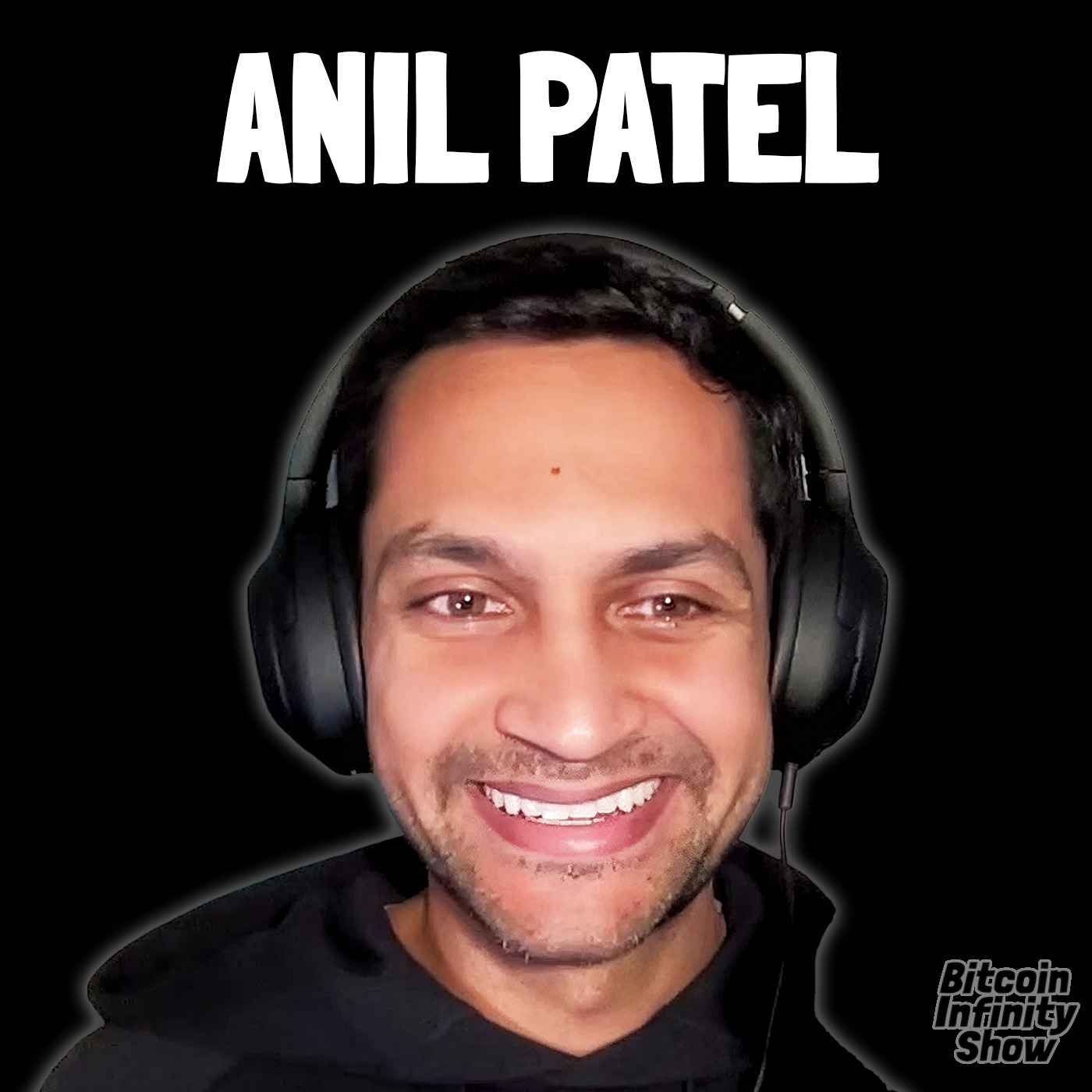
The Treasury of Michael Saylor with Anil Patel | Bitcoin Infinity Show #179


 Fountain
 YouTube
 Spotify
 Apple Podcasts
 RSS Feed
 The Freedom Footprint Show is a Bitcoin podcast hosted by Knut Svanholm and Luke de Wolf.
In each episode, we explore everything from deep philosophy to practical tools to emit freedom dioxide to expand your freedom footprint!
0:00 Bitcoin's currently a $2 trillion asset class. It's going to capture perhaps half of the monetary premium in the world, which gives it about 100x upside from here. The only scenario in which I see someone competing with strategy would be just a government through seizure of assets, either through crime or rugging their citizens. So even if you're just thinking from a game theory point of view, if you're a company and your competitors adopt Bitcoin, they could be a worse off company, inferior products, lower profit margins. But if you're both cashflow positive and they're storing the fruits of their labor in Bitcoin, well, over time, they're just going to destroy you. Anil, welcome back to the Bitcoin Infinity Show. Nice to have you here.
0:40 Great to see you. Excited to chat. It's been a long time. It's been a long time. You were on back when we were the Freedom Footprint Show and you had your first book, a beautifully designed book. And now you've written a second book, this time about someone else. that's someone else being Michael Saylor it's called the treasury of Michael Saylor and in it you explain in a very visual way as usual I suspect what Michael Saylor's strategy is is that right? yeah pretty much bang on you know kind of following his own journey of having all this cash sitting on his balance sheet and kind of having a moment of panic of what do you do?
1:28 How do you preserve it as inflation is kind of chipping away at it? And he kind of has to go through that process of elimination and then also convince other people on his board and shareholders within his own professional community that he's not crazy and that this actually is the best path forward. And then it's about how they execute on that and what the future might look like. Since it's been a while since last you were on, can you give our listeners a little TLDR on yourself? Where did you come from in Fiat land and how did you end up in Bitcoin land? Yeah, I did a bunch of things in Fiat land. I worked in the music industry. I worked in higher education, worked for a few startups.
2:09 And yeah, then when I made my way into Bitcoin, I kind of did it through the education route where I was just putting out educational content that I thought others might find useful. And then, you know, I went and worked for a bunch of Bitcoin companies within the space. Swan, Unchained, Bitcoin Magazine, did some angel investing. I'm an investor in about a dozen Bitcoin companies that I personally believe in. And in the process of that, I've also written a couple of books. So I'd say, yeah, primarily education has been my focus. How many books at this point? And what are they called? So yeah, two under my own name. So the Bitcoin Handbook, which is really just a collection of mental models that I think are helpful for anyone trying to make sense of Bitcoin.
2:53 It's now out in about 10 languages, which is pretty cool. And then I had the fortune of working with Parker Lewis to turn his essay series gradually then suddenly into a book, which I'm really proud of. I think everyone should own that. And yeah, my latest one, The Treasury of Michael Saylor, is now out and should be out in about five or six languages in the coming months as well. And again, all of it you can get for free. Awesome. Awesome. And Parker Lewis's book is published with the Safe for Dean's publishing company, right? The Safe House, if I'm not mistaken. Yeah. So you can pay with stats and get it through safefadean.com. Fantastic. But we're here today to talk about the latest book, I guess.
3:34 And how much was Michael himself involved with this project, or if at all? Yeah, very little. You know, he was very supportive of me doing this. You know, that was nice. and I'd been posting a lot of content of his, basically distilling it, trying to find these lessons and analogies that I thought were really connecting with people. He's a very effective communicator, like whether you like him or not, I don't think you can argue with that. And so I'd kind of collected enough material that it made sense to make a book and really, it was just a book I wanted to own. And it's not a book promoting strategy as a company. It's not a book that's particularly pro-Michael. It's really just a book about an individual taking a first principles approach and looking at Bitcoin from an engineering perspective. If you were to have an ideal form of money or a way to store value, how would you design that from the ground up?
4:33 Maybe the same way you'd design an airplane's fuselage. I hope it's very accessible to people. It's very difficult to argue with a lot of the material in the book. And it kind of just explains why the logical step for an individual, charity, community, and a corporation should save long-term if they're creating value in society, should put that value into Bitcoin long-term. Yeah, I saw a nice talk about this this summer at the Plan B Business School in Lugano when when Preston Pysh explained, he used a bicycle as a metaphor, for instance, and also a like a water power plant of some kind, like a pond of water, which represented all the boomer money that were so far inaccessible to the Bitcoin space and how Michael has been able to tap into that.
5:29 And the different MicroStrategy products with different yield curves and whatnot was sort of the gears on the bicycle depending on how steep the hill was at the moment well what what how do you describe it in your book i mean i guess this is a spoiler episode um yeah yeah well i was very fortunate that there are actually two forwards in the book and one was written by senator lammus who was behind the bitcoin act and the other one was written by preston so he kind of explains very well what Michael is doing in even clearer terms. He uses a similar analogy that he used in Luongo. One of the chapters is Michael laying out the case of what Standard Oil did. How Rockefeller took this product, this commodity, crude oil, and then was distilling it in different levels of purity to create different products for different consumers with different needs. And, you know, Michael's used this analogy many times. It's no secret that that's what they're doing, is that there are markets that exist right now that aren't being served.
6:39 And he plans to serve them using Bitcoin as his capital base. So, yeah. And the book also contains a transcript from an interview between Michael and Preston, where they're kind of discussing, you know, Bitcoin is this ideal measuring unit for conducting, you know, any kind of economic transaction. All right. And how did this whole thing start? I mean, we've had both Michael and Eric Weiss on the show. I think Eric twice, if I'm not misremembering. And Eric is known as the guy who orange-pilled Michael, and this is during the lockdowns and stuff. And they're sitting on this giant lawn in Miami, and he's like, Michael, maybe you should have another look into Bitcoin. Like, is that whole story in the book as well? Yeah, briefly, briefly, it definitely goes into that moment of, you know, during the pandemic. And that was clearly that hit of inflation was kind of the final nail in the coffin for him to be like, something's wrong here. I need to better understand money. I need to better understand, you know, central banking and that kind of led him on his own journey to kind of discover and accept Bitcoin as the ultimate form of money. Yeah. And then there's a whole process of orange peeling the board, which cannot have been the easiest task in the world. And how did he pull that off? Well, so if you go back and read the mobile wave, which he wrote in 2012, and he kind of lays out the case that, you know, every time there's a technological, like a paradigm shift,
8:14 essentially, there are going to be these players that emerge to dominate certain applications in a new field. So the mobile wave was kind of about these dominant digital networks that we now know as the Mag7 or the Fang stocks. And his thesis was absolutely correct. He was right. There were all these winner-take-all markets, and there were going to be these kind of superpowers that emerged from the birth of the internet. And if you read that, and perhaps you've been on Michael's board for a decade and you read that book too and you've watched how he operates, you kind of know he's always on the lookout for the next thing. And so when Bitcoin came along, I think he was perfectly primed to grasp it and also know that you have to act pretty quickly to kind of carve out that dominant place in an industry. And he's made no secrets about wanting to be the Bitcoin bank.
9:09 So yeah, I'm sure his board were kind of aware that there would be another thing coming that he'd be a very strong proponent for. So being the Bitcoin bank for the world, is that the end goal in your opinion? Do you think that's what he's building here? Yeah, to be clear, I have no inside information. I tried to make the book purely out of publicly available interviews, but he has said publicly in like, you know, maybe a few years back in interviews, he was kind of using that term. He wanted to be the Bitcoin bank. And to be that, you have to be, you know, 150% Bitcoin, which is why they're looking at different strategies to, you know, leverage debt and acquire Bitcoin in like accretive ways. So I do think he believed it's a winner take all market, just like e-commerce was just like online news was in search so my opinion you know become the bank and then you're creating different products the same way rockefeller was using that um refining analogy of oil so everything from asphalt or bitumen to to natural gas like and everything between diesel and gasoline and stuff exactly exactly all kinds of yields all kinds of maturities all right and how how would you explain what he's doing in in like the simplest terms to the to the layman like what what what's what has he found here so in the simplest terms i would say big of
10:42 probably one of the smartest people you know and i'm talking objectively here if you if you looked at his own knowledge base and the kind of all the different pieces of history and engineering and knowledge that he draws upon when he talks just in general. So one of the most well-read, most knowledgeable people you know, been spending all day on ChatGPT interacting with the smart stay high, you know. What do you think will be the result of that? And by the way, this very smart individual is also incredibly well capitalized and has a lot of resources to do what they want so in my opinion yeah the outcome of that is going to be dominance in whatever field they choose to pursue so it's as simple as that it's it's just the smartest guy in the room figures out that he should sell the the losing asset and buy the winning asset like and acquire as much debt as possible i guess in the thing that is losing value and buy the thing that is gaining in value it's as simple as that yeah and he's not the only person doing this right like all very wealthy people do this they just most of them have not rocked bitcoin so they don't understand what the asset you should want to hold is so yeah he could he definitely understood the importance of being being early being first and acting acting um very strongly early on yeah and if i understood Preston correctly, all the other products that are in MST, they're called like MSTR and MST,
12:19 some other letters, or STR. Yeah, exactly. Yeah, I'm bad with this stuff. But anyway, he described them as like the gears on a bicycle because they have X percent guaranteed yield in dollars per year and then the rest goes to strategy because they are expecting bitcoin to go up more than that and there are different levels so you so like a four percent yield eight percent yield ten percent yield whatever it is guaranteed and then that comes at the price and there was also some mechanism of like all of this funding the the extra funds that comes from the number go up funding the underlying thing or something like how would you explain these other products at a very simple level if you look at his overall thesis which is i would say is a lot of a lot of bitcoins have a similar thesis that bitcoin is currently a two trillion dollar asset class it's going to capture you know perhaps half of the monetary premium in the world which gives it about a hundred x upside from here and you think how long will it take to to reach that kind of saturation point or monetization, or maybe, you know, 20 to 30 years, if you look at other technology cycles, okay, and you work backwards, and you're like, okay, that gives us roughly 30% a year is our expectation of what Bitcoin should appreciate in fiat terms. Well, then you're kind of saying to yourself well I can then lend at a rate lower than 30 And I should theoretically be okay Now obviously you don want to be borrowing money at 29 with an expectation of a 30 payoff
14:02 You want to have a much, much wider gap. And so he kind of has this explanation of, you want long duration debt at the lowest interest rate you can get. And so if you're paying out investors who own some of these preferred shares at 8% per year, getting the cash today to invest in an asset you believe is going to appreciate 30% per year. It's pretty simple business in that respect. Now there's a lot of different conditions and scenarios that can happen within all those products. I'm not suggesting anyone go out and buy any of them by any means, but at a very simple rate, you know, the way strategy is built and all the different pipes they built and the access they have to different capital pools that sit around the world.
14:55 At a very simple explanation, it's we want your money today. We're going to pay you X percent. And we expect that our Bitcoin is going to appreciate by way, way more than that in the future. so so it's a low time preference game for sure like this is yes i've heard michael michael ask the question rhetorically well like if if you were to store gold for the last hundred years where would you store it like what what city would you prefer to store it in and turns out there's no real good there was no real good place to store your gold for the last hundred years like it has all been captured by some empire somehow. And this is still true. Like, not your vault, not your gold, I guess. Speaking of not your keys, not your coins is a phrase I kind of miss hearing at these conferences. I go to a lot of Bitcoin conferences, you know, and we sort of never hear this, this not your keys, not your coins phrase anymore since these strategic reserve companies started popping up. And sure, I believe that MicroStrategy, or I shouldn't say MicroStrategy, I should say Strategy, because that's their name now. I believe this is probably the safest bet within this realm. I think there are going to be a lot of rug pulls with other companies, and not everyone is playing a fair game here. I think I tweeted something about them being this cycle
16:25 shitcoins. So the saying now is sort of, you either die a Bitcoiner or you live long enough to see yourself become the suit coiner. And is there a truth to that? And what's the danger there in your opinion? Yeah, you know, like you said, it's these treasury companies, it doesn't take much to spin one up or take a company over and turn it into a treasury company. So there's nothing particularly special about a Bitcoin treasury company that emerges today. It definitely comes down to the management team and the strategy they pursue. And, you know, I personally do own MSTR. And I own it in a capacity where there's money that cannot own Bitcoin outright.
17:08 You know, someone asks me, what would I like to own? I would like to own Bitcoin in self-custody, multi-jurisdictional, multi-sig setup. That is the top of the pyramid. So, you know, Michael's kind of made clear that there is a lot of capital in the world that cannot access Bitcoin directly. you know, can never buy spot Bitcoin. Their mandate just won't allow them to hold the commodity. And you go talk to anyone who runs a pension fund, you know, this is very obvious. So what can they own and gain some exposure to Bitcoin or get a yield of eight, 9% when interest rates are full?
17:51 So yeah, there's trade-offs in everything. And by no means am I promoting people should own strategy stock. But when someone asks me like, well, why, why do you own MSTR? And I'm like, well, my due diligence was writing a book. I literally went and researched the team, the company, the strategy, and looked into how Michael thinks over a hundred of hours, hundreds of hours of content. And, you know, the outcome of that was me thinking, okay, if I have money that I cannot put directly into Bitcoin for legal reasons, tax reasons, whatnot, I will and I can't own an ETF either then MSTR is the next best thing so yeah but not your keys not your coins I agree you don't you don't hear much of that anymore and you certainly won't hear that in the traditional financial world because that's where most of the fees come from is from financial institutions holding your assets for you charging you a fee and you know sometimes in jurisdictions racking you so yeah it's it's definitely something people should be aware of yeah i think this this is the beauty of the thing is it's a true trojan horse in that sense because the bitcoin needs to be permissionless to work like if if we're if a government or a regulator gets to decide what a node is then bitcoin is not bitcoin anymore so it sort of needs to be black market money at its core it needs to be by the people for the people even though the people are
19:23 retarded i mean this is this is the beauty of the network right so so we're the the trojan horse metaphor is is very beautiful in that sense because that's what we're selling that so what i usually warn people about these products is like yeah for a fiat world product it's probably pretty good but it's still the bitcoins aren't strategies in the not your keys not your coin sense they're not even that the allegedly that they are on coinbase right i think they store with coinbase or with some other key holder at the end of the day is some guy at coinbase is very very wealthy at this point or or a few guys because it's probably a multi-sig thing and it's so my fear is couldn't some guy at coinbase just disappear one day and then there's zeros everywhere and some guy has both in Ireland, like, and poop through your gone. Like, what's your take on that?
20:21 Yeah, I guess, firstly, to be publicly listed on the NASDAQ, there are, there's a lot more scrutiny. In fact, it's probably like the most scrutiny of any capital market in the world, if you want to list and, you know, be a company of that size, have analysts constantly, you know, looking at your company. And, you know, if you see or have joined any of their earnings calls, and you see that they get, you know, about a quarter of a million people tuning in live. Think about how many people are doing research on them from every angle all the time. Like they're under a pretty big microscope. Now that said, that maybe is no replacement for, you know, proof of reserves and what have you. And the reason I wrote the book was not so much to tell people that you should buy this stock or any kind of investment advice. In fact, one of the chapters in the book is Michael laying out the 18 or 24 risks, I think, of equities. One of them being custody risk, right? If you invest in any equity, you're trusting the management team, you're trusting the jurisdiction, you're trusting the government, you're trusting the products they issue, you're trusting there won't be any employees committing fraud. So he's very aware of all those risks and makes them clear publicly. But if you're interested in finance in any capacity, it doesn't matter where you are in the world, if you're interested in markets in any capacity, you need to understand what's going on. You don't have to agree with it. You don't have to like it.
21:52 You don't have to be in favor of it, but you will need to understand it. So yeah, if anything, yeah, you should read the book purely from an educational point. Yeah, I absolutely agree. I'm just saying that. So I'm not advising people to not buy strategy stock either. I'm just saying that at the end of the day, like possessing a Bitcoin, if you will, rather than owning it, it's just having a piece of information that you don't think other people have, i.e. the private key. And some guy will have to hold the private key. Or if it's a multisig, it's a few guys but they can collude like and is there a scenario where we have the the final scene of fight club play out instead of this beautiful like i because i'm sort of looking forward to that yeah well yeah again i don't have any insight into how a lot of these treasury companies are setting up their their custody solutions you know as you point out a lot of people or a lot of yeah Yeah, it's more a question of the custodians themselves rather than the treasury company.
23:00 Yeah, and it's unfortunate a lot of them use Coinbase custody because that's just one of the most, it's got the most ticks from regulators in the US that it maybe is the easiest solution. And, you know, I personally am no fan of Brian Armstrong. So it's interesting. I wonder how it'll play out, but I don't have any immediate concerns. Yeah, and before some guy walks off with the money, he should be aware that there are half a million people looking at these board meetings and stuff. So some guy would be pressured not to bail with the money, I guess.
23:43 Anyway, what's the other risk there? Is there a risk that Coinbase and the likes of Coinbase become so powerful that they have too much of a say in Bitcoin's direction in the future, do you think? Like right now, I think like 60%, more than 60% of the coins are still held by individuals and not by institutions. But if that number shrinks and all of a sudden we have Coinbase being this giant key holding player and the more of these treasury companies we see, the more institutionalized Bitcoin gets, the less grassroots it gets. And then there is, in my mind, at least there's a higher risk of capture there at some point.
24:28 But what are your views on that? What are Michael's views? Yeah, I don't know Michael's views on this one, but my own views, I think there's lots of different kind of cycles happening. So for at an individual level, and let's talk about, you know, millennials, maybe, maybe their first foray into Bitcoin is buying an ETF in their, you know, Robinhood account. and maybe they live in a country where the government kind of rugs them similar to you know say what happened in cyprus or greece or even the 08 financial crisis and then they go deeper down the rabbit hole understand central banking a bit more and go from a wrapped etf product to self custody which then is you know kind of draining funds out of out of those pools then you have you know, say the treasury companies, if the goal is to hold Bitcoin you acquire forever, well, how many businesses can actually do that? Do you think of all the risks, you know, business cycle risk, you have to have a very strong strategy and balance sheet to be able to, you know, do that. I think a lot of treasury companies, like you mentioned, you know, probably will blow up and go through bankruptcy and those Bitcoin will end up back in, you know, on the market available for individuals to purchase. So I kind of see it as a cycle. I don't imagine a scenario where all the Bitcoin is held by BlackRock and strategy. I think there are just
25:58 so many other factors at play, like especially demographics and generational preferences. And the next generation probably has less and less trust for custodians. Yeah. And in Bitcoin, like your first million sets is the hardest, not the easiest. Like the the dollar works differently. Like the first million dollars is the easiest. That's the saying, right? And Bitcoin is the reverse. It's like the inverse of everything. So number go up also stops these institutions from becoming too large simply because the coins get more expensive. I think Bitcoin was around 20K like the first time Michael bought any or even lower than that. Yeah, I think about nine.
26:39 That low? Oh, really? For his personal holdings, yeah. was oh yeah yeah but yeah strategy's first purchase yeah i think it was around 10 or yeah yeah okay so yeah yeah which which is hilarious in hindsight yes so we all thought he was late like you know yeah you're never late to bitcoin yeah so so what's what's the main thing that sets strategy apart from all these other treasury companies, except for them being bigger? Two things. I mean, first, you know, so it's not necessarily being bigger. It's, you know, someone kind of thinks, okay, so let's say they have 680,000 Bitcoin at this point, 640, around that.
27:27 For another company to compete with them, it's not simply buying $70 billion worth of Bitcoin, which they have. It's actually the replacement cost. you got a bid into the market right now to try and acquire 640 Bitcoin What might that cost you What might that do to the price What might that do to strategy stock as a result and their ability to purchase more Bitcoin So you fighting a losing battle if you're going to try and take them on. The only scenario in which I see someone competing with strategy meaningfully would be just a government through seizure of assets, either through crime or rugging their citizens, in which case they might be able to reach that kind of threshold.
28:12 And the other piece, what was I going to say? I know there is no second best. Well, I just, yeah, he kind of, yeah. Oh, this is a very underappreciated point, I think, is that, you know, Michael has been a public markets executive for three decades and he saw his stock go from, you know, I think $300 to less than a dollar and basically saw like a 99% decline in his personal net worth, which would, you know, crush any average person. But think about someone who's very determined and how much more that might play on you. And your major newspapers are making fun of you.
28:55 You're on the front page of like the Wall Street Journal and they're mocking you. and I just don't think that Michael has forgotten any of that and I don't think he's going to let that happen again so I think you have someone who's got a lot of wisdom through a lot of pain in the past and is being very careful to to not repeat any of the same things that happened in the past yeah I I haven't had a chance to have a chat with Michael since I think New Year's but I saw his talk in in prague and that that talk had a lot to do with it's called 21 years i think like the 21 everything and it was a lot about like advising people to to borrow money to to acquire bitcoin and that made me raise an eyebrow because like is is that really advisable we know that bitcoin can have long ass dips like it can take a while before before the next bull run i mean i mean I absolutely believe that as long as it continues to function, it can only go up.
30:00 But there will be cycles. One of the cycles is probably the last cycle, and that's going to be weird. But we have no idea if that last cycle is like four years away or 400 years away. So is that really advisable to borrow fiat to buy Bitcoin? It depends. I mean, look, let's take the New Year's party, for example. And I mean, you know, kind of look around who was there and you have very public people, very senior people within the US government, other billionaires, a lot of notable people that you can kind of see, okay, Michael's a very well-connected person. He's in a lot of conversations.
30:40 And I don't imagine he would ever advise people to do something unless he understood that something had such a great deal of certainty within a certain jurisdiction that it probably is similar risk to someone, you know, leveraging real estate by taking, you know, a 90% of a house via a mortgage, you know, putting 10% down, borrowing 90%, you know, 3% for 30 years. Well, if you were going to do that for an investment property, so not your primary residence, well, why wouldn't you look at other assets that have kind of similar terms? And again, I also agree with you, I would never tell someone to borrow to acquire Bitcoin at a personal level.
31:22 but if you're in a position where you're like hey i've got a few hundred grand i'm looking at purchasing this piece of real estate well what are your other options if your goal is purely a return in the future you know unless you're really passionate about real estate and you want to be a real estate investor because you just love real estate yeah you have to go through that checklist of what are all the other asset classes you should be looking at against the same terms if you're planning to borrow money to purchase it so that's my own take yeah it's probably a good one i mean i the way i see it with real estate is like the problem with real estate is that it's being used as money like as proper money as store value or as i prefer to say medium exchange over time anyway so real estate being used as a store of value makes real estate worse as housing for human beings and i think there's a flip side to that i think the same is true for money. Like if money has other use cases than the monetary use case. So if money is used for JPEG storage, for instance, then I think it becomes a worse form of money because it gets priced differently because it has other use cases. And also, yeah, all the UTXO bloats and all that stuff. Are you taking a side in this latest Knotts vs. Kort? I accidentally stumbled into this but oh just yeah i'd love to hear you love to uh honestly i i didn't want to end up there but but here we are so i'm gonna divert look there are a lot of smarter
32:54 people involved in this debate than i am um i always just you know fall back on the fact that fortunately for us you know uh bitcoin clients you know they're backwards compatible so i don't see any immediate need to upgrade to something I don't fully understand the risks or opportunities of. And going back to your point about monetary premiums, that's why I still to this day recommend Vijay's essay, The Bullish Case of Bitcoin, where there's a beautiful chart where he kind of lays out the monetary premium of silver, gold, and Bitcoin. And Bitcoin is just pure monetary premium because you don't, like you said, you don't want any other applications competing for that asset.
33:37 And that's something that gold bucks just completely miss when they argue with Bitcoiners and saying, but you can use it in dentistry. Like, yeah, that makes it a worse asset to hold. Yes. They never seem to get that. But I think that that's true for, like, if we set the whole which version you're running kind of debate aside, like the other use cases that they are trying to push onto Bitcoin. is like obviously going to make it, it will compete with the medium exchange use case, which is what the thing is for. So we'll see what happens with that.
34:18 At least I haven't seen any dickbutt JPEGs inscribed in the actual ETFs. That might be a thing in the future that you get an official document with a US government stamp and there's a dickbutt JPEG on it too. What do you think? Yeah, anything's possible, right? Missionless. So is there a conclusion to the book? Or is it just like, here's the thing? What would you say? Well, yeah, the conclusion is, it works you through first principles.
34:58 Like, what is energy? What is money other than a form of economic energy? how do individuals benefit or use that to then build capital investments or store wealth? It just kind of ends with, I guess, another call to action of if you want to be prosperous in the future, if you want your family to be prosperous, if you want your company to survive, you need to take a serious look at this. It's not going away and anyone who adopts it will have an immediate advantage of everyone who does it. So even if you're just thinking from a game theory point of view, if you're a company and your competitors adopt Bitcoin, they could be a worse off company, inferior products, lower profit margins. But if you're both, say, cashflow positive, and they're storing the fruits of their labor in Bitcoin, well, over time, they're just going to destroy you. If they see a 10x appreciation over a decade in their treasury, or then you become an acquisition target.
36:04 So it's very different at an individual level saving in Bitcoin versus a corporation or publicly traded corporation where you actually have to be aware of what your competitors are doing because otherwise they just might acquire you. So yeah, we're the argument where people don't quite understand why these treasury companies are popping up. It's because it very much is far more game theoretical than individuals just casually saving in Bitcoin. Yeah, no, that's one of the best slides I've seen Michael use in his talks is that one with where you adjust for inflation in a proper manner. So real inflation, meaning the actual money supply is taken into account and nothing outperforms.
36:49 Like even if the S&P 500 is a losing game, like everything's a losing game except four or five companies in the world. Everything else is just losing. and and then of course bitcoin and microstrategy outperforms everything so yeah yeah and that's the other piece is recognizing that there have been different kind of primary saving vehicles of a time you know for a period of time people saved in government bonds for a period of time people saved in gold for a period of time currently people are saving in the s&p 500 and all those things were just tracking the rate of monetary inflation and you know the next what's the next thing that it is where's all that money going to move next so that's just the question yeah and also the the idea that saving in something that is inflationary like so so that you actually you're actually not making any money like in in reality the free market is deflationary and all prices are falling and if you put on the bitcoin go rules you can actually see this but yeah but So everyone thinks that zero inflation is like the neutral thing, but it isn't.
37:58 Zero inflation is also stealing a whole bunch of... That's printing as fast as people get better at doing stuff, basically. So, and I mean, for me, that was a... When I realized that, then that's a real penny drop. Like how much they've stolen from us, not only through inflation, but through not letting deflation happen. It's just insane. Yeah, and the amount of unlearning that has to happen for people to recognize that the true nature of technology is deflationary, which is so obvious. It sounds so obvious. It's super, super obvious. The way I put it in clown world was like, ask yourself a question. If human beings practice doing something, do they usually get better or worse at what they're practicing?
38:42 And the answer is obvious. We get better. But the follow-up question everyone should ask themselves is, so why aren't all prices falling forever? Because that's what that means. It's super simple. And so few see that. And that's just insane. We can understand 2 plus 2. We can understand language. and also everyone can but no one sees this absolutely bleeding obvious fact that is staring us in the face all at all times that you're being stolen from because prices are going up but then it makes sense from an incentives point of view if you have the money printer you're going to allocate as much of the money you're printing to keeping your population economically illiterate or funding you know systems that teach people that you are good so how much is of this is an actual conspiracy like or is it just the incentives or is there actually a mad evil genius on top that it rubs his hands and and and it just schemes this into being i don't know i think like i don't think even when they started the federal reserve that they they knew where it was going like right maybe someone did but but like most people they don't see the hockey stick nature of of these things because it's exponential too right that you have to print more and more as we get better at things faster and faster because we have ais and stuff now
40:16 no it's just insane what else do you want to talk about except michael saylor let's let's let's not narrow this down well let me get i mean yeah you know i don't use a podcast to catch up but yeah what have you been up to? You've written a few books now, a lot of episodes into the new podcast. I see you at a ton of conferences. Yeah, what are you working on? Yeah, I had a lot of fun here the last couple of weeks. I was on a small mini Europe tour. So I was first in Sofia, Bulgaria for a great little cozy conference there and met the Bulgarian Bitcoin community again. I've been once before, three years ago, and it's very good to catch up again and see how things are unfolding there. And then I went to Prague for the Trezor event, where they released the latest model of the Trezor, Trezor Model 7, which was a very cool event too. And a lot of good people, a lot of managed to film an interview in driving around Prague in a veteran car that is coming out soon, I guess. And that was also fun. And after that straight to Lugano, which was also packed with stuff to do. So what I did there was like the first night I did this Rocca Moto thing that you might have seen pictures of, where I sing Nirvana covers with Samson and Luke and Marty And we had a pod a live pod recording 8 in the morning after that So that was a bit rough And yeah and then that day was my 49th birthday
41:47 And I did a panel on the history of Austrian economics with Seyfeddin and Rahim. And that was a great honor. What a great honor. No, fantastic. So I was a very happy boy. And as always in Lugano, you meet a lot of great people. and it's it's lugano itself it's just fantastic it's a beautiful place for sure and yeah and now i'm happily home again and you know the saying you can just do things it's very true but what people forget is that sometimes you can also just not do things and how great that is you need recovery between these things but coming up for me later this year is yeah and Next week on Sunday, I fly out to El Salvador for Bitcoin Historico and adopting Bitcoin.
42:34 So that's going to be a lot of fun too. That looks like some exceptional programming for the Bitcoin Historico. That looks like a great lineup. A lot of marble. No, it's going to be great. And the venue is, of course, fantastic. The National Palace. Yeah, it's kind of amazing how these Bitcoin conferences are now. yeah just there's just the venues that were get i'm so is it um btc and dc a few weeks back yeah yeah yeah tell me about that well it was you know it's at the kennedy center it's like yeah you know and the and the hotel that the conference hotel was the watergate hotel tomer i had a chat with tomer straw light yesterday he was also there and the kennedy center is where they inducted like led zeppelin into the rock and roll hall of fame and stuff right yeah exactly big like that yeah they do like the the mark twain prize for comedy every year which is a massive occasion so it's just amazing to be like you know here's a group of bitcoiners in these you know treasured halls all around the world this is kind of starting to happen where we're going from like you know the basement of like a hair salon to these these beautiful beautiful venues and you know i think everyone sees that too in the general public they see like oh what's happening here oh that bitcoin thing you guys have this venue so it has just this recognition in it now for for people like oh this is a serious serious industry we need to take it take more um you know more notice for me like the the journey the last decade has just been i just
44:09 keep pinching myself because it's it's it's retarded like i can't find a better word like The amount of banana skids I've managed to slid on, if that's even a word, slip on. It's just insane. And when you're in the midst of it, you don't really think about it too much. You just go with the flow and be yourself and do your best and whatnot. But sometimes you take a step back and you think, holy shit, what is this thing? So we have Luke and I have a saying head in the clouds, feet on the ground. So that's what I try to live by. You have to stay grounded and like keep your shit together.
44:51 But still remember that crazy things can happen. And it's not it's not if you aim for the stars, you might reach the moon. Yeah, that's beautifully put. And, you know, it's also like recognition, right? that you you put in a lot of work early on and now as more and more people are coming to this space they you know recognize the work you've put in right and you you're just finally getting paid i guess in a way i mean you you experience it too uh it's we're we're on the same a very similar journey and it's home so um yeah you know like that so the spanish version of the treasury of sale is going to come out very shortly. And yeah, very, very excited about that. I think it's a really important language to have, especially for Latin America. And I reached out to Ricardo Salinas. I'm like, would you write the forward to this? I know you and Michael are friends. He's like, absolutely. Sends me a beautifully written forward. Couldn't, you know, couldn't have asked for more. Like what a generous, generous guy. And I was talking to my wife. I'm like, oh yeah.
45:59 She's like, what are you doing? I'm like, oh, I'm just editing this message I got from, from, friend oh who's your friend oh it's this billionaire guy like oh michael no no the other billionaire it's like in what world would someone shit posting on twitter have access to this caliber of people right it's just it's just ridiculous yeah yeah it absolutely is yeah i have very very very similar experiences with this and and i think the uh i won't have it done by el Salvador, unfortunately, but Bitcoin, el inverso del mundo payaso, which is the primordial Spanish translation, will come out pretty soon, too, and I'm looking forward to that.
46:43 Everything divided is already, there's already a Spanish translation. Go to BitcoinInfinity.com for more and brush your teeth and all that. So, yes. Now, and writing, what's your book writing process like? Like, how do you write the book? I don't know if you find this, but it gets easier each time. And you kind of pick up earlier drafts of your work or a previous book you've written, and you're almost like disgusted by it. Like, oh, I can't believe I wrote that or designed it that way. I'd never do that now. I think that's a good thing. You're just continually trying to get better with the reader in mind. So with this book, it was a bit different because it's just all of Michael's words. I had, you know, he's done hundreds of interviews. So there's thousands of hours of content I was sifting through trying to find like the gems. And then luckily we have Twitter or X so that I would put samples out into the world and see what connected. So it's very low risk in that way. It literally just took all the greatest hits, Michael's greatest hits. And then like, okay, that's, that's going to be the book. And then you're just kind of stitching it together in a logical way. So, you know, not rocket science, but I guess I was the only one who was willing to spend a year doing it, which again, just shows you, you know, you don't have to be the smartest. You have to be the best at it. You just have to be the one willing to work the hardest. And how visual is this book? Like in comparison to the very, yeah, I made about 200 different graphics for it. About a hundred made it into the book. So yeah, I'd say more material
48:17 got cut out of it than ended up in it. So hopefully, you know, it explains it to pretty much anyone. The goal was that anyone could pick up this book and be able to comprehend what's going on. You don't need to have an understanding of physics. You don't need to know what the Canteon effect is. You can grok what's happening. Because the way I see it, this might be a controversial opinion, but I think... No, get out of here. But everyone can do proof of work. Yeah. Like, few can do proof of results, like, and actually produce something that people want. And few people have an actual unique talent. And yours is, in my opinion, is with those visualizations, because they're absolutely top notch in teaching complex concepts in very accessible ways. And I think they're absolutely brilliant.
49:10 Yeah, thank you. Appreciate that. the handbook is absolutely beautiful and yeah i'd love to do something together at one point and we'll see absolutely we'll see i have some ideas for the future but yeah i usually write in the mornings because i i've heard john cleese say this once that you need not only not to be interrupted but you need to know that you're not going to get interrupted in order for the creative uses to flow properly i love his his book creativity i i refer to a lot yeah it's great so do i it's a fantastic book and i i can't recommend the audiobook enough it's a very short read it's like around an hour even shorter if you play it faster and he he reads his own book and laughs at his own jokes and it's just wonderful yeah so comedy is a great resource right because comedians have to put things complex ideas or very difficult things to comprehend into just the simplest format possible absolutely and i think comedian is probably the the hardest but most rewarding job in the world it's like because it's sort of like being an opera singer or a football player you have to be the absolute best to be good at all like sort of to get anywhere or metal musician for that matter you sort of have to be the absolute world class if if if it's going to count if it's going to be worth it at all if it's if you're going to make any money out of it or whatnot or make a career out of it might be better work but no i can't recommend that book enough it's it's absolutely great
50:42 and i've i'm very fascinated with creativity in general and like how to how to tame it because it's such a strange beast because where do you start with the blank page where does it here's a question for you like do you actively try to come up with ideas or do they just kind of come to you and hit you in you know random points of the day a bit of both i'd say i i i do i take shit long walks i average like around 17 000 steps a day wow and with the goal of clearing your mind so that that's a big part of it not every day because sometimes i walk with my wife or or with my brother or whatever so it's not it's different but if i have a book in mind and i'm trying to like i can sort of feel you know creatively constipated if that's a yes that's a good analogy like i have to like release something at some point and and then i walk around and try to find ideas that are good enough to pursue because if they're not good enough to pursue i will i won't get anyway anywhere i get right this block sort of and this has always been the case and i love these creative tips from especially from musicians and comedians of how to view this thing and once you start something like finish what you started like if it's a section of a chapter or if the whole chapter like churn it out while while you're at it and while while the fire is still burning yes yes
52:14 yeah what's it inspiration is perishable so you have to like act on it immediately yeah it's literally trying to catch lightning in a bottle sometimes and also this trey parker tip and that is to aim for 95 perfection and not 100 because then you get if you aim for 100 perfection you lose the momentum and you need the momentum as you said when you were looking back we were luke and i were re-editing all the older books slightly re-editing them just making them more readable is still the same content we did quite a big or i did first and then us together quite big rewrite of the praxeology books it reads more like a textbook now added some chapters and whatnot and structured it slightly differently and while you do while you do all these things you get better at at your craft actually so i consider myself a a proper author now and not a proper author was he wrote the first book they still i mean it was still the first one was still good enough for michael to recommend it on hope.com but then i'm very proud of that but reading it now it's like i can do so much better yeah but that's the important point right is that you're iterating that you can actually do that with a book you're literally upgrading it like software you're using all the bugs which you know you can't do with a piece of music say or film once it's out there in the world that's kind of usually it but yeah i think that's important to go back and try to make it better for the reader because you know you don't know what the lifespan of your books are going to have no and when directors specifically try to go and redo their movies
53:50 like when they inserted 3d effects into the star wars movies for instance it was horrible like so because and i think that is because a movie or a music project is usually a group of people that make it magic and not a single person. And then the single person can think that they are, they're the one who made it magic, magical. But for star Wars, for instance, George Lucas would have needed all of his, like, yes, his entire team. And they would have had been in the right mindset to make it consistent. But, and that's why it looks so awful with the, the CGI that he shoehorned into it. So I think it's different with the book and, and many of my favorite authors, they worked that way.
54:30 They kept on reiterating Mises in particular. I mean, human action is basically just the culmination of a lifetime of writing about economics. But Tolkien is another example, I guess. I mean, he spent years writing about these elves and gnomes and stuff and only finally made a masterpiece out of it. Yeah. Yeah. There's something to that. Jack? Cool. This has been a lot of fun, man. It's great to catch up and chat the creative process. Yeah, I don't get to do that very often. It's very therapeutic.
55:11 No, great. I love chatting about it too. And I'm looking forward a lot to reading this book. And I hope I get to see you at one of the conferences. You say you're not doing very many this year, and I'm trying to cut down too, but you never know with these things. All of a sudden, something comes up that you can't say no to. Exactly. Yep. That's, that's how it works. Yeah. Whether it's New Year's Eve, parties or anything else, but we'll see. We'll see what happens in the future. And it's a pleasure to know you, man. And, uh, I wish you all the best and I hope we can do something in the future. Likewise. Yeah. I appreciate our friendship and yeah. Say hi to Luke for me and look after yourself.
55:52 Yeah. Finally, where, where do you want us to send our listeners on the internet? Where can, where can they find this book? Where can they find other stuff, your other stuff? And is there anywhere else you want to send them? Yeah, if you just head to my X profile, and Neil said so, everything's there. All the links are there. You can get all my books for free. You can get all my slide decks for free. There's an online course that I put together. It's free. So yeah, head there if you want any of the resources. And if I remember correctly, you encourage people to use your slides in their own presentations, right? Yeah if you giving a talk at a meetup or a conference or you even just teaching your friends and family at home yeah hopefully I got enough slide decks now that there be one that might be useful for the audience that you speaking to Just kind of makes your life a bit easier.
56:46 Yeah, and I bet if you've been to a Bitcoin conference, regardless if Anil was there or not, You've probably seen one of these at some talk somewhere because they're frequently used by other Bitcoiners and for a good reason. Yeah. Cheers. Yeah. So check out Anil's book and other content. And Anil, it's a giant pleasure. Namaste. And thank you for being here. And until we meet again and the case is solved. Yeah. Cheers, Knud. Thanks for the chat. This has been the Bitcoin Infinity Show. Thanks for listening. Thank you.