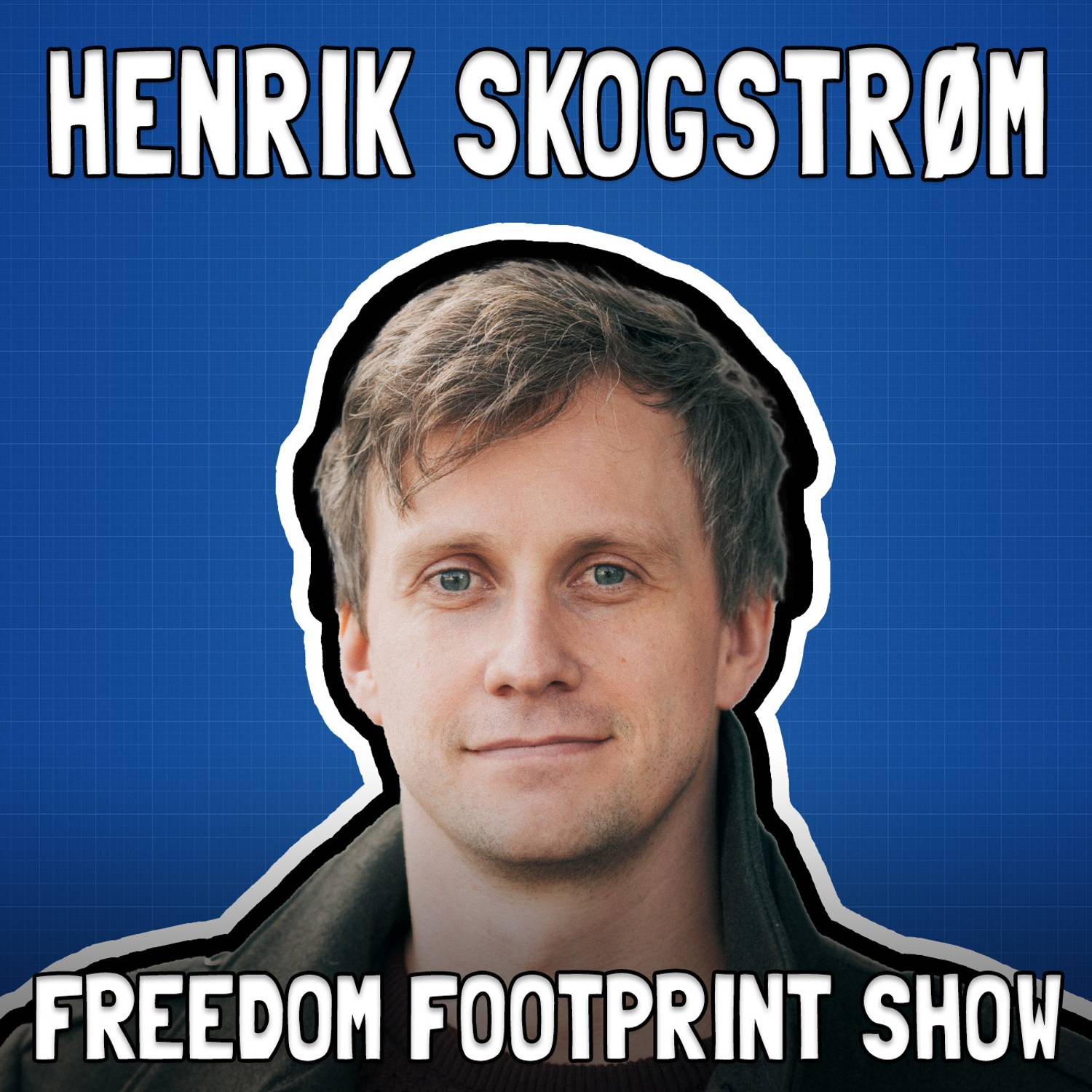
Supporting the Lightning Network with Henrik Skogstrøm


 Fountain

 YouTube

 Spotify

 Apple Podcasts

 RSS Feed
In this episode we are joined by Henrik Skogstrøm, founder of Torq (formerly LN Capital), to talk about the Lightning network! We learn a lot about how Lightning works, the things Lightning companies need to do to keep the experience seamless for users, and how Torq can help with that.
Connect with Henrik on Twitter: https://twitter.com/ohskogstrom
Follow Torq on Twitter: https://twitter.com/TorqLN
Torq's Website: https://torq.co/
Chapters:
00:01:33 - Introduction to Henrik Skogstrøm
00:03:55 - The Lightning Network
00:07:31 - The Philosophical Case for Lightning
00:17:01 - Lightning As a Scaling Solution
00:21:12 - Henrik's Orange Pill Journey
00:29:17 - Bitcoin Situation in Norway
00:37:26 - Lightning for Cross-Border Payments
00:45:13 - Merchant Adoption
00:51:12 - Developing on Bitcoin
00:55:16 - Wrapping Up
The Freedom Footprint Show is hosted by Knut Svanholm and BTCPseudoFinn. We are concerned about your Freedom Footprint! Join us as we talk to #bitcoin philosophers about how #bitcoin can expand your Freedom Footprint and much more!
The show is sponsored by AmberApp, the #1 Sat Stacking and Spending app on Earth! Their global launch is just around the corner, and they have loads of great features coming up, so stay tuned for those! The reason we've partnered with AmberApp is because of the great people - check out our episode with their CEO, Izzy, and you'll see why! https://youtu.be/nCSMzdp4_Co
Also check out their website to see all the great things at AmberApp: https://amber.app/
The show is sponsored by Wasabi Wallet, the privacy-focused desktop wallet with Tor and coinjoin built in. The coins you send to the wallet are coinjoined through Tor, so when you take the coins out they are private. Visit https://wasabiwallet.io/ and download Wasabi Wallet!
The show is sponsored by Orange Pill App, the social network for bitcoiners aiming to increase hyperbitcoinization in your local area. Download the Orange Pill App today! See https://www.theorangepillapp.com/ for details and connect with them on Twitter https://twitter.com/orangepillapp
The show is sponsored by The Bitcoin Way, specialists in cutting through the technical jargon of Bitcoin, so you can confidently navigate this complex world. They cover everything from Cold Wallets to Nodes, No-KYC Bitcoin Purchases, Inheritance Planning, BTC Payments, and more. If you're looking to expand your freedom footprint, securely managing your Bitcoin in self-custody—the right way, then booking a free 30-minute call with them is the next step to take: https://thebitcoinway.com/contact/
The show is sponsored by Geyser, the portal to the new creator economy on Bitcoin. On Geyser, creators can monetize their creations through their communities in a social and engaging way, and supporters can send sats to their favorite projects. Geyser has also recently integrated with Zaps and Podcasting 2.0, so every Zap sent to a Geyser address shows up on the Geyser page. We have a Geyser fund ourselves, it's the best way to support our show directly with Bitcoin. Check out their website for more info: https://geyser.fund/
Follow us on Twitter:
https://twitter.com/FootprintShow
https://twitter.com/knutsvanholm
https://twitter.com/BtcPseudoFinn
The Freedom Footprint Show is a Bitcoin podcast hosted by Knut Svanholm and Luke de Wolf.
In each episode, we explore everything from deep philosophy to practical tools to emit freedom dioxide to expand your freedom footprint!
00:00 - FFS060 - Henrik Skogstrøm
01:33 - Introduction to Henrik Skogstrøm
03:55 - The Lightning Network
07:31 - The Philosophical Case for Lightning
17:01 - Lightning As a Scaling Solution
21:12 - Henrik's Orange Pill Journey
29:17 - Bitcoin Situation in Norway
37:26 - Lightning for Cross-Border Payments
45:13 - Merchant Adoption
51:12 - Developing on Bitcoin
55:16 - Wrapping Up
0:00 basically if you're any type of company that touches the Lightning Network directly through a node, then you need to be able to manage that node and you need to have systems around it. So that can be anything from seeing which channels you have, how many payments have gone out or in, you yeah, opening and closing channels, it can be even just account systems. So if you have customers that have different balances that you hold for them, you need to keep track of that. Um, and. Torque helps you do a lot of these things. Welcome back to the Freedom Footprint Show. The Bitcoin Philosophy Show with Knut Svanholm and me, Luke the Pseudo Finn. Today we're joined by Henrik Skogström, founder of TORQ, formerly LN Capital, to talk about the Lightning Network.
0:43 We learn a lot about how Lightning works, the things Lightning companies need to do to keep the experience seamless for users, and how TORQ can help with all that. But before we jump in, I'll quickly cover how you can support the show. First, you can send us a boost or stream us some sats using a value for value podcasting app such as Fountain. If you're listening to this show as a podcast, check it out on Fountain. You can earn sats from listening and you can support us in all your other favorite shows. You can also support us on Geiser with Bitcoin or on Patreon if you want to get rid of your dirty fiat. All our links are in the description. And finally, we want to thank today's sponsors, Amber App, Wasabi Wallet, Orange Pill App, The Bitcoin Way, and Geyser. All their information is in the description.
1:25 We'll be talking a bit more about them later. And now, without further ado, here is Henrik Skogström on the Freedom Footprint show. Henrik, welcome to the Freedom Footprint show. Thanks for joining us. Thank you for having me. Yeah. Welcome Hendrik. I can give a TLDR on, on how we got connected because this is, this is sort of a in real life connection story via orange pill app, a shout out so, so, uh, yeah, we, we met at a, uh, we didn't meet, but. I met somebody who works with your, your company Torque, in a, in a live event, uh, orange pill app event, uh, in Tampere, Finland.
2:06 And, uh, we were at a sauna, party and, uh, And then, uh, yeah, we found out that there's a connection between, uh, yourself and, uh, and Finland and, uh, got to talking that it would be, uh, nice to get you on our show and, uh, hear about everything you're doing with the Lightning Network because we, we have not had anyone who is a Lightning expert. In any real respect, come onto the show and talk to us. So yeah, welcome Henrik, and let's maybe start off with an introduction to yourself and the work that you do. Yeah, great. Uh, again, thanks for having me.
2:46 And, uh, yeah, cool connection, uh, through, uh, Yoho there. Um, yeah, so introduction, uh, of me, I've, I've been working in the lighting industry since, uh, 2019. Um, maybe start with, my name is Henrik Skogström, uh, and, uh, we, um, Yeah, we, at Torque, we're building sort of this, um, management, lightning management platform for enterprises. Uh, so we've been really deep into how lightning works and different implementations for almost two years now. Uh, and it's been a ton of fun. So, um, hopefully we can dive into something, uh, some of the evolution there as well.
3:28 yeah, I've been using the Lightning Network since 2019 and I'm just baffled by how people are so ignorant about it and don't know about it and how awesome it is. Uh, so, so, but, but as, as I understand it, like most people use custodial lightning, uh, lightning. And I'm guilty as charged most of the time myself, uh, because I usually just use a custodial service and then put it into cold storage later. Could you give us an explanation of that and how, how the network, what the network looks like at this point, like how, uh, non custodial is it and, uh, what are the trade offs? Yeah, sure. So, I think it's important to remember when you need true self custody custody and in what scenarios.
4:16 The dream world is that everybody has 100 percent control of absolutely all their money at all times, right? Um, but at the same time, if you have a wallet with a hundred dollars in it. It's not the end of the world if somebody rugs that one. It's of course bad to have sort of a situation where either a company can rug you or some hacker can get access to it, but There is this balance to, to reach. So what we're seeing currently is that there are major providers that are like Vault of Satoshi and, and these that are custodial that a lot of people are using.
4:57 Um, But we're also seeing an increase in, um, self custodial wallets like Breeze, for example. Um, and in these cases, they're very often paired with, um, large LSP nodes. And both of these types of companies and wallets have the effect of... Gathering up a lot of liquidity in certain nodes, um, and that is by some seen as centralization. Um, the reality is more that it's centralization of capacity or capital to some places, and it's quite natural because if you have, if you're an individual, you don't need 20, 000 on your node.
5:44 Um, but a business or an LSP or wall provider definitely needs more than that. So that is sort of some of the effect we're seeing. I Okay. So, uh, um, so can you give us a, uh, for, for those of our listeners who don't know how lightning works, because it's kind of complicated. Is there a, a quick way of explaining what the lightning network is and how it works? Yeah, um, so the Lightning Network is a scaling solution for Bitcoin. So what it, the way it scales Bitcoin is that you do one Bitcoin transaction to open what we call a channel. And through that channel, you can send as many transactions as you want.
6:26 Basically, what you're doing is just asking the other party and yourself to update a contract between yourself. about how much Bitcoin each side has and that contract is basically just a potential normal Bitcoin transaction. Um, and since this doesn't have to be broadcast to the world, you can do that as many times you want, as fast as you want. Um, and of course don't impact everybody else. Bitcoin transactions. Um, the second effect there is that You can have a challenge with multiple parties and I can ask somebody, I can send money to somebody I'm not directly connected to because I can ask different hops or different node operators that I have a challenge with to relay a transaction through them.
7:16 And this, of course, is always done without any form of trust involved in that transaction. Uh, so that might not have been as, uh, short and straightforward as it could be, but that's sort of a very short explanation of what Lightning is and how it works. Yeah, don't worry. I think most of our listeners have some understanding of this stuff. So, uh, the. The thing I'm curious about is like, uh, the regulations that are popping up in different jurisdictions around Bitcoin. Uh, could you make, like, a legal case for Lightning not being anything but mathematics, and thereby, like, since, since it doesn't ever have to touch The base chain, really, you could just call it messages between people.
8:07 And maybe, do you know of any anyone that's trying to lobby a politician or like, some lawmaker around in these areas? Because like, to me, you know, money should be under free speech laws that should like, I do not care what you pay, but you will fight to the death for your right to pay it. Um, Because what bitcoins obviously has pointed out to everyone is that money really is nothing but information. And money ness is more of an adjective than a noun and all of this philosophical stuff that we touch on often in this show. Um, but lightning is a special case.
8:49 I mean, you, you could make a good legal case for lightning transactions, not being transactions at all, but just messages, right? Yeah, it's a very interesting question, I guess. So, I talked to some lawyers about this recently, and I think, it depends on what each country thinks related to money transferring laws. But I very much agree with the philosophical thought of it being just communication. Um, Or language, because yeah, you, you move, like moving money is essentially saying I value this thing. Um, I'm no legal expert, but it's, it's something where the power of it is so big that it should be a fundamental right we have as humans to be able to transact.
9:39 Yeah, given that we have such a high degree of, uh, like everything is digital around us, being able to pay online or digitally is becoming so important that it should be a basic human right. And, uh, yeah, lightning is a tool to, to make that possibility because right now finance is, or payments is a very permission, um, based system where certain parts of, um, The globe can't access that system. So yeah, philosophically, that's a really interesting topic. Henrik. Yeah, uh, to my knowledge, like, each lightning node does not know, uh, where the, it knows the, what node the transaction comes from and where it's going to, but it does not know how long the chain is, and it does not know how, uh, what the final destination is or where it came from originally.
10:37 So, so, uh, How private is a Lightning transaction? Like, I mean, obviously it's less private if you're using a custodian, but how private is it if you're doing it properly, so to speak? So yeah, a custodian will see, of course, who you are, if they're doing KYC, and they will see who you're sending it to. If you're not Using a custodian, you're 100 percent generating invoices and paying invoices on your own device. That can be sort of something like Breeze or it can be a wallet. Then it is, um, then it is very private.
11:20 The hops in between don't see, as you said, they don't see what the length are, where the payment is actually going. If you're the first hop or so the payment is coming from you or not. Um, and this again has some interesting effects on the legal systems, uh, for larger financial institutions and different, um, uh, payment providers, uh, out there. So, but other than that, other than sort of the routing, this is like paying with cash again. It is like you. You sort of pay with cash right through your mobile or, or, um, uh, computer screen. Uh, so in that sense, it's back to a very basic and known element that we have.
12:04 All right, so, uh, Lightning is known as a layer two solution to Bitcoin because layer one is viewed as the, uh, the base chain is viewed as layer one. I would say that layer zero is the people involved or are the people involved, uh, that because there's no layer one without, without the people. So, uh, Is there, is there a layer three coming and what would that be in your, in your mind with like, what, what problem does it even solve when we already have lightning, like, is there a layer on top of this coming in the future? And what would that look like? I mean, it's, um, at definition, I don't know, like there's applications, of course, on top of Lightning.
12:48 And then we have, uh, I guess layering is the sort of protocols doing something different. I mean, um. Separate assets and something like that could be considered a layer three where we use Lightning as the transport layer and then we use some other protocol to have some other meaning to those transactions on top of it. So that can be considered a layer three to add more functionality that isn't possible on Lightning itself. Um, scalability wise. I don't, yeah, it's, it's not something I think would be adding a third layer for scalability again, right? Lightning pretty much solves that. Okay, so what is, what is torque?
13:29 Like, what do you do at torque? Well, what is the, what is torque? Yeah, so basically if you're any type of company that touches the Lightning Network directly through a node, then you need to be able to manage that node and you need to have systems around it. So that can be anything from seeing which channels you have, how many payments have gone out or in, you know. Um, um, yeah, opening and closing channels, it can be even just account systems. So if you have customers that have different balances that you hold for them, you need to keep track of that. Um, and all these sort of different aspects of interacting on the Lightning Network.
14:12 and. Torque helps you do a lot of these things. I mean, constantly expanding and adding modules to Torque. But right now, the modules we have is that we help you collect data about all the traffic and everything going on with your node. We then help you open and close channels, for example, either manually or automatically. We'll let you see all that data, so you can interact and analyze everything that's going on. Um, we also have the ability to manage multiple nodes. And this is important because a lot of the enterprises around, uh, today, they have multiple nodes for redundancy reasons and for special, um, specializing the traffic.
14:53 Um, so for example, you can have, uh, two nodes. One is mainly sending data or sending transactions out and one is mainly receiving payments. And then you have redundancies. You might have four because you have two of each. And this sort of increased the entire complexity of the operation, of course. so Because the complexity is increasing as you add more nodes and you have more channels, you have more transactions and things going on in your operation, this gets ever more complex and harder and harder to manage and build. So what we provide is a platform for operators to work off of so that they don't have to, um, Uh, build everything from scratch and they can rather build the systems and the end user experience that their user care about and not sort of know the management stuff.
15:45 you got to remember that, for example, if you're a payment processor or your wallet, your customers don't care at all about how it works in the background. They just want a really cool user experience, they want an API, they want a smooth wallet. So, there's a limit to what you really want to spend an energy on building stuff yourself. So, what we do is we provide a set of modules that help these companies operate. For example, it allows you to collect data about everything that's happening. You can, uh, inspect channels, you can, uh, automate, uh, or manually open and close channels. Um, you can also manage multiple nodes, and this is especially when the, um, as the operation grows, you can see that you have, um, For example, um, two or four nodes.
16:40 And the reason for this is that the traffic is so big that you want to specialize the node activity and you want to have redundancy in your operation. So in short, you can use Torque to simplify and use Torque instead of building your own tooling and simplify your organization in that way. All right. Luke, is there anything on your mind? Well, sure. Yeah. So, so I think, um, lightning from the perspective of, yeah. What it actually does for Bitcoin, I think this is a, this is a bit of a deep thing because, uh, we, we tend to try to avoid any mention of shitcoins here on the show, and I'm not going to mention any by name, but the general idea is that there is so called quote unquote blockchain technology that can beat Bitcoin in the future.
17:35 Specifically the level of fast payments and that's kind of the idea here and so um, maybe something about um, what I'm trying to get at here is do you have any, any feelings on what is the real value of lightning to bitcoin? Is it working? Is it, is it actually helping bitcoin to do what everyone hopes it will do? Yeah, definitely. And I've done large payments on Lightning as well. And especially for something that we use payments for every day, um, up to a thousand dollars, there's everything, regardless of self hosted or not works really well.
18:17 Um, the, the interesting thing there versus a lot of other coins where they're talking about transaction volume and speed and all that is that Lightning settles less than a second. And. The, the way it scales is, uh. is in a way that's super efficient. So when you look at a lot of other coins, what they're talking about is that they, um, they increase the number of transactions possible, um, by a few methods. One is just increasing the, the speed of the, the block creation, or they just, uh, increase the block size. And when you think about that, it It is a solution where they then just not talk about what happens over time.
19:02 There's a lot of different, um, problems that arise from that. One is just that the block size, um, creates an intense, insanely large, um, um, blockchain over time. And that's where I think we in Bitcoin and in Lightning is much more honest about what are the challenges in Lightning today and what are, how does it scale, um, in what areas do we need to improve, uh, and all of these things, uh, rather than just saying, okay, we, we have sold it. Everything is fantastic. Uh, it will work forever. Um, we address sort of these problems and, and work on them.
19:43 Okay, we have some big news. We have a new lead sponsor, AmberApp. They're the number one exchange in the Southern Hemisphere. They're rated for the best customer service around and their global launch is coming. But the reason we're partnering with AmberApp is because of the people. If you haven't listened to our episode with Izzy, CEO of AmberApp, you really should go check it out. You'll see why it made perfect sense to partner with Izzy and AmberApp. That's it. All I'll say for now, you really have to check it out for yourself. They have loads of great features coming that we're excited to share with you when the time comes, but for now, just check out the episode, check out their website, Ampr.
20:24 app. You can see for yourself, why we're thrilled to bring Ampr. app on as our lead sponsor and partner. So go check it out. Next up WasabiWallet. The privacy by default, open source, non custodial Bitcoin wallet with CoinJoin built in. It's the easy to use, comprehensive, affordable way to make your coins private. And the best part is, they've been making huge improvements to the app. They're really focusing on the user experience, adding advanced features for power users, they just keep getting better. You send your coins to your Wasabi wallet, and they get combined with loads of other coins using the Wabi Sabi protocol, so they're private on the other end. Your tracks are covered so you can work on expanding your Freedom Footprint without worrying about your privacy.
21:07 So, check out wasabiwallet. io and download Wasabi today. So how did you discover Bitcoin? Like what was your orange pilling journey? Like when, when did you get orange pilled and how? Yeah, it's interesting. I, I went through a route I think a lot of Bitcoins do with sort of the Bitcoin route where, um, I, I got into it, um, basically because I was interested in currency trading originally and discovered that maybe there's a interesting way to trade. And make money, uh, through arbitrage or momentum trading, uh, with, uh, bots. So I started playing around with that, a ton of different coins and got swept up in all that in 2017 especially.
21:54 And, uh, went through the entire crash. And I think there's a small percentage each time who then's like what happened and realize that, oh, I should just bin at Bitcoin the entire time and get into that. And then I started really learning how Bitcoin converts, how. When I discovered Lightning, it was like, okay, game over. The other stuff is just BS. Uh, let's dive into this. Uh, and I've been working, um, really diving into Lightning after that. Um, where is, where are you on the, uh, sound money journey, like on, on the ethos of Bitcoin journey and the like, uh, on the, on the more philosophical prax logical side? Like what, what have you views on, uh, hyper colonization, for instance?
22:37 Do you think that's a likely scenario? And, uh, if so, when and what does, what does it mean to you? Yeah, it's a very interesting topic. I think, I think I might be a bit unconventional Bitcoiner in that area. I think. If we see hyperbitcoinization in next year, then the world is in so much trouble that it's time to get your, your shotgun and guard your door. And the reason is that the case? Uh, if, if we're, if we don't get into hyper ization also though, yeah, I think there's going to be suffering either way. That's my point. I think where, um, We're in such a trouble, we're in such big trouble with the debt that we're in that there is no smooth way out of it.
23:26 So essentially, if you stop all lending, and you go into hyperbitcoinization, and everybody just uses that, we're quickly into a situation where, um, so if everybody switches over to, um, to Bitcoin today, we're getting into a situation where I think the economy is going to go through a heavy, heavy crash. So even the housing market, for example, so I hope we transition there a bit more peacefully. yeah, you're, uh, I'm guessing your, your thoughts and your, um, idea on it is, is a bit different. And this is something I love to discuss.
24:07 The different points of view in this, and I'm guessing that's what you've been doing a lot on the show so far. Yeah. Well, we're, we're, we're sort of on the philosophical side. I mean, we, we try to envision what, what, what this means and what it is and, uh, where, where the vectors are pointing and, uh, I always like to, to like, to try to extrapolate, extrapolate the, uh, thought vector as far ahead into the future and possible as possible and see, see where I end up. And it's, it's kind of hard to see anything but hyper ization happening given that everything else is crashing. Um, I mean, where else? Are the money supposed to go? I just don't see how in a, in a hyper interneted world that the, the, the money could go anywhere else than Bitcoin because it's the only stable thing left.
25:00 Yeah. And that's a, that's a very good point. Um, most likely it becomes, um, over time it becomes the base, uh, value where we store value and perhaps also settle value across, uh, countries and larger operations. Um, definitely. Um, I guess it depends a bit on what, what you mean with hyperbitcoinization is if absolutely every other currency becomes Bitcoin and we only transact in Bitcoin, uh, and we eliminate all debt, that is, um, that is a different scenarios scenario than, for example, we don't limit debt and we, um, we have some other, uh, credit based systems around things, uh, to, um, to use as, um, um, Uh, in some cases, efficiency gains, but, um, yeah, it's, it's just, I feel like the world is just so far out of balance today that how that is used around the world is quite crazy.
26:02 Um, but then again, I'm not an economic, no, uh, I mean, um, Uh, there can still be debt on a, on a Bitcoin standard, of course. Uh, it's just that the interest rates will better reflect what the lender and the, and the receiver actually agree upon. And we won't have these artificial things. I mean, there's, there's always a market for lower interest rates. I mean, It's basically a bet on, on the future, like, it's better to have money now than in the future. So, so that's where interest comes from. It's just that, and the free market should be able to, to figure out the correct interest rate by itself.
26:44 It's just that it's been so manipulated at this point that it's not. It's just weird, like negative interest rates, for instance, it should make everyone like buy that shotgun and hide up in a cabin somewhere or leave the country because it's, it's, uh, just not possible. Uh, that word in itself, in my mind, should, should make people really scared because that's like the ultimate testament to that. You're being played. You're, you're being, you're, you're caught in a system that is using you. yeah, it's, um, it's definitely not as straightforward anymore as it was, uh, once, uh, once upon a time.
27:28 Yeah, I, I think Bitcoin is a tool that can be used for a lot of good, it can be used in, uh, to fix a lot of systems, but there's another side of it, which I think a lot of Bitcoiners don't talk too much about, and that basically is the power of money in the, in the direct sense, uh, where if you have a lot of money, even if you have a lot of Bitcoin, you can use that as a tool to influence others to do things they basically don't want to do. Um, so of course, just doing work is one thing, but you mostly are happy to do work in order to get paid. But there's situation where you can pressure people to the point where, yeah, they're still working.
28:08 They're still getting a salary. But that's the only option they have and the salary is not enough to live off. We don't really get rid of that problem still with Bitcoin. There's still going to be massive, massive, um, difference in, um, uh, in income around the world and, and power through that. And I think that's a problem that we don't address with Bitcoin and that we should be very aware of both in society today and in the future Bitcoin world. So, how is the climate at TORC? Like, do you discuss these philosophical stuff in the office, or wherever, if you even have an office? I guess you're mostly online, but do you discuss these things, or like, what's going on there?
28:56 Yeah, um, we, we do once in a while, but we're also very tech focused, uh, and love sort of diving into how Lightning works and what it does. Um, but we certainly discuss it once in a while. Um, but yeah, we don't have a, a office. We're working completely remote, um, which changes the dynamic a bit, I guess. Yeah, from your accent, you're, you're from, uh, the space cat planet, right? Like, uh, but, but you're not an astronaut. So, so, uh, it must be Norway. Yeah, definitely. One of the guys in the team, they usually have like a space background. So bit in space. There you go. How is everything going in Norway, by the way, if that's where you're actually based?
29:40 Because I mean, you can't actually tell by where someone is from originally where they actually are. But anyway, Yeah, no, I, uh, I'm born and raised in Oslo and still live in Oslo. So I never got out anywhere, I guess. Traveled a bit though. So that's good. But, uh, um, here, uh, I mean, that's, that's one of the things where I'm. not too interested in, I guess, in the politics, uh, in Norway and how things are evolving there and a bit of that is that it's so stable, so it might be very dark clouds on the horizon, but for, I guess, most people living in Norway, the so Economic situation is, is quite stable, uh, prices are, of course, going up, uh, there is inflation, um, there is, of course, one of the only ways to get out of the, the inflation we are in is that the regular people suffer.
30:36 And I think people are starting to notice that, that they have less money, prices on everything is going up, especially the stuff that... isn't in the inflation numbers, like just groceries, right? Um, so, um, it's going to be interesting in the next few years when this sort of starts to stress the economy more and more. Yeah, the same thing is happening in Sweden, where the... The both the Kronos are losing value fast and it's pretty sad to see because most of the populations don't seem to realize what's going on, which is often the case when inflation hits hard. No one seems to be able to pierce the veil and see what's going on.
31:18 But you know, the pay no attention to the men behind the curtain type thing. Uh, they're waving with one hand to make you not focus on the other. Um, do, do you know our friend Rune Østgaard by, by any chance? Another Norwegian, uh, recently came out with a book called Fraud Coin. Ah, yeah, yeah, I listened to his presentation on one of the local, um, meetups. Um, that was, that was great. Yeah, he has some great takes on, uh, on, uh, the situation in Norway and Norwegian politics is, uh, very active on Twitter and, uh, everyone should follow Rune, he's great.
31:59 an aggressive Trønders separatist, which is interesting, but he's a fun guy. An aggressive what? He's advocated for the independence of Trøndelag. I don't, I don't know how serious he's actually being, but yeah. Yeah, I think that's a bit, um, humor in there. Yeah, uh, then again, um, it's the separation, the separation of money and state is the separation of everyone and state in the end. So like, so, so, uh, the smaller, the better. Like, uh, As long as we can still trade between the cantons, uh, we're fine, I guess. Every single farm out there is by zone.
32:41 There's balance in these things again, I think, but it's, um, it's interesting to see, uh, that effect in, in the difference between the U S and Norway and, um, different how the starting point is. And I think the, um, the effect that you talked about earlier, people not noticing, I think this is something that's a bit scary for Norway and, uh, all countries basically is that some of these effects are, they're coming over time and they're quite subtle. They're hard to understand. And I think a lot of people are getting more and more frustrated. Because they feel like they're getting screwed in some way. They don't know the source of it and they start to blame everything around them in different directions and just frustration, uh, increases.
33:30 Um, I think this is a bit behind the political, um, climate in, in the US. Uh, I'm not into politics, uh, the US, uh, at a level where I should discuss this, but it feels a bit like they're so much further ahead in that frustration than many other countries are at this point. Yeah, uh, given the video clips we see on social media over here about, uh, grocery prices being completely bonkers over there. But, uh, yeah, we're, we're headed, we're on the same path. And, uh, yeah, people should know this. Inflation is not a natural thing. It, it comes from some people in society being allowed to counterfeit money and others, while others don't have that privilege.
34:17 That's where it comes from. That's the only reason that prices are going up and not down. And inflation is wage deflation. So what it does is just making everyone poorer over time. You, you're not getting a 5% raise a year, you're, you're, you're losing 5% per year because the inflation is 10%. So, like, and, and the real inflation is even higher than that because they, in this C P I basket, they don't, they don't take account for house, house prices and the stock market and so on. So, uh, it's, it's just a complete joke in the end. And the joke on you. So, get out, get some yeah, I mean, brush your yeah, yeah, yeah, actually, it's, uh, it's a really good argument to get into Bitcoin.
35:01 I guess that's why everybody's talking about it. Um, and also like at the end of the day, it's the people who don't have an option and are just wage, um, Uh, getting a wage paycheck, those are the guys who are suffering in order to end massively increasing inflation, which, uh, we are in a, in a situation where you have a lot higher inflation than normal all around the world. Um, so yeah, it's, I think my, uh, outlook on that is a bit dark and pessimistic, I guess. Normal people are going to suffer. The show is also sponsored by Orange Pill App, the Bitcoin only social network where you can stack friends who stack sats. You can connect with your favorite Bitcoiners on the app, make local connections, and even connect with Bitcoiners around the world.
35:47 You can see what's going on in your area and organize and attend local events. I've been to multiple events organized on Orange Pill App and they brought Bitcoiners together from all over. And now, with group chat, it's easier than ever to stay in touch with all your Bitcoin friends. The best part is you know it's high signal. There's no spam on OrangePillApp because everyone pays to be there. So download OrangePillApp on Apple or Android and start building your local network of Bitcoiners. Next up, The Bitcoin Way. Their mission is to onboard, educate, and remove barriers to taking self custody of your bitcoin. They cover everything from cold wallets to nodes, no KYC bitcoin purchases, inheritance planning, payments, and more.
36:27 Whether you're new to bitcoin or you're an experienced bitcoiner looking to expand your freedom footprint, Or you know someone who this sounds perfect for? The Bitcoin Way has something for you. They have a skilled team, well versed in the Bitcoin space, and their goal is to make all the complexities of Bitcoin as straightforward as possible for everyone. And the best part is you can get started with a free 30 minute call with their team. Go to thebitcoinway. com slash contact for more info. Our newest sponsor is Geyser. They are the portal to the creator economy on Bitcoin. On Geyser, creators can monetize their work through their communities in a social and engaging way. And supporters can send sats to their favorite projects.
37:08 Geyser has also recently integrated with Zapps and Podcasting 2. 0. So every Zapp sent to a Geyser address shows up on the Geyser page. We have a Geyser fund ourselves. It's the best way to support our show directly with Bitcoin. So whether you're a creator or a supporter, check out geyser at geyser. fund today. How about remittances? Is that a, uh, like, Lightning is always, uh, um, quite often, uh, advertised as being the, the, the real killer app of Lightning being remittances between countries, like, um, or at least that's a, a major use case. And I don't know how much of the network you actually monitor at TORC and like what you, what you see and what you don't see, but like, do you think there's, there are remittances being sent from Norway, for instance, to wherever refugees come from, like Syria and other places?
38:03 Do you think there's any of that going on? So, um, that's also a distinction in, in Troy Cooper. The tooling we're building is focused on the operator operating, uh, operating their node. So they're actually not sending any data to us, and we're not analyzing either private data or public data, so we can't see these, uh, patterns directly in any way. All we can do is analyze the public, um, Uh, graph, the lightning graph, which means which channels, which nodes have chance with who, where liquidity is allocated and which channels are closing and opening. I mean, do you think there's that there are remittances sent by a lightning from the Scandinavian countries to like Ukraine and Syria and places like that at this moment?
38:50 Or do you think that's just a fantasy thing at this point? I'm not sure in that direction. I know that lightning has huge benefits in countries where remittances are very, very expensive or slow, or where large parts of population don't have access to banking, um, digitally or even close by. Uh, some people have to travel quite a distance in order to reach a place that can help them, like Western Union, that can help them transact, uh, or get, um, money abroad or, uh, send money abroad. Um, then they additionally take a 10 percent charge or even much higher sometimes, uh, on their transaction.
39:31 Um, and in those cases, Lightning has a huge benefit and is being used, uh, quite a bit. Um, so I think we, we need to see more of it and we need to see a dynamic where there are more. People exchanging directly. We need more apps that help people exchange in and out of their native currency very quickly in order to see that effect in that use case. Because for a lot of these people, they can't risk being in Bitcoin right now. They can't just instantly switch to just using Bitcoin because they have to live in a world where other people aren't using it. So there is a bit of cold start problem with Bitcoin in a lot of places.
40:12 This is such a, uh, a sad part because, uh, yeah, it's like I, I, um, I see a, a bitcoin, a t m in a mall, for instance. Uh, and I see isn't this wonderful that you can just, uh, go there and get some, uh, euros, k y c free from a machine? Uh, But when you think one step further about that machine, it's, it's only a matter of time till all the vendors inside the mall realize that people don't even have to go through the machine. They could just accept Bitcoin payments directly. And, uh, I guess it's the same with remittances that people think that they need to exchange the Bitcoin for some local shitcoin, but when really they don't.
40:54 They don't have to do that. They could just start this underground economy in their own circles. And that shows you the importance of orange pilling the people around your community to make this happen locally. It's not going to happen by itself. Well, it is, but it's going to go a lot faster when people talk to one another about it. Yeah, I also think like, as the size of the market cap of Bitcoin grows, we see that stabilize. We see also during the winter that the value of Bitcoins stabilize quite a bit. They have some of the sudden moves once in a while, but that helps in general, people just staying within the Bitcoin currency.
41:42 But of course, I think having for a lot of merchants having that option where they don't even think about them using Bitcoin for quite some time, I think can actually be a benefit because then people slowly transition into Bitcoin. And we managed to bring the whole world on board instead of creating this sort of almost division where people are like, we're only going to use Bitcoin and others like we're never going to touch it. That's not the ideal situation. We should have this transition where. The people who only want to use Bitcoin can actually use it everywhere, regardless of other people adopting it or not. And that way we get much more natural adoption, I think. Um, so I'm always torn between this sort of idealistic thinking and ideal world and, and trying to think about how.
42:26 Perhaps adoption can happen, and I think we as Bitcoiners have to compromise a bit with the rest of the world in terms of driving adoption without compromising on how Bitcoin works and how we're, where we're going to end up in the end. Yeah, to me, this is definitely a transition phase where these solutions between all the currencies are happening, because it's sort of like those stationary computers that had two DVD slots, one for burning a DVD and one for reading one. And you could just copy movies that way. When the data is all there, you can just send it to someone.
43:07 And like, it's, uh, maybe that's a bad analogy, but, but there are lots of examples of, uh, of this, like phone companies trying to hinder IP telephony and, and stuff like that, like, uh, uh, sooner or later people will realize that the, uh, the network is the network and you don't need the other networks for the network to function. Exactly, yeah. I mean, it's, um, it's always a mix between technology limitations in technology and limitations in what people understand and can adopt. Um, I think Bitcoin has a bigger problem with, um, with how merchants and how people relate and think about it.
43:53 And I think we need companies who think much more about the commerce side than perhaps the ideal state of people holding Bitcoin in their wallet. I think the ideal solution for adoption is the case where I can go with my app of choice and pay for whatever in a different country by just scanning a QR code or tapping the phone to whatever terminal that already exists in that shop. Um, and when I do that, it exchanges from my Norwegian banking account into Bitcoin over to the merchants and perhaps back into their currency. Because having that choice, um, makes it possible for me to choose either.
44:36 Loading my shitcoin, local shitcoins into Bitcoin, transacting that way, or just having that super seamless transition when I need it. So there is no disruption or extra steps in order to pay. That's for at least the, the sort of Europe and US and these areas. In other countries that have a much, much bigger problem with either their financial system or Um, their local, uh, coins, uh, deflating at an even higher rate. Um, it's different again. I think the willingness to hold Bitcoin might be much, much higher. It's funny that we're seeing these days, um, like a whole thing about what is really Going on with with Bitcoin adoption.
45:23 And right now there's a little bit of Twitter drama going on where where our friends Joe Nakamoto and Paco de la India are, are going around the world and showing Bitcoin adoption and, and um, Well, the showing it and also, you know, trying to increase it and all that good stuff. Um, and there's, there's some smooth brains out there. I won't say who they are, who, who are, uh, saying that, you know, that like, uh, if a merchant allows Bitcoin payments and such a small percentage of their, their payments are in Bitcoin, well, then what's the value to them and all this, but the, I don't know.
46:06 On the ground of it all is that just by convincing merchants to take it and seeing that Bitcoin is accepted somewhere, right, like, the payment side and the adoption, it really does help, right, like, it's not as if a merchant accepting Bitcoin is going to be even like really a negative for them, unless it massively increases their anxiety about whether they're tax burden or, or regulatory accounting needs or something like that, which is, uh, fair that happens in some, some countries that don't get it, but, but, uh, merchant adoption and payments and, and all this, this is what the lightning network work is really for, right?
46:52 Like that, that's the purpose to actually facilitate the payment side of Bitcoin as opposed to just keeping a store of value. Like, what are your thoughts on that? Yeah, exactly. I mean, my thoughts in general is that the companies, um, And the people pushing this online and, um, people operating with lightning, we need to look at how payments work in the different countries, what the challenges are, and we need to solve them, um, because nobody's adopting this technology or that's incorrect. A few people are adopting it. Just because they want to use that new technology, when you look at the total population, people care about money, people care about simplicity, especially simplicity, people even pay money to not have to bother with things.
47:41 Like you see with credit card fees and this, like, imagine how much money is lost by merchants, large merchants. paying percentages based on transactions. They're doing that for convenience and they're doing that because they don't really see that expense that that's sort of just deducted from what they receive and it's just calculated into the price but they might pay millions millions for this little box that the customer taps in order to pay them or whatever form they fill in to to pay. For their goods online and for lightning adoption in certain countries, we need to reach the point where the simplicity is equal.
48:24 Uh, and, uh, people don't really think about this differently, but we get all the benefits we get from lightning transactions, which is the final settlement. We get the speed of that transaction. Uh, the price of that transaction is much lower, especially if you do it right. Uh, we need, um, we need to just show that and sell that, not sell Bitcoin. and beginning to get these people because they don't care about Bitcoin, right? We care about Bitcoin and we're trying to get people to care about Bitcoin because of all the important, um, benefits that has, but as we see at massive scale, people don't do their, do what's good for them necessarily, right?
49:05 Uh, convenience and just going through your day is often... Enough, uh, for people to just, I don't know, be distracted and not caring about the important parts of this. So we need to meet people, um, where they are, and we need to solve the problems in each country. And we need to, yeah, make it easy for people to make the right choice. Any thoughts on El Salvador and what is going on there? And any thoughts on Chivo Wallet? Is that a psy op? Like, is that a CBDC in disguise? Like, well, what are your thoughts on El Salvador in general? Um, to be honest, I'm not deep enough into it. I see stuff on Twitter, but it's so easy on Twitter to say, Oh, that's bad.
49:48 Oh, that's good. Right. Um, without really looking deeper into what's going on. Um, I've heard there is issues with adoption, and I think that goes back to the same stuff I talked about earlier. People don't understand it. They don't necessarily know what's good for them. It is a hard transition, right? Imagine that we just suddenly come in and say like, in 1997, we say just everybody should use internet right now to send mail. A lot of people aren't going to do that, right? Um, and the convenience stress isn't high enough. So we need to, to, to get to that point and need to be not necessarily patient, uh, but need to understand how heavy and how much needs to change to get there.
50:36 So I'm actually quite positive of what's happening in El Salvador in terms of Uh, whatever adoption we have, uh, we need to just keep working on it and increase that. But yeah, again, I'm not too deep into it. There's probably a lot of problems in different places, uh, that you alluded to that I'm not deeply into enough because I'm so focused on building and working in the Lightning industry from a technical perspective. Oh, that's great. That's the division of labor. Uh, I mean, focus on what you're good at and things will sort themselves out. Right, Luke? Yeah, absolutely. I mean, we need people who understand the technical side and I've got a technical background and I still even have a fiat job that's kind of tech oriented.
51:22 And the thing is, it's still Really not something that I can personally focus on building the the tech side juggling a fiat job and something like that. And so so, yeah, for people who actually are able to make the leap to to work on Bitcoin, it's it's really fantastic to see. And, and, I mean, how does it work that that to actually get information Developers and technical people to be able to do more things with Bitcoin because I, I really do see it as a, as a problem that, for example, they can just, again, with the shit coins, they can just get a bag of shit coin money to go work on some blockchain project, or they can mine fiat and do normie things.
52:11 Um, how, how do we get developers to, to, uh, Bitcoin and to understand, uh, why it's important for them to spend their time on that? Yeah, I mean, I think there's a lot more developers who really want to work with Bitcoin and on Bitcoin than the people who get the chance to do it. Um, the reason for that is, as you said, with With shitcoins, you can just basically print money out of nowhere, uh, and convince people through massive amount of marketing that they're worth something, and then cash that out in order to fund your development, uh, or fund VCs, essentially. And a lot of VCs have gotten used to the fact that you, you create this token, you dump it on people, uh, within a year or two.
52:57 And if you're a VC. And you get the choice between a regular startup that spends 10 years until they can cash out, um, or two years from some, yeah, token. Um, you're going to do the former, uh, no, the later, I mean. Um, and that's where Bitcoin is in this position where, funding wise, they, they operate like in normal. Um, startup. So it is the near horizon on things, right. Um, while the investors who are there are often coming from sort of the general crypto space. Uh, of course we have Bitcoin focused VCs and they're often really good, but.
53:41 There's limited amount of money in that, which in, in, so the, the Bitcoin focused one. So, so you have this huge division, uh, and separation between sort of the rest of the, the VC world and so the, the Bitcoin VCs. And that results in less money for the true Bitcoin companies, uh, which results in fewer jobs. So there are a lot of people right now who's just either, uh, part-time or full-time working on open source projects or in companies for lower. Rages because they're really passionate about getting this to work and doing the work that is needed, um, for Bitcoin to evolve and to work, and, um.
54:21 yeah, I mean, uh, I think it is something that's worthwhile doing because this industry is growing, uh, steadily through the bear market. It grows of course, um, a lot in funding wise in the, in the bull market. And the only way to really get into this industry is through fruitful work. Uh, you need to show that you understand Bitcoin and especially Lightning has a complexity that's higher. It is harder to understand. There's more terms, um, both from sort of user perspective and from development perspective of how the network works. Um, so yeah, proof of work, you really dive into it, uh, spare time in the beginning if you need to and, uh, get into the industry now.
55:10 Yeah. Proof of work leads leading up to proof of results. Uh, at some point, that's what we're looking for. Henrik, thank you very much for the conversation and I hope to see you soon. Before we leave, can you guide our listeners to where to find you and where to find TORQ and are you attending any conferences this year or stuff like that? Yeah, I've, uh, I'm attending the Adopting Bitcoin conference, uh, so, uh, go there. I think that's a great, uh, conference, uh, also for Lightning. Um, you can find Torque at, um, Twitter with, uh, at Torque LN. And, uh, myself at O.
55:51 Henrik Skogström, a bit hard to pronounce and understand, so maybe we can add something in the show notes, um, but that's the main two channels. Uh, we're also writing a lot of content on Toric LN, uh, to, to help bring people, uh, into Lightning. Wonderful. Thank you so much, Henrik. This has been the Freedom Footprint Show. Thanks for listening. So what did you think of that episode with Henrik? It was interesting to learn more about how the Lightning Network works under the hood. What was your favorite moment? Let us know. You can send us a boostergram on Fountain, leave us a comment on YouTube, or get in touch on Nostr or Twitter. If you're watching on YouTube, don't forget to like the episode and subscribe to the channel.
56:31 Our show's sponsors are AmberApp, WasabiWallet, OrangePillApp, TheBitcoinWay, and Geyser. All their information is in the description. That's all for now, see you next time, and thanks for listening.