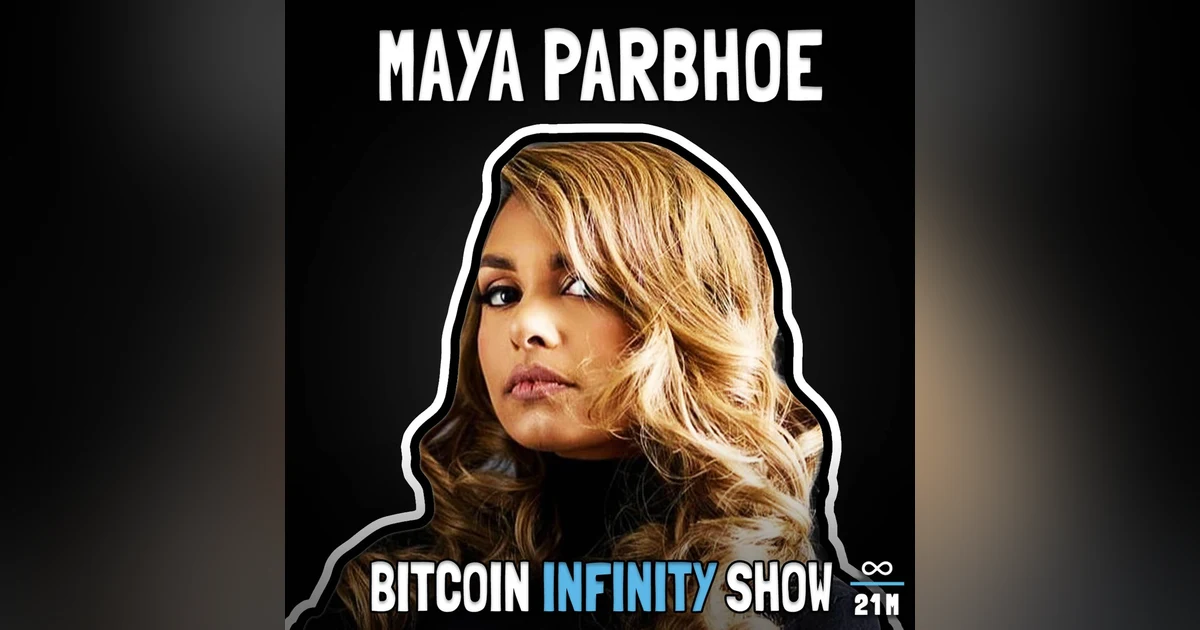
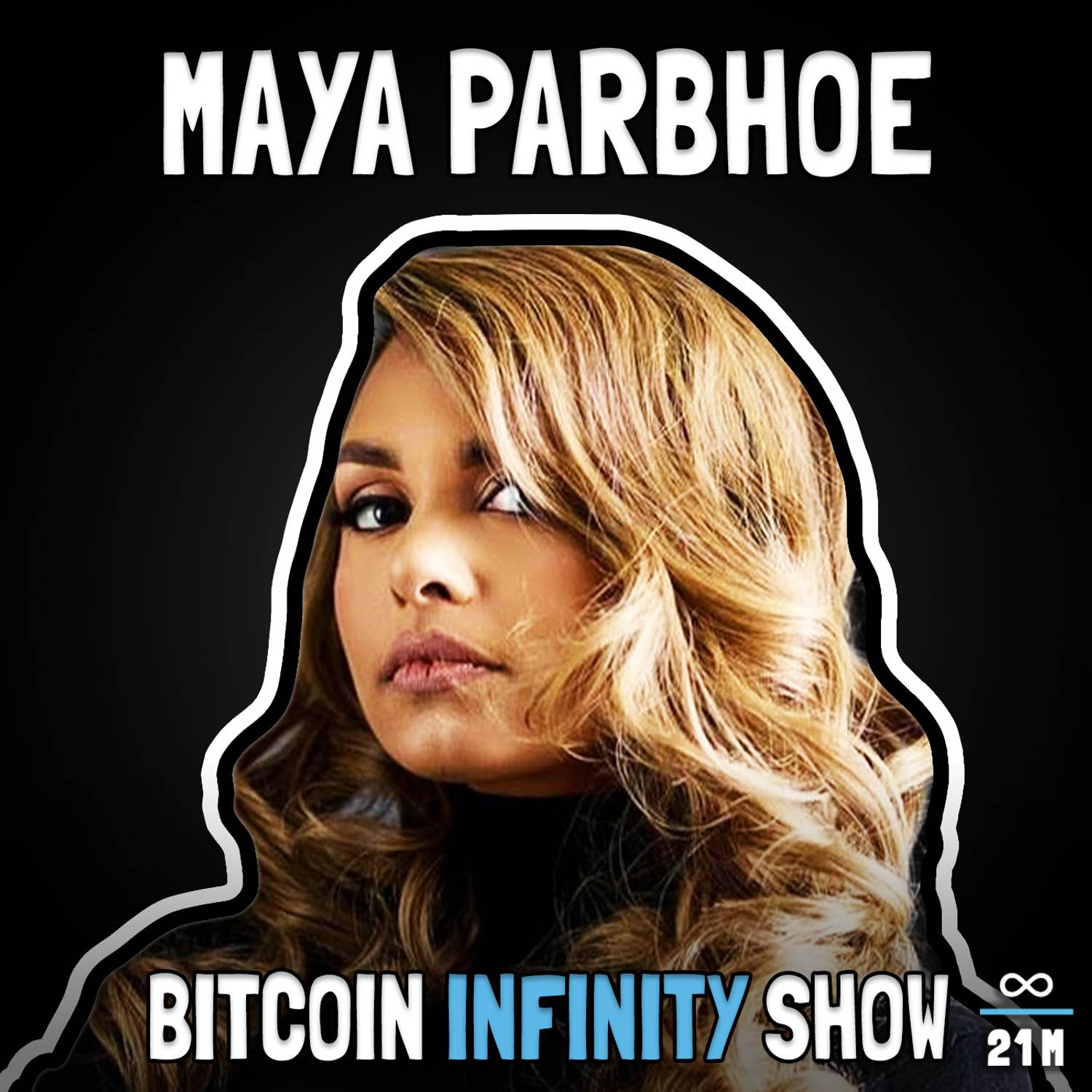
Running for President with Maya Parbhoe - Bitcoin Infinity Show #123

 Fountain

 YouTube

 Spotify

 Apple Podcasts

 RSS Feed
In this episode, Maya Parbhoe joins the Bitcoin Infinity Show to share her story, going from Bitcoin advocate to presidential candidate in Suriname. Maya shares her passion for innovation and Bitcoin, explains her vision for implementing Bitcoin as a national currency, and outlines her political campaign for 2025. She provides insights into Suriname's unique cultural and economic landscape and describes efforts to create a sustainable circular economy powered by Bitcoin.
Connect with Maya:
https://primal.net/p/npub1h0fd5xu8rfhwdkkjr78ssdhm7rdjyf97hhjqr9acwv77ux0uvf8q23kvcg
https://x.com/MayaPar25
Connect with Us:
https://www.bitcoininfinityshow.com/
https://primal.net/freedom
https://primal.net/knut
https://primal.net/luke
https://twitter.com/BtcInfinityShow
https://twitter.com/knutsvanholm
https://twitter.com/lukedewolf
BITCOIN: THE INVERSE OF CLOWN WORLD IS OUT NOW! You can find it and much more at https://www.bitcoininfinityshow.com/
Thanks to our sponsors - check out there websites for info:
BitBox: https://bitbox.swiss/freedom
Bitcoin Adviser: https://content.thebitcoinadviser.com/freedom
Support the Show:
If you value what we do here at the Bitcoin Infinity Show, consider sending us some value back. You can send us a boost or stream us some sats on Fountain. Check out https://www.fountain.fm/ and https://twitter.com/fountain_app for more info.
You can support us directly with Bitcoin on Geyser Fund: https://geyser.fund/project/freedom/
The Bitcoin Infinity Show is a Bitcoin podcast hosted by Knut Svanholm and Luke de Wolf.
The Freedom Footprint Show is a Bitcoin podcast hosted by Knut Svanholm and Luke de Wolf.
In each episode, we explore everything from deep philosophy to practical tools to emit freedom dioxide to expand your freedom footprint!
0:00 Maya, welcome to the Bitcoin Infinity Show. Thanks for joining us. Thank you for having me. Interesting. So you guys went from for fuck's sake to Bitcoin Infinity. I love it. Thank you, International Settlements. BIS. Yeah. Yeah. Great to have you here, Maja. Um, you're from a country that I've visited twice and it's a very small, very, um, very strange country that I absolutely loved, uh, Suriname. So, uh, yeah. And you're running for the presidency there. So, so tell us a little about yourself and, uh, how you discovered Bitcoin and how you decided to run for president in.
0:46 Suriname. I mean, it's, it's pretty surprising to hear that someone's visited twice already, to be honest. Usually the, the, the answer I get is where is that? Or where in Africa is that? Most people don't even know where the country is. So it's very, very surprising to hear that you visited twice. well, okay, to, you know, to give an introduction on me, yeah, I'm, I'm, I'm, I have a background in business administration, I've had a love for tech and, and math ever since I was, I don't know, a kid, uh, basically, and, and a love for innovation, uh, I, I read Jules Verne, I think I was six or seven years old at the, at the time, and I just loved how You know, in, in Jules Verne, they were talking about submarines and things that had never, you know, had never could exist or you couldn't even imagine them, um, at that time, and, you know, now they're so straightforward.
1:44 They're, they're just these standard things that you. That you have that, that just exists. Um, and my dad was also very innovative. He would also, you know, have the latest technology always available at, at, at the, at the store. He used to own a store and like we, we'd have computers. Um, he, we, we had the, um, how do you call this? In, in, uh, in English. It's the. uh, Stenograph, um, you know, Morse code, Yeah, yeah. yeah, we had, we had like everything, uh, TD, TDMA phones, uh, like the early days, computers, I would, and as a kid I would actually like pull them apart and, and put them back together and you had these like, it was a, Before floppy disks, you had the bigger drives, the zip, the zip, like the actual zip drives that you had to use to play games.
2:38 So I would do all of that as a kid and I grew up, um, you know, with that love of technology and as a pretty nerdy kid playing games behind my PC a lot. And as I grew up, um, you know, I 15 years old, more out of necessity. And that business, it's an import export company, but it wasn't really like my passion, you know, it was innovating here in this country because you couldn't order anything online, so I was the first company that actually, you know, allowed people to be able to order products online and get it delivered all the way here in Suriname to their homes, um, and about, so that was 21 years ago, and about a decade ago, I started a second company.
3:28 Uh, we wanted to innovate in the civil engineering space, uh, with my partner, he's a civil engineer. So also not really my passion, but, um, I just wanted to, you know, another challenge basically. And I wanted to grow a company, to more than a million in revenue, which is, is really hard here in this economy. Um, so we started that about a decade ago. And that gave me the opportunity to invest into, you know, something that I was passionate about and something that I wanted to spend the rest of my life on. And a friend of mine actually told me about, about Bitcoin in 2012. My friend Ed. Uh, so he told me about Bitcoin in 2012, and I, you know, like, shame on me, to be honest, because I just looked at it, I looked at the, I read the white paper, I thought it was amazing, I thought, you know, this is gonna be, um, life changing, or like, it could potentially change the world, like, Specifically after the 2008 crisis, I was one of those people that was anticipating that crisis and kind of, you know, knew that it was going to happen and then you see the whole banking crisis like unfold in front of your eyes and you feel that, you know, that, that sense of like, the system is broken.
4:45 And this seemed like the solution, but I thought to myself, okay, you know, it's still early, what if a government stops it, what if, you know, I still had this idea of, okay, it needs to grow. So I just kept an eye on it a little bit, um, kept following it in the media, just kept, you know, Keeping, like, kind of tabs on it. And then in, I think it was 2014, I joined, uh, Whirlpool, uh, and Telegram, which was a, a Bitcoin only, um, maxi, toxic maximalist group, you know, where, where everybody was just, like, talking about Bitcoin all the time. And, I, I just kind of got more and more obsessed with it.
5:30 You know, it's like once you, once you keep learning more and once you understand, you know, What it, what, what it actually can mean for, for, for the world. And then you just kind of stop, can't let go. Um, and then I went to, I think Konsensus was the only conference at the time. So I went to Konsensus, uh, in 2017, I think was the first time. And I met with the admins of, of WhalePool actually. And, and we went to dinner, uh, and I, I was like explaining to them, We need to have Bitcoin adoption in Suriname and we need to, you know, we need to convert the country and it's, it's the perfect place for it because we only have 600, 000 people, we have no financial infrastructure, a lack of, you know, very big gap, um, in, in technology here.
6:25 So, it's the perfect, It's like the perfect place to build that new system on Bitcoin. Um, me guess, let me guess, the reply was, what the hell is a Suriname? yeah, well pretty much, yeah. They were, they were pretty supportive, but I think it was, it was hard to fathom, you know, what, what, what adoption at that level could, could actually mean. Um, so they told me not to give up, um, I think one of them even asked me, they were building, I think it was, um, one of the exchanges, actually one of the derivative exchanges, Derivit, I think, asked me to be CEO of Derivit, but I don't really like derivatives, and I just kept like kind of pursuing that building a capital market and building that new system, you know, with Bitcoin being basically the tool that allows us Companies to, to, to raise capital from anyone in the world, um, being able to, to hedge, you know, inflation here with SRD, you have 50 to 60 percent inflation, um, being able to hedge inflation using Bitcoin and you just want it to, yeah, Trojan horse it into the economy and, and, you know, some kind of way.
7:47 And then in 2020, we, like, we had the exchange live, 2020, in January, we were about to issue the first, um, bond, the StatsOle, um, the StatsOle is the, it's a national, uh, oil refinery here, and they had a bond issuance of about 190 million. And we were, like, preparing for that issuance, uh, you know, preparing the licensing process at the central bank, and the governor was very supportive, you know, to let us innovate completely free, like, hands off. He was really, uh, he had a very pro act, like, progressive approach to just letting us do, um, you know, what we thought would be best here.
8:31 Um, and then he got locked up in a political trial, so that kind of put a wrench in things. Um, and then in 2021, I mean, we were still working with the new Minister of Finance and things were ongoing, but it was going really, you know, like, very slowly. Um, and 2021, I saw Buquere, you know, making Bitcoin legal tender in, in El Salvador. And I thought, holy shit, you know, this is what I've been dreaming of. So I flew to El Salvador for adopting Bitcoin. Um, and started, started lobbying there. And I guess that's where I met Kamal, I met Daniel Wiggin, and I started talking to Daniel and also asking him, like, how do I get this here, right?
9:15 And then he introduced me to Gigi's 21. world. And I just started with that. I started with trying to develop the circular economy here, um, you know, just like as, as a passion side project while I focus on, um, trying to innovate still in this space, which is how Daedalus Labs actually got, um, how we started with Daedalus Labs in May last year. yeah, let me just briefly tell you my story with Suriname. I've been there twice, as I said, and, uh, I was working on a tall ship at the time as an officer on the, uh, Like this big sailing boat that had high school students on board and we went to all these obscure places, Paramaribo being one of them.
10:04 And, uh, uh, before, before arriving in Paramaribo, I looked up the, we had a little lonely planet guide, printed in the nineties and it's, uh, under Suriname. It just said, don't go here. It's dangerous. Stay out. So, yeah, but we went anyway and, um, I found Paramaribo to be beautiful. Like it's, it's a very, uh, Cool city and, or, or town. Like it's not even a city, right? And, uh, I, I went on long walks in, in Paramaribo and, and saw these, um, houses on, villas on stilts almost, and like very cool architecture in some of the, uh, More obscure parts of town and, and something struck me like all the, all the little supermarkets had, uh, metal bars in front of, uh, yeah, because they got robbed all the time earlier on, I guess, like, uh, it seemed pretty safe at the time, but there were still, still these measures and everywhere you could buy a little, um, I'm gonna, I'm gonna fuck off and go live in the jungle kit, like with a, a Primus kitchen and a tent and a machete and whatnot.
11:16 and, and we heard some stuff from the, I I think the, um, some contact down there that, um, in order to get all the different religious groups to, to, um, uh, to not, to not fight anymore, you, uh, you needed to have. Uh, so, so. Yeah, you have to correct me if I, if I'm wrong here, but Suriname had eight state religions or something. So you had to have a holiday for each and every single religion. So you were like, not working like half of the year because, because everything was a holiday. Is that true? Well, it's not half of the year, but we do have a lot of holidays. They were like 150 days or something.
11:59 No, it's not that much. Um, but it is, it is a lot. Um, don't hold me to it, but I think it's, it's around 30 to 50 max. I think. It varies every year. Like, we had a, um, Japanese New Year, uh, last Monday, and I have Japanese friends, and I asked them, like, what is Japanese New Year? Like, they don't even know. They don't even know what Japanese New Year is. But apparently, it's a holiday. So yes, we do have a lot of holidays. Um, There's, there's, um, so it's a melting pot of cultures. It's not really as dangerous, um, you know, in, like, in the city, for example, it's a UNESCO heritage site, so you have a lot of old colonial buildings, um, and in the heart of the city, um, I do think that it is, like, a bit more dangerous for, um, specifically for a supermarket, right, because they know that the criminals do know that there's a lot of cash there, so they do tend to put up bars, but If you're like, outside of the direct city, then it's pretty fine, to be honest, you don't have, um, you know, they don't have bars, uh, at the entrance, you can just walk in freely, and it's modernized a lot as well, so it's not it's not like the West, it's still like a little town, um, yeah, it's, it's, it's fair that in the Caribbean, I think it's one of the most safest, uh, safest places where you, where
13:32 you can visit, and yeah, in terms of the cultural melting pot, so we have Chinese, we have Javanese, we have Indians like myself, we have, um, Brazilians, we have Venezuelans, we have Cubans, we have, um, Yeah, big Javanese population, you have Creole, you have Maroons, you have Indigenous, and that's just to name a few. We have Lebanese as well, so we have a Lebanese community, we have a Jewish community, um, so we're a real cultural melting pot, and everybody celebrates each other's holidays and everybody, um, cooks each other's dishes. Oh, we also have a Dutch population, so like, for example, my mom is right now cooking sauerkraut, So, you know, we, we, uh, we eat each other's food.
14:19 We celebrate each other's holidays. You have a, a synagogue next to a mosque, So you don't have, um, a lot of like, discrimination where people, you know, are actually actually really violent towards each, each other like you have in other, um, countries in the region. Luckily. So No, it's, it's super cool. And, um, the, the, the other thing we did in Suriname was that there was like an excursion out in the, out in the jungle. Where we, um, did some canoeing and, uh, some jungle safari thing, uh, visiting a, a very, what's the word for that? A, a nature tribe of some kind where, Maroon tribes and you have Native Indians, so the indigenous population of Suriname.
15:10 no, it was really cool. It was one of those old yellow American school buses from the 70s. And at some point we had to have all the students jump, or all the male students jump out of the bus and push it up the mud on the road because it was stuck. And there was no phone connection or anything like that. And I, if I recall correctly, there was a, um, uh, a dam somewhere in the country that they have decided to build, and there's a, there's a church tower sticking, uh, in the middle of the dam sticking out of it, because there was a little village, That they just didn't give a shit about and just flooded the entire valley to build a hydroelectric dam.
15:57 relocate the villages, some of them have stayed. But I think this was, uh, yeah, it was, uh, the Suriname Aluminium Company. So, um, well, actually Alcoa, so the, the largest aluminum company in the world. And I think we supplied most of the aluminum for the Second World War as well. So it's, it's, yeah, that's why that dam was, was, uh, developed. Um, it's, it's been decommissioned for a while. So not the dam, but I mean the aluminum refinery, so now the energy is used by just the locals, so it goes to the city. And yeah, they flooded a piece of the country.
16:42 It's not very large percentage wise, but it did You do have like some mountaintops that are still sticking out, where you have new villages that have come up. That you do have some remnants of what used to be there still, but it is beautiful. It's a 93 percent forested. So the largest percentage of the country is Amazon rainforest. And as you said, like cell phone coverage has improved a little bit. Um, when you head into the interior, um, but you, you still do have to, like, depending on how far you go, um, if you're going up river rapids, for example, you do still need to, like, get out of the canoe, uh, get all of your baggage out, and then they, they, we push the canoe, um, you know, like, upstream, um, through the rapids, um, or sometimes, if you're really deep, uh, sometimes they have to carry it, uh, and then, you know, Put it back in the water and then you reload all of your stuff.
17:50 That's the way we did it. And, uh, yeah, it's a great memory. I mean, it was beautiful and, and, um, it felt very adventurous. Um, that was a really cool. And we heard, uh, like the story, the history of the country is like the slaves that managed to escape. They just ran into the jungle, right? And then the slave owners who were Europeans didn't know how to handle jungle, so they couldn't really catch them. And they, uh, they started this, these little villages and there's a, uh, what they call anthropologists are, um, studying all these tribes because they're even more based than, than the ones in Africa.
18:31 Because, um, yeah, that's, that's what we were told anyway. But yeah, yeah. Great memories. They still have, um, they still have kept a lot of their culture, um, alive and they're very remote. we've actually been working with Amazon conservation team for, it's been, yeah, it's been almost a year, a bit longer than a year now, to actually incorporate Bitcoin into their lives to solve, um, you know, a lot of the problems that they have because they're, because they're that remote. They don't really have a use for the Surinamese dollar, it's, it's very, like, they need about three months of salary to be able to travel to the city to use the SRD.
19:20 So, you know, inherently that, that makes it difficult for them to use the local currency. you know, they live off of the land, so they live off of, um, like, hunting and fishing, um, and they produce some things, like, um, there's stingless honeybees, so they produce honey, um, they produce some type of pepper, or they cultivate, um, things, or they make jewelry, for example. So things like that are their only source of income. But it's also costly for them to, you know, need to travel to the city to be able to, to, to use their money. So Bitcoin solves that problem, but it also solves a problem like of sustainability because, most of them are a lot, well, actually, almost all of them are too remote to be connected to the grid.
20:11 So they don't have great energy. The only thing that they can actually use is solar and there's nothing that can make solar sustainable for them to actually maintain and keep that solar system. So if you add mining to it, You create a source of income that is, you know, purely from energy and is just basically the basis of their little circular, what we, you know, like to call their little circular economy. So we've been working with Amazon conservation team very closely, um, over the past year to, to get them all, you know, to adopt Bitcoin, to be honest. And it's taken a year, but, um, We're getting a lot more traction right now, so it's very exciting to finally see some traction and see Bitcoin companies willing to help to get projects like that off the ground because I feel like, you know, they're so, they're so remote, they're so traditional that and they're so not, they're so against being dependent on government.
21:20 They want their independence. They want their self sovereignty. So I see this as a real opportunity to just directly have energy convert into Bitcoin and that be their, their main source of income and, you know, basically give them sovereignty, have them be able to be self sustainable and, you know, just completely be. Independent. And, and like, I think as far as, as, uh, circular economies go or, or like the whole idea of, of, you know, Bitcoin adoption, I think this is like the most, like the purest form you can have it. Right. Because it's not just them buying Bitcoin. It's like literally.
22:01 They have a source of energy that they need, and that source of energy also converts into this, you know, purest form of money that they can use. That's one of my passion side projects that I'm really happy that it's finally getting more traction.
24:01 . did you decide to run for, uh, for president and what are your chances? Like where, where is this going? Yeah, so, okay, um, like, I've never been politically active in the country, but I have been a political activist, so I have been very vocal against government, very vocal against, um, you know, corruption, very vocal against, um, you know, some of the You Corruption happening at our financial institutions. I was very vocal about open market operations, um, like our, our central bank started doing it a few years ago, and I was actually one of the, the people that, um, you know, worked out how open market operations worked.
24:50 And the whole point of it was to get interest rates down because they're like at 19%, between 12 and 19 percent interest rates here. And the whole point was to get, you know, to get those lowered, um, and create liquidity in the market initially with, with that. And, uh, they took that and raped it. And made it 89 percent and 90 percent interest rates on a short term deposit. So they've injected over 221 million already into the economy in just the last few years. and I've been very vocal about that. I've been very vocal about corruption in the country and very vocal about government corruption.
25:35 Um, it was actually at, uh, I think it was, yeah, it was Bitcoin Miami last year, where I met Samson and his team, uh, from Gen 3 and, you know, uh, Samson being an advisor on the, the, the sovereign bonds in El Salvador and, you know, also being part of, you know, that adoption happening in El Salvador, it being legal tender, um, I asked Edwin actually at Gen 3, like, how do I? You know, how do we get this done in Suriname? Similar to me still lobbying for the same thing everywhere. Um, and Edwin said you need to get Samson on the flight to Suriname, or you need to convince him to come to Suriname.
26:17 Uh, so that became one of my goals, you know, to convince him to come here and get him in front of the right people here. we started talking and then working together I think starting Bitcoin Miami last year And I we had several meetings with the Minister of Foreign Affairs and then eventually I arranged also a meeting with him and the president November of last year and that took a couple of months of you know, lobbying to get Get him in front of the president specifically And, uh, he was here, he talked to the central bank, he talked to the, he had a meeting with the minister of finance before, he had a meeting with the minister of foreign affairs, he had the meeting, he had meetings here with a lot of financial institutions and their CEOs, the banking commission, their, their vice chairman.
27:10 And it was actually while Samson was here that he, he said it in a couple of, of, of like, dinner meetings that we had. He's like, you should just run. You know, everything. You understand, you understand how it works. You understand, you know, the bonds, the sovereign bonds, the, the, The dynamics of the economy and what Bitcoin can actually mean and how you can leverage, you know, Bitcoin and implement it actually in this country and just change the economy. So you should just run. And then he did that a couple of times and we actually talked about it more broadly in one dinner meeting. And I thought that they were going to make Bitcoin legal tender because the president was very, very, very positive during that meeting with Samson.
27:56 He said, yes, I'm going to be a global leader in innovation. We're going to be the Bitcoin leader in the world. And, you know, it's similar to El Salvador. We're going to change this economy. And he wants to be a global voice in tech and in innovation and Bitcoin's going to lead the way. So during that meeting he was very positive and afterward they were also, you know, following up and being very positive and they're, you know, installing a specific commission to go to oversee it and one of his advisors was going to review it. And then I think it was January or February this year, one of his, that, that specific advisor had a conversation with me because we had worked together previously in eGov He was, he was talking to me about this and then he mentioned that he was mining Bitcoin and that he was already mining a couple of megawatts and he was scaling it up to a 10 megawatt facility or he already had 10 megawatt available and he was scaling it up, wanted to head to 20 megawatts and he wanted to keep it silent.
29:05 Like he didn't want people to talk about Bitcoin. And, you know, doing, making Bitcoin legal tender that would attract too much attention to what he was doing. So that's when I immediately saw this, you know, fuck, it's the same fucking corruption again. And, you know, look at the opportunity that we have and look how close we are. You know, we've been working towards this point for a year and we worked so hard. We got Samson all the way here. We got Samson all the way here. And we can literally, you know, they had the proposal at the central bank, they know the impact that it can have on our country.
29:45 They know, they know what they can do. And they're, they're, you know, being bureaucratic about it and putting it on the back burner and keeping it silent. Because of this man's personal interest in this mining facility, you know? So that's where, where just my political activism and like my hatred for corruption just kind of kept brewing. and then I just, I kept thinking about what Samson said and I just kept weighing, weighing the pros and the cons because you do, you know, you do lose your, your, your privacy. You do have a A sense of danger and threat in terms of security because, you know, it's still, our vice president is on the Interpol list, you know, our former president, um, is, is, um, was a dictator, um, who read, who led a revolution, right?
30:42 So it is, it is a, it is a dangerous environment. Um, and we do have, you know, You know, like, there is exports that other political activists, I spoke to, um, other political leaders, um, and after those, all of those conversations, uh, after a couple of months, um, also, you know, just kind of like dealing with the fact that I'd be losing my privacy, that I'd be losing, my sense of safety, security, that I'd be going against my mother's wishes and my family's wishes, actually, and pursuing this and, you know, speaking to who are now my team.
31:22 Um, you know, people that are influential here, that have integrity, that, um, have a reputation and credibility here, and political, um, leaders in the country that I actually decided to, to take it on. you know, our population is very tired of old politics, um, of corruption, because it's been, it's, there's been systemic corruption ever since independence, since 1975. It's one government after the other. Um, looting and stealing, uh, from the people, you know, taking our central bank reserves and, um, just basically doing big projects. And then of those big projects, just the percentage goes into the actual project.
32:03 The rest goes into someone's pocket. There's just systemic corruption at all our, um, state owned companies. it's just widespread, right? And it's one scandal after the other. We had hope for this government, but it's just been. Corruption scandal, after corruption scandal, after corruption scandal. so, everybody's tired. And it's like everybody's living in survival mode, and people have lost hope. And they've lost hope in our older politicians as well. And, you know, we wanted to have change. And it seems that other political parties and leaders, um, You know, some of the smaller ones, they were very supportive of, of me, um, running and, and the question was, am I going to start, you know, a new party?
32:55 Am I going to start my new, like, my own new party? And that was our, our initial, idea and an initial approach. We started, you know, the, the incorporation with, uh, our local notary to incorporate the National Liberal Party, our Libertary Party. And, well, as we went further along, um, I've also been approached by the National Democratic Party, which is one of the largest parties in the country, um, to join them. but there is another small party that was actually created after the last elections called 597 Network, or Netwerken, uh, in Dutch, and Networks, uh, in English. and this is not a specific political ideology.
33:38 It's, uh, it's almost like, like Bitcoin. It's, it's about nodes. It's about a network. It's about people, individuals, and it's, it's decentralized and it's very much about this decentralized form of government, governance. It's not about a specific person. So I'm, I'm aligning with this party. Um, we have our, our party elections on, on the 25th. I'll, I'll be put forward as the, the candidate. To lead the party, so that is, um, the path that we're on right now as a team, and basically you have, um, so you have the existing party called the Fé Hapé, the current government, um, the current president's party, Which is one of the larger parties at the moment.
34:25 And then you have the NDP, which is the other large party of our former president. But our former president was convicted, sentenced to 20 years. So he's in hiding right now. So he's not leading the party, so the party is actually having elections as well to select a new leader. Um, there's some infighting in that political party, so I'm not really sure if it makes sense for me to, to join, and also because of, you know, the history of both, of actually all of the larger political parties is a lot of systemic corruption, like none of them, um, you know, have, have a track record of, you know, leaving this country, uh, without, you know, their own, um, political agenda and without a track record of corruption.
35:12 about 40 percent of voters are, uh, under 35, so we have a very, um, young voting population, that'll be voting in these new elections are, um, Our constitution has been changed as well, or part of our voting laws have changed. It used to be, um, a system where, you know, like, for example, you have Koruni, where you have about 1, 300 people living, and those 1, 300 votes would weigh as much as, you know, more than 10, 000 votes in the city. Um, so you had this weighted system where you could go to these villages or these districts and, you know, convince that small amount of people to vote for your political party and that would get you a significant amount of seats and at the end you'd have enough seats in parliament, you know, to have enough voting rights to be able to elect a president.
36:08 So, um, that changed. It's now one man, one vote. So this will be the first elections. Um, in our country, where you have this one man, one vote system, sorry, my cat in the background, um, yeah, so you have these, these elections where you have, um, this one man, one vote, uh, system for the first time, um, where things will be more fair, and now that you have, um, You know, just our population just being very tired of corruption and none of the other political parties actually have a, um, a clear plan on how to develop our country, right?
36:49 They have, I mean, they've taken bits and pieces of what I've, I've spoken about. They're, they're taking some ideas, but you don't have the, the skills, the, the knowledge, the, the capacity within those political parties to actually Lay out an actual plan, like with, with the structure for the sovereign bonds with Bitcoin and how you actually use Bitcoin. what, how you attract foreign direct investment, how we're going to tackle a lot of the economic issues that we're facing in this country. We're on the verge of being blacklisted. Um, three of our banks are being prosecuted by Dutch government. Um, recently came out.
37:29 Um, so how do you deal with those challenges? How do we get rid of the IMF, right? Because we don't want to be in an IMF program, and the amount, to be honest, like, it's the amount that of that program and the amount of our, of our Uh, our bonds at, at Oppenheimer, for example, those are insignificant amounts in comparison to our national resources and what we get from our national resources. So, none of the other political parties have a clear strategy or exactly, actually know how, or a vision how to develop this country. Um, so I guess that's where I stand out and which is why I'm, I'm getting as much support as I am.
38:12 Uh, campaigning has actually just started and it started after I announced that I was going into politics. So, they, the podcast came out, I announced that I was going into politics. Thanks for listening. Um, and then the two other political, like the larger political parties started being more active. I was approached by a lot, actually all of the smaller parties, um, to join them. but all together, all the small parties only get about 7, 000 votes, which is enough for one seat. Um, so we're going for the win. We're going up against the larger political parties, unless we form, um, a collaboration with one of them. And then, you know, the, the, uh, the forward, uh, the requirement would be that it would be a group of younger people between 30 to 35, or between 30 and 40, that have a track record of integrity, that have the knowledge and the skills and the capability to be able to actually lead this country into change.
39:17 And, you know, be able to execute our, our program, because we have. We laid out a plan that can immediately change this country starting 2025, not, you know, four or five years, not promising something, but actually doing it starting 2025. So it would have to be a team of integrity, and they'd have to be willing to let this team, you know, change this country because it would be systemic change. Um, I believe in that. You know, less government involvement. I do believe that everything that government touches tends to ruin the natural dynamics of a free and open market, right?
39:58 It tends to have the opposite effect of what a government usually intends to achieve for its people. So we want to privatize as much as we can. We want to decentralize as much as we can. So for example, education doesn't have to be. A government, um, you know, government led, ministry. That ministry doesn't even have to exist. It can be completely privatized, um, with the right foundation and guidelines, right? And doesn't need to be completely managed by government. Um, healthcare. Our healthcare system is completely in shambles right now. Um, that doesn't need to be a government thing.
40:39 All of the state owned companies don't have to be owned by government. Like, uh, there's a lot of systemic corruption at our energy company, ABS. That doesn't have to be government owned. SOM, our water company, that doesn't have to be government owned. Our national air carrier is 140 million in debt, thanks to government. That does not have to be government owned. So, remove as much of the power and, and, you know, overreach that has been systemically created throughout the world. Actually, where government has, you know, crept into our lives in all and every aspect, right? You need to ask, ask government for permission for almost everything.
41:24 But, um, if you look at, for example, Switzerland, the Swiss cantonal model, you have a federal government, but the cantons still decide. So, similarly, in Suriname, we have districts. You can actually bring a lot of the decision making back to the people, back to the government. Um, you know, at this district level, where, you know, if a road needs to be built, for example, they can actually themselves vote whether they need that road or not, or what is the highest priority, and just bring the decision making and the budget back to that, that, just that, that regional, that regional level. And using Bitcoin as our national currency because I, I, you know, not like Mukele, Mukele made a legal tender, but they still have the U.
42:12 S. dollar as a de facto currency, right? if we replace the Surinamese dollar with Bitcoin, people just earning in satoshis, people just earning sats, um, and earning in Bitcoin, companies maintaining their treasuries in Bitcoin, we are an import economy. We import more than we export. And the things that we export are national resources. We don't produce a lot because our population is much too small. So you change the way people earn and the way that companies run their treasury. Every company in this country will be a mini micro strategy, right?
42:53 And in comparison to the fiat value of everything they import, the resources that, the, the, the, the, the, the resources that they need to import to, to manufacture something, for example. The companies that produce locally, their costs will be going down. In comparison to everything they need to import, everybody that earns a salary, now, what they do is they have SRD, and then they immediately convert their SRD to, um, US dollar or euro, and then they save in US dollar or euro, or they buy gold, right? And they save in that. So, instead of them having to exchange it to some other fiat, they One bitcoin is one bitcoin, and they'll always be increasing in value in relation to that fiat currency.
43:38 So I think we can be the first nation in the world where this can actually be successfully rolled out. Where, and it's been done by previous governments before. You know, they've scrapped three zeros, they've changed from the Surinamese guilder to the Surinamese dollar. They have done this before. And with the resources that we have and the dynamics of our economy as it is. We can actually do this and just imagine going to the store and, you know, the price of a product staying the same in sats and the cost for the importer just increasingly going down, right, in comparison to the fiat value of an external product.
44:24 Uh, of external forces. And then I have a, a specific look at energy as well, like energy creation. We have a hydro dam that creates between, it's actually very low at the moment, but it can create, you know, max capacity of 180 megawatt, but we use almost twice that and the rest is fossil fuel generated. So we can actually be incentivized to create more sources of renewables to be, be able to mine Bitcoin. To generate more for our own sovereign wealth, wealth fund, right, from the income we receive from our national resources, have the country completely go on to renewables, I'm a big fan of nuclear, and I think if use energy and convert energy directly into Bitcoin because right now all miners are still focusing on a fiat price for energy, right?
45:26 They're not power producers. I'm not aware of many that are power producers. So if you're also the power producer, And you're converting energy directly into Bitcoin and your entire economy is based on Bitcoin. That is, I think that, that, that was what this, what was made for, right? This is what, what Satoshi developed this for is, is an economy completely based on heart, sound, money, and on math, not on something created by people. It's just pure energy. So that is what we can achieve here and we can actually achieve it next year. Okay, so, bunch of questions there.
46:08 Like, first of all, what's your stance on legal tender laws in general? Like, are you pushing for, legal tender laws, or can people just use whatever they want, or how is the Bitcoin push going to happen? So right now. Um, the proposal we actually have at the central bank that is making Bitcoin legal tender and, um, as our laws are currently, it would only mean, um, for them to, um, so what they would need to do is the foreign exchange commission, which is a commission within, um, you know, just led by government also is also, um, the head is also, um, placed by government.
46:49 They would only need to issue one decree, so that can be done in a day. And then Bitcoin would be legal tender similar to US dollar and euro. What I'm pushing for is for us to adopt Bitcoin as a de facto currency. So to scrap the SRD, which our central bank doesn't function as a traditional central bank anyway. All it does is just take our national resources, either give it to government or funnel it back into the economy and it all goes to shit or it all goes to someone's head. Bank account in Switzerland eventually anyway. So, there is no reason for us to have a Surinamese dollar.
47:30 There is no, no reason whatsoever for us to have a Surinamese dollar. If we transition to just Bitcoin being the unit of account, just Bitcoin being our currency, just the entire economy. Running on hard decentralized money, why would we need a local currency still? Yeah, no, no, totally agree. And so the election is in 2025. Is that correct? And how are you doing in the polls? Like, what are your chances? What, what, what? So, we don't really have official polls, uh, similar to like in the U.
48:13 S. where you have, or in Western economies where you have, you know, like percentages and you see how each, each, um, candidate is actually, Um, we have a similar system, um, as, so you need to form a coalition, and you need a majority seats in parliament to be able to elect a president. Depending on how many votes you get as your political party, that determines how many seats you get. With the new laws, you need about 7, 000 seats, 7, 000 votes for one seat, and you need 26 seats to elect a president. So, we need You know, that amount of votes, or the majority of votes, to have a significant say in who becomes the president.
49:00 So, over the next, we're already in July, so over the next nine months, eight to nine months, now everybody's starting campaigning, the political parties are starting campaigning. Um, and the majority of votes do seem to, to shift during each election, depending on how the population feels about, you know, uh, a political party. Like, they voted against NDP, but the NDP still got 60, 000 votes in the last elections. Um, and the FIAP got about, I believe it was around 100, 000 votes. But now with the new voting system, the weight of votes is different, right?
49:41 So now in Paramaribo. The votes actually weigh more, so you can get more seats with the votes in Paramaribo and we have a younger population voting. So with the one man, one vote, my odds are better. I have a clean track record and I actually have a plan. And it all depends, to be honest, on fundraising. And what I've heard right now is that the other political parties are not raising as much capital as they had for previous elections. So they have about, I heard 300 to 400k, right, in budget for, for their campaign, and you have one, like, the, the only, like, real challenge is some of these political parties, they have their own gold concessions, and they have, you know, drug related ties, or original, uh, original content.
50:36 Sponsors. So they do have, I think one party has about 3 million in, in funds to campaign. So it's all about media exposure, it's all about, um, Um, getting the message out there, getting the message out there properly, so we're preparing in the same way, we're preparing, you know, with the same political, um, political leaders with the same, um, trying to, to collaborate as well as much as we can, With the right people, but it's all about getting the word out there over the next couple of months. But right now, I've been in the media, I, and 98 percent of the comments and the views, um, you know, for example, one of the interviews got more than 50, 000 views and, um, comments were positive.
51:27 The majority of comments are positive. Um, they say that I give People hope, um, something that other parties don't really give them yet because of their track record or other leaders don't give them is that, that sense of hope, um, for a better future, for a different future, that things can actually be different because, you know, something that Bitcoin also allows is transparency, right? Everybody in the world will be able to see where our government spending goes and how it is, how it's spent. The entire country will be able to live audit how money is being spent so you can, there's less chance of corruption.
52:08 So I think, Um, as far as raising campaign funding, I think we're doing well. I think I'm on, on the, on the right track. I think that's the most, that, that's our biggest hurdle, raising campaign funding to actually do, successfully do our campaign, um, and other hurdles, and also security, you know, make sure that I, I, um, don't get killed in the process. I think those are our two, two biggest hurdles. Ah, that sounds scary, but, so if you are a random, uh, Bitcoin whale and, uh, a fan of the Bitcoin Infinity Show, as Bitcoin whales with integrity are, and you want to help, uh, Surinam, uh, and Maya, uh, go forward with this, like, is there a way to, to donate to the campaign or like, uh, do you have a geyser fund or something like that, or you're raising Bitcoin money in some way from around the globe?
53:07 Yeah, we have, we accept Bitcoin for, for the campaign, um, and, you know, we're also, even with the campaign, we're doing it differently. We also want the campaign funding to be completely transparent and traceable. So, you know, even our spending, It's more focused on social impact, more focused on projects, more focused on actually changing things for people heading into the elections. It's not, you know, not going to be part, like, what they're doing right now. They're doing parties and having shows and that's fine. Basically what they're doing. We are going to actually implement change and Bitcoin adoption is also a very significant part because that's, that's changing people's lives and it's also already visibly changing people's lives here.
53:57 So, um, we have a geyser fund for Bitcoin Suriname. I'd say if you're a whale, you can also support Fiat just supporting the, the, you know, the, the circular economy here is supporting Bitcoin adoption here. Um, and if you want to directly, um, support the campaign and, you know, I'm also, this is something that has never been done globally, right? So, uh, if you're willing to support, willing to help, um, reach out, we want to be as transparent as possible, completely transparent actually about how funds are going to be spent and how, how they can be tracked and, um, everything should be, you know, easily viewable online.
54:39 Thank you. So if you're a Bitcoin will watching this show and you want to support the cause and help get us there, it's about 46 Bitcoin that we need to, to give, give us like a, an actual shot of winning this. Um, and, you know, any other help is, is also welcome. So just feel free to reach out on, on Telegram or on on on Twitter. Fantastic. Well, and I think on this political side, we absolutely wish you the best of luck. And, uh, yeah, I mean, as far as ways that individuals can get involved, I mean, Yeah, I, the, the, the on the ground side in, in Suriname, are you seeing people pick up on this as well?
55:28 Is there any traction coming with, with Bitcoin on the ground? Yeah. Yeah, actually, um, so it took a while. It was actually very, very slow, um, especially in the start. And I think it was 21. world, like the, the, um, the Island Swans community, like GG's uh, community that was very, you know, supportive of just keep at it, just keep going. Because early on, it was only two people that showed up to the meetups. Now it's, you know, 30 people at a minimum, a hundred people that come to our monthly meetups. Um, you have the Nova Stars Academy, it's a soccer academy that has about 800 kids and 800 families that just launched the FedE federation.
56:12 Um, and that are getting a lot more support right now and working together with, you know, Bitcoin Beach and getting a lot of support and advice and help from, from them as well. So things are really starting to pick off right now. Trezor Academy. So we're just starting with Trezor here, um, with education. We just got approved as a Meet Premier Bitcoin node. So we're also starting the Meet Premier Bitcoin diploma program here. Um, that will also go to those 800 families and with the sponsorships that he's recently received, also in Bitcoin, he's paying his trainers in Bitcoin and he's scaling that from 800 families to more regions in the country and to more people, to more kids.
56:58 Um, so that's a great project and that's a great project to support as well. So we're actually getting a lot more traction, um, with the Suriname circular economy, we have the Bitcoinized POSs here and the clubs and bars actually want to use those POSs to replace, because right now it's very hard for them to do payments during events, they use coins, um, and they want to replace the coins with just NFC cards, so people can just, you know, Use a NFC card, pay at the bitcoinized POSs. So we're going to start rolling those out over the next couple of months as well. Um, so there's, there's, and oh, the Solr, the Solr projects at, at the villages, right?
57:42 That's, that, that's um, also life changing for, for those villages. So the Solr projects, those, those could use some help as well. Those are getting traction too, so. If you're in, uh, solar or if you're in mining, uh, we can use some help there as well. So, as much, and more bitcoiners are moving here, there's one that already moved, um, one that already lives here, and there's two or three families that have reached out that actually want to move in the next couple of months, so more and more bitcoiners are also coming, so everybody move here. Yeah. And well, okay. So what is life like for an expat, I guess, uh, uh, in, in Suriname?
58:25 Like what's the, what's the draw for, for Bitcoiners? Well, um, I think A lot of the, uh, and this is not just expats, this is also people that, you know, go to the Netherlands and even me going into Europe and, or the US and then coming back here. Um, you have more freedom here. You're not a number in, in a machine. You're actually a person here. You're, um, you know, not everything is over regulated. You know, you don't have scanners and cameras everywhere, not everything is digitized and automated, and you know, your whole life is not run for you.
59:10 You actually get to choose your life. And because it's 93 percent forested, you can buy a property for like 15k or 30k in the middle of nowhere, build your house and just live in complete freedom. Peace, peace and quiet. Um, and there's not this much, as much, you know, government overreach as you have right now happening in Europe. Um, I was speaking to a family actually that wants to move here because of, you know, the amount of control that is being exerted in, in, in Western economies right now. Um, especially with CBD, CBDCs coming up, um, we have great food, we have a lot of nature, life is peaceful, you know, it's not rush, rush, rush, work, work, work, um, and work to survive.
59:57 if you work remote, um, or if you're working in the oil industry, for example, or if you have a company that you, that you want to, uh, run from here, um, there's a lot of opportunity because there is so much that hasn't been developed yet. Like there's, there's such a big gap in development that there's a lot of opportunity as well. So um, life is actually pretty peaceful. how do someone get residency? Is it, uh, open visa program or, or what is it? Um, yeah, how does, how does someone So you have, um, you can stay here for 90 days with a regular tourist visa, um, but you have, uh, you can request a longer term visa, um, and that's just the process here.
1:00:41 You can, um, check online. I think I posted the link once, but I'll, I'll, you know, I can re share, um, if necessary. Um, and basically you can just. It requests a longer stay and then I think it's a two or three year visa that you can get to just work and live here. you don't have to invest 100, 000 or any of those requirements to be able to get a longer term visa or longer term stay here. No, that's nice. I mean, we're, we're big advocates of, uh, yeah. At least, at least exploring, uh, second passport options and, uh, or, or residency options and things like that. So, interesting one, uh, I think we'll have to.
1:01:23 See about getting our way to Suriname at some point. And you were mentioning there's a conference coming up here fairly soon before we started. Yeah, November 7 to 9. We have, um, the first day is Nostr Day, uh, the second day is Bitcoin Day, and then the third day we have a Nostr Beach Festival because we do believe that it's a nice way to have freedom on communications, um, and, you know, and also an easy way to start using Bitcoin as well. We like, uh, we like how you can just zap people. Right. Um, and it's a playful way to get, to get introduced to Bitcoin as well. So, um, that's 7 to 9 November.
1:02:05 Um, we have partial conference and partial side events where people will be actually interacting and using Bitcoin. So it's more of a practical approach to teaching the locals how they can actually use Bitcoin and how it benefits them. Yeah, that's great. I mean, the local conferences, I mean, they don't get as much press or as much international visitation, but they're just as important as the big conferences that you get tons of Bitcoiners to, right? But you do want people to come from abroad if possible, definitely. We're hoping we're hoping to get at least 300 to 500 Bitcoiners here. So start packing your bags and booking a ticket if you can.
1:02:47 And, you know, come support us here and then help because as it also you You know, you'll have the possibility to pay with Bitcoin at all the restaurants surrounding the conference, at all the side events, so you'll be able to actually use Bitcoin and inject it into our circular economy here and have people actually benefit directly, you know, and see the benefits directly from Bitcoin. So yeah, start booking your tickets. Awesome. And, uh, you know, I think, uh, one other thing you mentioned there is, uh, is, um, uh, the, the other piece that I think we wanted to touch on with you was, was you mentioned Nostr. And, uh, can you explain what you do with Dataless Labs?
1:03:31 So we know, we know there's a bit of Nostr there, a bit of, uh, uh, Bitcoin development stuff there. What, what goes on at Dataless Labs? We've also got our friend, uh, uh, Ralphie, who we know is involved in that. So shout out Our band member our band member. Yeah, for our other band. our next gig. So. See you there, Ralphie. But, uh, yeah, please, please, uh, tell us all about Yeah, so, um, I think I got into Nostr, um, pretty early on, uh, there weren't much people on there, it wasn't much activity happening on it, it took a couple of months for it to get some traction, that was, um, I think last year after Nostrica is when, when more people started, um, hopping on.
1:04:14 And I think I, I joined Nostr because something Jack posted, I think Jack posted on, on Twitter that, you know, you should check out Nostr and that's when I joined Nostr and actually that was one of the first conversations I had on Nostr was about, I think I asked them if he smoked weed, um, but that's basically where I think the whole Bitcoin community or most of the developers in the Bitcoin community and everyone is, was, was joining. for joining. Um, and we incorporated Daedalus Labs in 2023 in May, and it was actually the continuation of, you know, me wanting to innovate in the Bitcoin space, wanting to be in it full time and just dedicate my skills, um, you know, being capital market skills and, and, um, tech, finance, and the intersection of financial structures and all of that.
1:05:07 And trying to build also part of this new world, this new system, right? Um, and that's how Dayless Labs got started. And we started focusing, like I took a couple of steps back, focused on we as humans, what are our basic needs, right? Um, and one of our basic needs is a roof over our heads. Um, and one of the things that ties all of us still to banks is a mortgage, our house, right? Because not everyone has A significant amount of money or capital ready to be able to just cash out and buy their house and, um, be rid of the bank and live completely on a Bitcoin standard, right?
1:05:48 No, and houses are expensive because money doesn't work exactly. Like, we've been, we've been outpriced, right? These things have been overinflated. So I started looking at, um, like traditional real estate investment trusts like Blackstone, and those are also structured and to, to like have this incentive model to make real estate super, um, expensive and owned by, um, you know, just by the, the, the REIT itself and have most of the profits of these, these properties flow back to a small amount of people, like the top 1%, um, right. And, you know, you look at these capital market structures, you look at, You look at the traditional exchanges, you look at how those companies are structured and where the profits flow and where the profits of the big banks flow and how money flows, and it's all structured to flow back to the top 1%.
1:06:42 And then how do you change and completely rethink that model and create something that actually works for you? People, how it works for everyone and that it, the returns also flow back to people. And if you add Bitcoin as a, um, uh, like a component of your portfolio in a REIT actually, you completely change the dynamics of a REIT. And you can actually finance property differently. You can own property differently. Um, you can finance commercial property differently.
1:07:23 And have the returns actually flow back to the community instead of just, you know, top 10%. So we structured it as, as Bitcoin Maxis, as Bitcoiners. Um, and it's, it's kind of like similar to, you know, MicroStrategy right now is selling shares, buying Bitcoin, holding it in treasury. If you sell shares of a REIT, Buy a property. Let's say a property is 100k and you also buy 100k in Bitcoin, right? So the REIT, the community holds the property and an equal amount of Bitcoin in its portfolio in, um, in, uh, collateral.
1:08:05 So you have that, that is your, your, your, your, those are your assets. And instead of having to charge, you know, 10, 12 percent interest, like here, uh, with the bank, for example, the, or needing a down payment, you can actually just have a user, uh, person, you know, someone that wants to buy a house. Be able to just buy equity and build equity over time in that property by just paying their, what would be monthly rent or a monthly mortgage. Instead, they just in a rent to own model, just buy equity in that property over time.
1:08:46 So you build wealth. And if you want to, because on average, if you're buying like a studio, you're, you know, early on, you buy a studio apartment, maybe later on after 10 years, you buy a two or three bedroom house, you want to build a family. So you're not staying there for that 20 or 30 year mortgage anyway. And you can take the wealth that you've built just port it into another property, into the ecosystem. Right, so we're creating a community way for people to own and finance property. And if you look at commercial property, for example, we have one, um, one that we're piloting here in Suriname. It's right directly next to the shore base.
1:09:27 The income from that property from corporations that rent, you know, Uh, space in that building that just gets divided to the, to the community as well. So it's divided to the shareholders of the REIT too. So you create actual sources of income. But I do think that in time, as this grows and spreads, that it will also change how you value real estate. Right? Because now it won't, like the incentive model has changed completely. It's not real estate needs to appreciate, appreciate, appreciate, appreciate, like, or it gets inflated, inflated, inflated over time. The value will go back to its utility, right?
1:10:10 Because now you're actually just bringing it back to its, its natural use, where like our grandparents, right? It was just, A home, and you could buy it with a, with a couple of months of salary, that is where it needs to go back to, and I think by adding Bitcoin to the mix, making it easier for people to, to just acquire it and actually use it as a home and not, you know, need to be in debt and be a debt slave for the entire life, that they can actually go back to its utility value. So I'm very excited to see how that evolves over time. Uh, it's fantastic Yeah, Nostr is, we're building it as a Nostr client because we do think that, you know, this is the infrastructure for free internet as internet was supposed to be in the 1990s, but turned out to be this, you know, centralized, big tech controlled, Um, you know, environment instead of actual free and open internet.
1:11:09 So I think with Bitcoin being the payment layer and, you know, Nostr being the communications layer, I do think this is the foundation for that dream that we had in the 90s of actually having free and open internet. And if we build our economies on it, if we build our, you know, how you own a house and everything, On these new standards, that's going to change the dynamics of everything and disrupt big tech and old financial systems. And I do think this is, this is where Bitcoin wins. Like, this is the transition that we've been waiting for. power to the people, literally.
1:11:51 So yeah, hashtag hyper not Nostrification, hashtag hyperbitcoinization. My eyes, it's a, it has been an absolute pleasure having you on the show and we wish you all the best. Good luck in the upcoming elections and what not, and yeah, keep on keeping on, keep fighting the good fight, vive la resistance, uh, yeah. that. Anywhere else you'd like to direct our viewers and listeners to where can, where can they find you? Where can they, where can they support your campaign, all of this. Um, well, they can find me on Nostr. Um, I'm, I'm on Nostr more than I'm on Twitter. Um, they can find me on, on, or Twitter, X, whatever you want to call it.
1:12:33 You can find me on that platform as well. Um, and I'd like to direct them to, you know, the Bitcoin Stratum, uh, Geyser Fund, the Circular Economy, the Telegram Group, um, and Novastars. Novastars, it's, it's an amazing project. Just check that one out on Geyser as well. And, you know, if you can If you want to reach me, just DM on onX, um, that just can tend to get a bit, um, busy, but, uh, in the Telegram group, I'm, I'm pretty active there, because I'm, Telegram has been my life for, like, Bitcoin on Telegram has been my life for, I don't know, a decade now, or over a decade now, so you can, you can usually find me there as well.
1:13:17 Awesome. We'll include all the relevant links in the description and, uh, the, as an, as an aside, uh. We would love to have the video and the audio directly hosted on Nostr. Still haven't figured that out yet, but all the links and everything will be posted on Nostr, so you'll be able to get that there. Maja, this has been fantastic, and good luck with the campaign. Hopefully we'll be in touch, uh, uh, you know, between now and then, but, uh, best of luck until then. And this has been the Bitcoin Infinity Show. Thank you very much for listening.