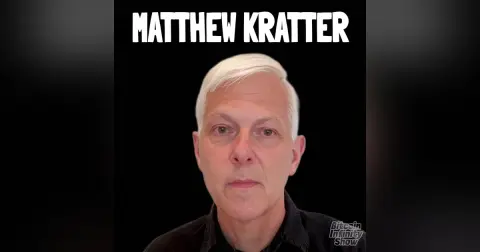
Bitcoin Core Has Been Compromised | Matthew Kratter | BIS #203


 Fountain

 YouTube

 Spotify

 Apple Podcasts

 RSS Feed
Matthew Kratter joins the Bitcoin Infinity Show to talk about the escalating fight against spam on Bitcoin, why he believes Bitcoin Core has been compromised, and how the pleb migration to Bitcoin Knots has gone from 1% to 25% of the network in under two years. Kratter walks through the case for BIP-110 as a temporary soft fork, explains why mining pool centralization is the structural problem underneath everything else, and shares his own setup for renting hashrate at industrial scale from home using Datum Gateway and Ocean. The conversation also covers the rotting culture inside Bitcoin Core, why slaying our heroes still matters when figures like Adam Back behave erratically, and what self-custody, sound money, and Bitcoin sovereignty actually demand from us when the protocol itself is under cultural attack.
Connect with Matthew:
https://www.bitcoinuniversity.com/
https://www.bitcoinuniversity.com/mining
Connect with Us:
https://www.bitcoininfinityshow.com/
https://bitcoininfinitystore.com
https://twitter.com/BtcInfinityShow
https://twitter.com/knutsvanholm
https://twitter.com/lukedewolf
Thanks to our sponsors - check out their websites for info:
Firefish: https://firefish.io/ - Use Code INFINITY!
Bull Bitcoin: https://app.bullbitcoin.com/registration/infinity
BitBox: https://bitbox.swiss/infinity - Use Code INFINITY for 5% off!
Bitcoin Adviser: https://content.thebitcoinadviser.com/freedom
The Bitcoin Infinity Show is a Bitcoin podcast hosted by Knut Svanholm and produced by Luke de Wolf.
The Freedom Footprint Show is a Bitcoin podcast hosted by Knut Svanholm and Luke de Wolf.
In each episode, we explore everything from deep philosophy to practical tools to emit freedom dioxide to expand your freedom footprint!
00:00 - Introduction to Matthew Kratter
01:37 - From academia to TradFi with Peter Thiel
06:18 - Matthew's journey to Bitcoin in 2019
08:22 - René Girard's mimetic theory
17:10 - Bitcoin culture and questioning authority
28:52 - The problem of spam on Bitcoin
38:02 - BIP-110: A temporary soft fork to fix spam
54:00 - Woke influence and Bitcoin Core devs
01:10:00 - Decentralizing mining with rented hash
0:00 Matthew Cratter, a warm welcome to the Bitcoin Infinity Show. Lovely to have you here. I've been wanting to do this for a long time. Likewise. It's great to be here, Knut. Thanks for inviting me. Yes. You are one of those Bitcoiners that, to me, is made out of the real material, like a true Bitcoiner, acting the part and doing whatever is necessary and not worrying about, you know, reputation among certain circles or whatever, just speaking your mind. And I truly respect that. Well, I appreciate that. I think I've gotten lucky to sort of falling in with some really good Bitcoiners who have guided me and sort of showed me the ropes over the years.
0:45 yeah uh anyway for for for those of our listeners who don't know who you are i mean you you run a daily show on youtube and x called the bitcoin bitcoin university uh there's no v there it's just bitcoin university but it's technically uh technically called matthew cratters bitcoin university which um which is done which is done sort of consciously because i feel like only satoshi could run or probably in a decentralized protocol even satoshi shouldn't be running the university, but it's my take on a Bitcoin university. Yeah. So tell our listeners a little more about yourself. Where did you come from? How did you find Bitcoin? Who are you, basically? And why are you doing, we'll get into why you're doing the things you're doing later, but first a little introduction, please. Yeah. So I think there've been sort of three epochs in my life. And the first one, I really started off as an academic. And that's served me well over the last couple of years too, just the ability to read lots of material and do deep research and synthesize it. So I studied music and English literature, music composition, English literature at Stanford University. It was a bad job market in the early nineties. So, and my interest sort of shifted to doing a PhD. So I did a PhD in English literature at UC Berkeley. And as part of that, I had a very, a really wonderful mentor named Professor René Girard, who is a Stanford professor. He was eventually inducted into the
2:17 Académie Francaise, but just a wonderful philosopher. And it's been interesting to see some of his work infiltrate Bitcoin circles. And so I focused, sort of hung out with that group. Simultaneously, I became interested. I was living in the Bay Area, obviously. A lot of my friends had gotten into trading and investing, and this was sort of the beginning of the internet boom and then the internet bubble. And so I started playing around in my free time with trading. I was a graduate student. I was working on my dissertation. I had a $15,000 Mellon grant. And so there's this progression where I gradually, and this was the beginning of online brokerages. There were platforms like Daytech and MB Trading and various things that people who were around back then would know about. I became very interested in trading.
3:05 It sort of began to take over my life, the markets, just reading about them, participating in online forums. And so there's this confluence of events where I was very into these Girard circles, attending a weekly chat with Girard and his disciples, essentially. And one of the guys who was there was a guy named Peter Thiel, who Noah knew who he was back then. He was running a small macro fund and he sort of pivoted that macro fund into, I think he invested all of it into PayPal. And then obviously people know who Peter Thiel is now. But we share these sort of common circles.
3:45 And as part of these weekly or biweekly Girard meetings, Peter and I just were hanging out. This was before, I like to say, it was the last time I had more money than him, though we both had no money whatsoever. we started hanging out and I slowly figured out that he was running this macro fund and we began to compare notes, et cetera. And I showed him what I was doing. I was doing mainly systematic trading. There were a lot of market inefficiencies back then that one could exploit. And so it was a very interesting time when a lot of trading systems still work. And so when Peter sold PayPal in 2002, sold it to eBay and basically took home about $50 million in his Roth IRA. He rebooted his hedge fund, which had been called Teal Macro, and he rebooted it under a different name, which was called Clarium, Clarium Capital. And I was lucky enough, he basically hired a lot of his friends, and he and I had already been trading notes about macro and systems trading for about five years at that point. And so I did end up finishing my PhD in English literature. I never went on the job market. I was basically making so much money trading, especially in the late 90s, that there wasn't, I sort of got distracted. And so basically Peter took me under his wing and it was a real hodgepodge group of people. We had math professors, we had physics PhD dropouts.
5:12 it was a lot like Bitcoin circles, actually, just a lot of weird people, weird, really smart people. And so it was kind of a continuation of it almost felt like grad school, but getting paid because I got to sit around and talk about cool things. So that was sort of how I made the transition from aspiring professor academic to trader in the hedge fund business. And I was basically very involved in TradFi up until I just, there, there've been some accusations that I'm somehow a Peter Thiel puppet. Uh, so I, I should probably add the, the, the, the, the, the footnote here that, um, I was last on Peter's payroll in, in 2006. And, um, I've spent a lot of the last few years fighting against Peter Thiel projects, for example, like Ethereum, which, uh, I believe Peter funded Vitalik with one of his, um, drop out of college, get a hundred K, uh, fellowships. And that's, that's the money that Vitalik Hughes to support himself while he was developing Ethereum. And I've also been attacking various teal investments like Palantir and of course Citra, which figures into the story.
6:18 I played around with Bitcoin. I first knew about it in 2011. I sort of moved in some libertarian circles in the Bay Area. And one of my friends, it wasn't Peter, told me about Bitcoin in 2011. I took a look at it. I saw it was trading for about a dollar a coin. And I remember telling my friend, I could, you know, I could put $10,000 towards this, which would be 10,000 Bitcoin, obviously, but I don't think it would really move the needle on my net worth. And I, what's Mt. Gox and how do I even buy this stuff? And it's, it looks like a, it looks like some sort of Ponzi or, or too low bubble to me. And so I basically ignored Bitcoin. I traded it a little bit. I think you can still find old videos on YouTube of me trading Bitcoin, you know, buying at 15,000, selling at 15,500.
7:04 But it was really the third quarter of 2019 when I was already running the precursor, the predecessor to Bitcoin University, which was Trader University. And I just began to, this was a time of the repo crisis, the third quarter of 2019. And it finally occurred to me, I finally saw that this was actually a macro instrument that could be used to hedge against monetary debasement. the whole store value use case. And so I began to, I really began buying and holding, hodling in the third quarter of 2019. And then my channel really was a fairly small channel. Even at that point, it was probably 7,000 subscribers. And then COVID hit the lockdowns.
7:50 Everyone was trading GameStop and watching YouTube videos about trading. And that's when my subscriber growth began to, it really went from like 7,000 in 2020, went from 7,000 subs to probably 150,000 subs, something like that. And then ever since then, it's really sort of taken over my life and it's a labor of love. And it's my main focus now making these daily videos on YouTube. So really been class of 2019 for Bitcoin. What was the name of the philosopher, Ian? René Girard. My very poor French actor. Yeah. And what's his main philosophy? Like what's the TLDR on his philosophy?
8:31 So he is one of these kind of old school intellectuals who was synthesized a lot of different fields. So he works, he basically began analyzing desire, what he calls mimetic desire in all the famous French novelists like Proust and Dostoevsky, et cetera. And this idea of mimetic desires that we don't only imitate other people's behavior, but we also imitate their desires. And so you have a convergence of desires on the same object, on the same girl. This is the plot of every movie or novel. And this leads to conflict. And then he sort of pivoted into anthropology and did some deconstructions of Claude Levy Strauss and came up with something called the mimetic theory, which is a synthesis. It's almost like a 19th century project where people still believed that you could synthesize the various fields in the human sciences or the humanities.
9:26 And so his writings encompass violence in the sacred is a famous work that really catapulted him to fame. But he writes about human culture, which I think the stuff I've learned about him has been very helpful in that. He writes about scapegoating and how scapegoating is a generative mechanism that leads to religion, basically, that leads to primitive religion, and that you can trace the origin of myths, rituals, and various things like this to these generative, through scapegoating, which gradually became more ritualized. Yeah, I love that kind of stuff. I mean, Richard Dawkins, The Selfish Gene, had a big impact on me. And the word meme, I believe, originates from that book written back in 1976, the year of my birth. And his observation is that ideas propagate just like genes do. So whatever idea survives, survives, or the most adaptable one where it's not survival of the fittest, it's sort of more like survival of whatever survives.
10:33 But if you are fit for your environment, that you have a higher likelihood of doing so, which is how genes work too. And I just find the whole thing fascinating because you mentioned religions and stuff. It doesn't really matter how good the idea is if it has the properties required to propagate and survive. So suicidal bombing, for instance, can be a very detrimental idea to the individual subject holding the idea, but it can still propagate because it can inspire others to do the same stupid, thing. Yeah, I'm very fascinated by that stuff because I think that's how in Bitcoin too, of course, you see all these bad ideas propagate, not because they're the best ideas, but because they have other ways of attracting people and especially gullible people. I mean, that's why we have these NFTs and monkey JPEGs and stuff. So I think there's a parallel there somewhere.
11:32 Yeah, there's one further note to that, which makes it especially interesting, is that Girard was a traditional Catholic. So his critique of religion is, you know, it's not some Christian triumphalism, but it basically, his idea was the reason we understand what a scapegoat is. because if you read, you know, you read a lot of the Greek philosophers or you read stuff before the time of Christ, this idea of the scapegoat doesn't really exist. And we know what a scapegoat is. Scapegoat is usually it's someone who's innocent whom the crowd thinks is guilty. And so his idea was this.
12:14 There's this was all sort of revealed at Christ's crucifixion. And so this idea, the reason we can say, oh, he's being scapegoated or, you know, that guy's innocent. and he's just a scapegoat, that this is a very modern Western thing that is a derivative of the Christian revelation. And this is one of the things that made Girard so interesting is because he, and this is one of the reasons that Bitcoin is so interesting too, because it just goes across so many fields. So Girard, we spent a lot of time on Christian theology as well, as well as studying more traditional sort of anthropological religions, you know, primitive people religions. Yeah. So there are no examples of scapegoats before Christ, like in anything?
13:00 Well, there are. And one of Girard's hypotheses is that at the center of every myth is a human being, or most myths, you have things like Orpheus and, you know, is torn apart, is an actual human being. At the origin of every myth is an actual human being who is lynched by a crowd. And the way they tell this story is they tell it in a very particular way where they don't say, they say basically there was a societal crisis, what Gerard calls a mimetic crisis. There's this tribal crisis. And then we realized there was this old woman who was putting a curse on everyone in the tribe.
13:42 And so we all got together as a village and we all murdered her. And then there was peace and prosperity in our village And so from their perspective the woman really is guilty She actually a witch And we seen we obviously seen modern versions of this in Salem et cetera But the more modern basically derived from the Christian scriptures version of that is she was just an old lady who was kind of weird and she wasn't casting. And magic doesn't, magic doesn't really exist. She wasn't casting spells on that. And so Sherrard has this whole take on the history of science. And it's once you, once you understand that it's not the witches that are behind the weather, etc., then you can end up with people like Francis Bacon and the scientific method and various things like that.
14:28 I've actually experienced similar phenomena in group psychology situations. I think you know a bit about my background, that I used to be in the shipping industry. So I've been in a lot of crews on ships, a part of a crew, and you're maybe 20 people or even less than that, maybe 10 people in the base crew living together for a couple of months. And I've been through that over and over again through like half of my career. Oftentimes, I found it very interesting that whenever there was an obvious person to blame for like everything in the crew, because you had a person who was worthless at basically everything and who just nobody liked, then that sort of welded the rest of the team together more than if that person hadn't been there.
15:19 Because if there was no such person, everyone was blaming everyone for everything. But when we had a scapegoat, for lack of a better term, then that actually made the rest of the team stronger in a sense. And I found it kind of disgusting, but very fascinating at the same time that that was the case. I don't know. Have you experienced something similar? Oh, definitely. This is a common human dynamic where we... it's almost like a shelling point where you unite ourselves around a common enemy. But, but what doesn't happen in modern times, you had these experiences on these ships. It didn't lead to a new religion. You didn't, you didn't tell the, you didn't, you're not still telling the story of this, this cabin rat who you guys threw overboard and then the, the, the sea was no longer rough.
16:07 And, but we, we have lots of, we have lots of versions like this. And what's very interesting, there's some versions, there's some sort of transitional versions where the illusion begins to wear off. In 100 AD, 200 AD, some of these texts where you can see this guy is being lynched and there's still some sort of magical properties ascribed to him, but the veil is beginning to wear thin. And people are saying, oh, it's just some poor old man that the crowd is lynching. So these human dynamics remain the same. But what I think Girard did a really good job of was showing this path, how desire leads to rivalry, can lead to actual conflict, and then the relationship to what the anthropologist described in a fairly different way.
16:59 Yeah, heavy stuff. Very interesting, though. I'm thinking, how do we segue this into core versus knots and BIP-110 and all of that? One obvious connection was just, I mean, what I've always had is this sort of love of people who deal in interdisciplinary ways with things and are not dogmatic and they just don't want to do economics like Keynesians or they don't want to. they're just focused on software development and they don't understand economics. Like this is obviously a problem, a problem in Bitcoin. But I think that's one of Bitcoiners' great strengths is they're just a lot of people like the Nick Zablos of the world who are just polymaths.
17:50 And I've always been attracted to people like this. And that's why I hung out in Girardian circles. And I felt very at home once I began to meet Bitcoiners, you know, like yourself, who just dabble in a lot of different areas and are not afraid to, you know, Bitcoiners were very good during COVID, for example. Like we weren't intimidated by the fact that we didn't have MDs, that we could actually just look at the data and decide things for ourselves. And maybe this is something that Bitcoin, Bitcoin may have lost a little bit in the last, in the last three years, people willing to trust, willing to trust the experts. And I've actually felt, I was thinking about this this morning, this whole situation we're in really, at least for me, feels a little bit like COVID where there are these really obvious, there are these obvious lies out there.
18:37 People are repeating them. People are unwilling to, people say, you know, trust the experts, trust Adam Back, trust Greg Maxwell. You know, who are you to criticize them? And, you know, they were right about all the, you know, they're great guys. They contributed a lot to Bitcoin, but they've gone wrong. Just this willingness to question authority, I think is so important. So Maybe there's a connection there. Absolutely. And I mean, I think that Bitcoiners still question authority. Maybe the Bitcoiners you see on the internet don't do that as much. But that doesn't mean that the ones that were on the internet back in 2017 don't exist anymore. I think they're still out there. And this is what gives me hope that we will still be resilient enough to resist more sneaky attacks on the system than just blatant attempts at trying to copy it and creating the new shitcoin and stuff.
19:30 But there is more dangerous stuff for sure. I mean, this is why I fell in love with this community in the first place. Not only Bitcoin as the technology or the idea of absolutely finite money. And I fell in love with that, of course. But I fell in love with the community because no one was safe. We were always ready to slay our heroes if they fell out of line and said something stupid or something inappropriate in the context of we're trying to save the world with absolutely sound money here. Like, why are you falling out of line? No one was safe. Except there's a small anecdote from Baltic Honeybadger in Riga 2019.
20:13 I noticed how no one was saying anything about Andreas Antonokoulos, and he had just released Mastering Ethereum. But sort of everyone at the conference was orange-pilled by Andreas because he was really the only person on Earth doing orange-pilling back then. Maybe a handful more like Max Keiser and Trace Mayer and people like that. But Andreas was by far the biggest one, especially here in Europe. I still think he's the greatest. I still think he's in spite of the eventual path he took, his early videos. I learned a lot from him just watching him on YouTube. Yeah, I absolutely agree. And he had a huge impact on me and not only about Bitcoin, but I also saw a potential future.
20:57 Maybe I can do this. Maybe I can travel the world and talk about this stuff. So he was a great inspiration, and that's why it was so disappointing when he released this book about Ethereum. Because to me, Ethereum was like, it was obvious from the get-go that this was a scam, a copycat thing at best. But 70% pre-mine and all of that, it was all there. The signs were on the wall. But no one at the conference dared to touch him, even though everyone was proud of having slayed whoever else that got into Bitcoin. Was he at that particular conference? He wasn't. I've never met him except online. So, yeah, he was the teacher in a class I took in 2016 about digital currencies.
21:39 Amazing. Plural. Yeah. Well. University of Nicosia online course. Oh, interesting. This is a little bit more forgivable in 2016. It's like the same thing in 2026 is like a whole different story. Yeah, but this was 2019 when he released the book. So at that point, it's sort of not forgivable or not as forgivable anyway. But it's just an interesting, to me, that the phenomenon was interesting that we were willing to slay a lot of people, but Andreas was sort of untouchable, sort of like Saylor is now. I mean, I think there are a lot of Bitcoiners that don't dare say what they think about it.
22:19 I mean, he's doing his thing. It's not the thing I would do in Bitcoin, maybe. I have my views on that. You know, paper Bitcoin is paper Bitcoin and so on and so forth. I have no grudge or beef with him. I think he's been a very kind guy the few times I've met him. But I do think that people are self-censoring in a sense. not not only sailor but other prominent names and they they don't as you say they they say how dare you question this or that guy and there's there are large amounts of like andreas wasn't uh i i don't think he was ever a billionaire and he he wasn't uh he wasn't giving people jobs and he wasn't funding startups and in in the same sense that some people like you know if you uh you don't maybe you don't want to offend some of these fairly wealthy people in Bitcoin today.
23:16 So it's that added thing. And also, if you're an influencer too, I think there's this calculus. If you're a Bitcoin influencer, there's this calculus, which is unfortunate. There are a lot of Bitcoin influencers now who do this calculus in their head. like if I cover this topic, will the engagement be worth it? The clicks, the social media engagement be worth it? Or will it cause, you know, will I not get invited to this conference? And there's, there's some sort of, rather than what is, what's the absolutely right thing for Bitcoin? And what's the right thing for my life savings?
23:57 Because I have all my life savings or almost all my life savings in Bitcoin. And sometimes worry about some of these inflow. It's just like, do you really own any Bitcoin? Because you don't seem too concerned about what's happening. No, it's definitely a problem. And I see a lot of this, of course, because I do a lot of conferences. I travel around a lot. And I'm sort of doing this for a living. So I feel the incentives. Oh, yeah, they're hard. And I'm thinking, like, I just hope that my integrity is still intact after all these years. I think it is. I think I haven't fallen out of line. There's this dilemma between being 100% cypherpunk values and never touching toxic stuff with a 21-foot pole.
24:44 And on the opposite side of the spectrum, you have a full diplomat that talks to everyone. And I think you have to find your specific position between the two, especially if you're doing a podcast like I am. I can't just be rude to people. I wouldn't get much information out of them in that case. No, that's true. And I think it is important to talk to the quote-unquote enemy or, you know, people on other sides of the Civil War. Because ultimately, you know, I would have the back of most of these people if the U.S. government, for example, starts putting all of us in jail.
25:25 And, you know, it's where we really are on the same team. And from an outsider, when outsiders look at us, they sort of wonder what these squabbles are about because we have so much in common. But that being said, you still have to, there are, I would have to say like in the Bitcoin space, I've met the best people that, the best human beings that I've ever met. And I've also encountered the worst human beings that I've ever met. So it attracts just really great people, but also sociopaths and psychopaths who see an opportunity because there is a lot of money here. There's people trying to make a name in Bitcoin.
26:08 And so it's this weird paradox of all the best and all the worst people. I've experienced exactly the same thing. This has been my observation since day one. The thing that comforts me is that it seems to be the ratio of good people to bad people seems to be higher at the Bitcoin conferences these years than not all the Bitcoin conferences. Some conferences, let's not name them, but some conferences go the other direction. Some of them American. Yeah, it's interesting. And these dynamics, I bet they will always exist because of how powerful Bitcoin is. It will attract psychopaths. Money has always attracted psychopaths.
26:50 And deciding about money, that's where the psychopaths on top come from. They urge to want to do that. We wouldn't have money printers if that was not the case. Of course, it's going to attract those kinds of people. And it's just something we're going to have to live with and weed them out continuously. Yeah, it's very true. You should check out firefish.io The open market for bitcoin backed loans Where every single user stays in control Cause their security is all in the code While you're at it, go to bitbox.swiss The hardware wallet, cypherpunks cannot diss The Nano 2 is something you cannot miss Knowing that your sats are safe is a bliss Bobecoin is a non exchange Their wallet's pretty based even though it's half French Francis, Dave and Madix and I are good friends So check them out, they're cool and super not gay And the Bitcoin Advisor is great.
28:16 Go secure your funds before it's too late. Multi-sig inheritance planning can't wait. When you got some shrimp on the barbecue, mate. So go check out firefish.io. bitbox.swiss, bullbitcoin.com, and the Bitcoin Advisor. And use code INFINITY everywhere. Brush your teeth. Yeah, so let's get into this. I mean, I've been following your Bitcoin, Matthew Kratus, Bitcoin University, religiously for at least the last year.
29:01 I watch it every day, and I really like what you do. And pointing out stuff. The whole thing, the things you've been talking about the last year is, of course, the core versus not fight and now lately BIP 110 and why people should signal for BIP 110. So in short, where to begin here? So in your words, because people are bored of mine, why is spam on Bitcoin a problem and why should we do something about it? Well, spam is a problem in many areas, especially in online areas. So spam is a huge problem in email for cell phones. And spam has been a problem since the dawn of the internet. And certainly, spam has been a controversial issue since the original spam wars, which were called the Opperturn Wars in 2014. And at that point, the Bitcoin community was much smaller. And there was this consensus. I made a video called Bitcoin Culture Has Always Been Against Spam. There was this general consensus that what various meta protocols like counterparty and omni colored coins were doing was um was degrading bitcoin as a monetary network and you had um you had uh eric vorhees satoshi dice spamming the chain with this these these small dust outputs and basically the community came together bitcoin core was really leading the charge at that point which is the the
30:34 main node software, or at least was back then. And they basically said, this is abuse of the blockchain. The blockchain is this sort of commons. We've all heard of tragedy of the commons where people, everyone can pursue their own self-interest. But if you're letting all the cows graze in the commons and there's no more grass and it gets overgrazed or whatever the metaphor is, then it ends up hurting everyone. And spam is a similar problem. It's a problem of the tragedy of the commons, spam interferes with spam, which is basically non-monetary transactions on Bitcoin. It competes with monetary transactions when it comes to transaction fees, when it comes to block space.
31:16 It fills up our storage. It bloats the UTXO set, bloats our, you know, makes the RAM requirements for running a node much higher. And so what basically happened in 2014 is this thing called OpReturn was introduced. And it was basically designated by the community and by Bitcoin Core as the place to put a small amount of non-monetary data. So, for example, the hash of a much larger amount of data. You could take the Declaration of Independence and run it through a SHA-256 hash and end up with a 256-bit output, which is sort of the fingerprint of the data.
31:58 That's about something like 32 bytes. 32 bytes, so they set up Opperturn to be 40 bytes. So you could put some sort of hash in there that would function as proof of existence for a certain amount of a certain piece of data at a certain point of time. So if I put it, these hashes are very unique. They are like fingerprints. And so it's a way of proving that I had something. I had a certain thing at a certain point in time that produced this hash. And then you just put the hash in the OperaTurn. So OperaTurn was designated as, and this is what a lot of people miss, is that there are infinite ways of embedding data in Bitcoin or non-monetary data. But there's one way that's been there really since the beginning or since the early year, since 2014, that was the designated place to just put a small amount of arbitrary data or non-monetary data.
32:47 And then like all things, this is a little bit like the U.S. income tax, which started off at 1% for just the wealthiest people. And now I don't think there are any Americans paying such a low income tax. So then it moved up. And the same happened with op return. So it started off at 40 bytes. And then about a year later, it was moved up to 80 bytes. And then where our story really takes off was in last year when Bitcoin Core decided to basically remove the cap on data carrier size, which had been at 80 bytes. And the result was the maximum amount of non-monetary data you could put in this designated space that everyone agreed. You can go to ChatGBT or Grok and say, you know, what's the designated space for non-monetary data? And it's opportun. So this I want to emphasize this is a special space, just given the sort of precedent.
33:42 And so what Bitcoin Core did is they blew it open from 80 bytes, not to 160 bytes or 200 bytes, but to 100,000 bytes, effectively capped by the cap on transaction size. Yeah. And if I may interrupt, just filling in the blanks here, you can just add some information to this. you can store all the information in the world in one hash if you just make a tree of hashes and hash that. So you can make a hash of a hash of a hash. You can just put it as the input and hash it. Yeah, exactly. So the point is that the only thing you can prove by putting something in a Bitcoin transaction is that that information existed at that point in time or rather at that block height.
34:28 So that's all you can do. You cannot own information. You cannot really do anything else with it in any real way. But the scammers tell you you can. And now, for some odd reason, they changed the Mempool policy to 100,000 bytes, which is just inviting spammers to use Bitcoin for other things than monetary transactions, in other ways, interfering with Bitcoin's original purpose. And they did this under the shadow of Bitcoin affinity scam companies like Citra. So we had a certain Bitcoin core dev who was actively talking to the people at Citra. And Citra was saying, well, we might need to put fake pub keys into the blockchain.
35:13 And so part of the reason for uncapping Op return was a dialogue happening, I believe, in New York City, sort of these same social circles, people moving the same social circles, crypto and Bitcoin people. And so that's another disturbing part of it. But the really disturbing part is Citray, all they really needed was, I believe, 160 bytes. My impression is Bitcoin Core has gotten a lot lazier over the past few years. And so I think that was one reason they just decided to rip off the Band-Aid, as maybe Gloria's outputed. And just instead of raising up return the need to raise it again, they did it all in one fell swoop. and they did it in the face, the significant things they did in the face of really significant community opposition. And there was a lot of funny business around the GitHub repo where they would let people approve the proposal. Then they would close the repo when people tried to disapprove it, et cetera. Various people like Bitcoin Mechanic were banned from the repo. So there's a lot of political engineering going along with it. And it's still not really clear. We tried to be as adversarial when it comes to thinking as possible. One of the problems with doing this is basically, as they put it, opening or increasing the size of the garbage can.
36:30 Maybe we shouldn't have any garbage cans on Bitcoin, but the idea was give people a garbage can where they can put stuff and then they won't put it in places that can be more harmful to the protocol and end up in the UTXO set. The problem with this is they opened wide and one big attack surface, namely op return, moving it from 80 bytes to 100,000 bytes. And they didn't close an attack surface, which was much cheaper, which was 75% cheaper, which was the inscriptions bug or the inscriptions exploit, where you could put, and this is, people have probably seen Bitcoin NFTs called inscriptions. There were tokens on Bitcoin called BRC20s, and these were all, These never used op return to begin with.
37:16 And so the weird, the sort of weird thing is they closed, they opened up, they made one garbage can much larger without closing or narrowing the other garbage can and doing something about the inscription's exploit. And so it's basically any of these things taken by themselves are not suspicious. But when you take them, when you put the whole thing together and then you see how certain people are behaving these days, defending the changes, you don't have to be too adversarial to realize that there's a problem. And that we may be, I think we're almost certainly under attack. Bitcoin is under attack by this. Yeah, so it's hard to know what forces led up to this point.
37:56 And I mean, BIP-110 is trying to fix the problem at least temporarily. I mean, the reason I like it is just its temporary nature. I probably wouldn't have been pro-Bip 110 if it had been a permanent thing, since it's controversial. But its temporary nature makes me like it, because I like the whole notion of giving a middle finger to these people that are doing the damage. Was Bip 110 just a reaction to Core V30, or do you think it would have happened anyway? What are your thoughts there on the root causes of Bit.1.10, why it's now on the table?
38:39 I think it's basically an escalation. So to go back to 2014, we had a situation where we had these spammers attacking Bitcoin. But fortunately, back then, we had sane Bitcoin Core devs who were willing to fight it. This time around, we had a problem, though, because Bitcoin Core was basically in 2025, has been siding really since 2023 when the inscriptions exploit was opened up. Has Bitcoin Core itself, the reference implementation, the node software implementation that still has the largest market share was siding with the spammers. And so you have this situation where there are a number of factors.
39:20 You have, and probably the biggest structural factor is just mining pool centralization. So currently, there are only five or six companies that get to decide what goes into 90% of Bitcoin blocks. And what this means is most of the blocks, 90% of the blocks are mined by these small groups. And so what you can do is you can, if you have a really well-connected node and you're a bad actor, you can collect spam transactions and you can send them directly to one of these mining pools. Now, the reason this works is because these mining pools are highly centralized. They produce a lot of blocks, like Foundry, for example, produces, they have about 30% of the hash rate, so they produce about two blocks per hour.
40:05 And so if you submit your spam or if one of these bad actors, for example, the people, in my opinion, running Libre Relay, Peter Todd's creation are bad actors. Basically, you have these highly connected nodes and then you have nodes running node software like Libre Relay, which really doesn't have any mempool filters. If it's consensus valid, it will send it, it'll pass it on to other nodes and pass it on to miners. And so you have this situation where you have Bitcoin Core siding with the spammers and scammers. You have a number of bad actors, some of whom are closely aligned with Bitcoin Core, running these highly connected nodes, what's called preferential peering or using Libre Relay, and creating these superhighways for spam directly to the miners.
40:49 None of this would be possible if every miner had 0.1% of the hash rate. And so there'd be no way to direct it to one of these pools. are, you know, there have also been these direct submission services. For example, the American miner, Mara, has been, they had a direct submit, they basically had a website where you could upload your spam and they would put it in a block. Now, Mara wouldn't be able to offer this if they didn't have so much of the, they had something like 5% of the hash or so. And so this is the context. We were able to fight spam at the mempool level with filters. Mempool level is just what nodes relay. And mempool policy is always much, it's always much tighter than consensus.
41:32 Consensus is what ends up in Bitcoin blocks And so we were able to fight it at the mempool level in 2014 But when in 2023 to 2025 and to the present we have a hostile Bitcoin core has basically gone rogue. They're siding with the spammers by doing nothing about this and by actually opening up new attack surfaces by raising the op return limit, raising data carrier size. And so the problem is we have the mining pools are not responsive. They're putting all this junk in the chain And one of the most ancient Bitcoin principles is you put as little on the chain as possible. Bitcoin's a monetary network. It's not a data storage network.
42:14 And this is what Bitcoin Core used to argue. People like Peter Woollah. Peter Woollah used to say, there's a famous quote that Ghost of Unhosted Marcellus has pinned to his Twitter, to his ex, where Peter Woollah is saying, we should use compressed pub keys for this, not uncompressed pub keys. because uncompressed pub keys take up more block space and there's no benefit to that. But fast forward to the present, we have all this block space. Currently about 40% of block space is going to non-monetary uses, going to spam. And Bitcoin Core doesn't seem to care about this. The big mining pools don't care about this. And then you have these hostile node runners, these bad actors that are willing to create a pipeline of spam directly to these miners.
43:01 So it's very complicated. there are many factors here. And so in the context of that, if you're a Bitcoin node runner and you don't approve of this, and there are quite a few of us, there's at least 20% of the network that doesn't approve of this. What exactly do you do? Mempool policy breaks down because you have what's called the tolerant minority. So if something like 5% or 10% of node runners are okay with spam, it's very, very difficult to stop it. And then mining pool centralization exacerbates this. And so node runners who want to abide by traditional Bitcoin culture, which is anti-spam, which is trying to have the smallest on-chain footprint possible, we're basically left with no choices except the functionality of being able to soft fork.
43:48 And soft forking is one of the powers that node runners, that node operators have. And it's not something that is invoked very frequently, but it's the next level of escalation. And so spam is best dealt with using manpool policy. But if you have mining pool centralization and you have a hostile reference implementation, namely Bitcoin core, the next step is to contemplate some sort of soft fork. and the milder version of a quote-unquote permanent soft fork would be a temporary soft fork which is what BIP-110 is so it's temporary because it automatically expires at a certain block height so it will activate BIP-110 will activate at the latest in September probably around Labor Day of this of this year and then when it activates there'll be a certain block height approximately one year after that when the soft fork will expire and the rules and basically everything will revert to where it is now. So it's a fairly conservative way of doing things if it causes various problems, which I don't expect it to do, because basically what BIP-110 is doing is basically just returning us to those pristine days of 2022 before the inscriptions exploit, before BRC20 tokens, before this whole runaway train just got started, being promoted by Bitcoin conferences, being funded by the same Bitcoin VCs and crypto VCs who fund these spam companies and then promote them at their conferences.
45:22 This thing has been a runaway spam train. And so what this does is it presses the pause button. And it also, it's a reminder to people that, I guess if there's one takeaway I would like listeners to take away is that culture, and given my background, my humanities background, you might expect this from me, but culture is very, very important. And in Bitcoin, I would say that culture is upstream from consensus. So consensus are the rules of Bitcoin, what can end up in a block, what can be mined. But there's something more fundamental than consensus, which is culture. Culture, I would say, is a leading indicator for consensus.
46:03 So if you want to know where consensus is heading, you can look at the culture. And Bitcoin culture right now is very sick. It's focused on Bitcoin treasury companies. It's focused on turning Bitcoin into Ethereum and introducing smart contracts and adding a lot more bigger on-chain footprint. Bitcoin treasury companies, spam companies, and then of course, this huge emphasis on fiat and stable coins. And so Bitcoin culture is being infected by fiat culture, which is inevitable because fiat culture has the money printer. So it's very hard to fight against. And so the escalation here is from mempool policy to temporary soft fork. But the most important thing is, and the takeaway I would like everyone to have, is that culture matters.
46:47 And so if you want to fight spam, you have to have a cultural attitude that is against spam. And so that's another thing that BIP110 does, is it basically puts on notice all these people who are spamming the chain and bloating the chain with NFTs and scammy tokens, puts them on notice that this is not welcome. The last couple of years have been an anomaly. We're returning to fundamental principles. Bitcoin culture has always been against spam. And so now we're willing to put some teeth into it. And so that would be – so that's why I think it's the next logical step in making it temporary.
47:30 There are a couple of technical reasons to make it temporary as well. One of them is that if you make it permanent, to undo some of this stuff would possibly require a hard fork. And so it's much better. The one rule in Bitcoin is you don't want a hard fork because you split the network. And it's a very hostile thing to do. It's important to recognize this is a BIP-110 is a soft fork. It narrows the rules. And it basically closes all these holes that spammer's been using, the most common holes, inscriptions, BRC-20 tokens, large op returns. And then it also forbids at this consensus level, at the level of mind blocks, a couple other holes that attackers haven't used yet, but will begin to use.
48:16 I sort of rambled there, but I guess the fundamental thing is you have to show the best way to fight spam is to be against it, not to lay down and be defeatist like Bitcoin core devs. Obviously, we can't expect the crypto VCs to police themselves because they're basically funding scams. But one way we can do this is we can drive the crypto VCs and their startups to other chains. So that's the great thing about the Operaturn Wars. We basically, Bitcoin Core's hostility to spam drove Vitalik out of Bitcoin. He went to his own chain. He started Ethereum. And he basically scammed there for a decade. And in retrospect, it was very nice to have this as sort of an idiot container for people like Vitalik who don't understand Bitcoin.
49:00 Unfortunately, a lot of these scammers were brought back to Bitcoin starting in 2023 by some of these crypto VCs. And so the most important thing is to fight spam at the cultural, at the social level. I think this is such a crucial point. There was one video you made mentioning this Vitalik himself tweeting about being treated, quote unquote, badly by Bitcoin Core and then voluntarily leaving. And there was also this other interview with some guy, I can't remember his name or the name of the company, but it was an interview by Isabel Fox and Duke, I think is her name. She is a lady who is quote unquote technical and funded by a lot of spam companies to interview other technical people in Bitcoin.
49:48 And all of her sponsors are like spam companies too. Yeah, I know. I know. It's hilarious when you look at it from that. But people who don't know that are at risk of falling for all the bullshit, right? Because it's technical. So therefore, it must be intelligent. Like, it's so obvious when you see it. But anyway, your video there comments on this. And there's this guy admitting that he wanted to build some smart contract platform or whatever tokenization crypto bullshitty thing on Bitcoin. But he chose to start his own chain instead because of the way he was treated. So the same as Vitalik. Do you remember the name of the guy or the company?
50:31 I don't. Anyway, you'll find it if you look at all of Matthew's videos here. I have to. So this is the argument against people saying that this is all for nothing because the spammers will just find other ways. Yeah, but the whole point is we are forcing them to rethink their whole business models and forcing them to... This will come with a cost to the spammers. It's not trivial to just start fooling people in different ways. If we put it in context to imagine if Google came to you for your Gmail and said, basically, you know, we don't really know what spam is.
51:17 These spam emails you've been getting, they conform to SMTP, they conform to the protocol. And so we're not going to. And the problem is, if we try to stop this form of spam, the spammers are just going to come up with a different form of spam email. So we're just going to do nothing. That's basically Bitcoin core in 2020. It's absurd. It's absurd. And spam is much worse on Bitcoin because it has to be stored forever, which is not true for your email inbox. I mean, it's like Google saying... You can pay like 20 cents to have your spam stored on Bitcoin for the next thousand years. Yeah. Yeah. But it's a really dumb idea if you think about it, because spam is parasitical. So we've all seen these trees, for example, where there's not much of the tree left. It's just completely covered with ivy because the ivy has choked it. And so the tree doesn't have leaves and the tree is dead. This is what spam does on Bitcoin. It's not just some aesthetic problem. The reason, basically, if you, so where it's something like 40, 45% of Bitcoin block space is non-monetary right now, there's a certain point at which that's going to break and where miners are no longer going to want to mine on Bitcoin simply because the block rewards with the Bitcoin they're being paid for mining is not going to be worth very much because the entire chain has become a non-monetary chain. And so Bitcoin as data storage fails as good data storage because when it becomes data storage, it's no longer good money, so you can't pay the miners. And so the system becomes insecure
52:48 and there's no one to stop people from rewriting the chain. So people don't really even game it out what this looks like. It is good storage, but ultimately if it becomes cloud storage, then it's not good storage either because there's no money to secure the storage. No, so it's so ironic. The more it's used for storage, the worse it becomes at being storage. Yeah. Yeah. And the opposite is true for it being used as money. The more it's used as money, the better it becomes as money. Anyway, the other thing that you've been talking about lately, and we had Hodlnod's wonderful second article here just yesterday, is about the rotting core.
53:34 And I'm super interested in how these things connect. So like, is core being more and more quote-unquote woke, how is that connected to them being more easier to influence into making decisions that are good for spammers? Like, what's the connection there? Like, yeah, do you have any ideas? I'm struggling formulating this sentence or this question, but like... Yeah, no, it's a good question. I think one piece of it that Hathalnot has done a good job of covering is there was this push, which in itself was admirable, this push to get more younger Bitcoin core devs.
54:15 Because normal people, they don't dream of growing up to become a Bitcoin core dev. It's just not even on, even Bitcoiners, it's just not even, it's a very small subset of people. And so there was this sort of push for diversity to get more women in the space and stuff, which, you know, I guess it's admirable at a certain level. There's nothing wrong with it, though you can ask yourself if there's not a lot of people in a space, certain kind of people in a space. Maybe it's just because they just don't want to work in that space. But Gloria Zhao is a great example of someone who is essentially groomed to become a Bitcoin core dev and then a Bitcoin core maintainer who actually had right access. Bitcoin core maintainers have right access to the repo and they can actually post these changes.
54:59 which is, and Gloria was the one, I believe she was the one who merged blowing open data carrier size last year. And she herself came from UC Berkeley, which is where I did my PhD. So it was a very woke place in the 1990s. And I sort of, I saw the origins of a lot of these places were sort of ground zero for the woke pandemic. You could already see it back then. And so when you bring people who are not organically interested in this, like I think that the path for Bitcoiners used to be more something like they've, I don't know who they read. They read Austrian economics or they read Ayn Rand and, you know, they're hacking code in their basement and they want to overthrow the government and they own gold and they know the story of the forming, the founding of the Fed.
55:50 Gloria Zhao was very different. She was a very mid developer, mid programmer who studied, I guess she studied computer science at Berkeley. But she was interested in Ethereum and she was teaching people how to do ICO scams. And so to bring someone like that in and the guy who brought her in was also dating her, which I will not. I don't know if he talks about that, but I've talked about that in videos. So there's some weird interpersonal stuff here. And there's just some conflicts of interest. Like the irony is leftists always talk about power imbalances and, you know, in the office, et cetera. And here we had a leftist in the form of John Newberry, who was basically he seemed to like young female devs.
56:30 And he dated them and then tried to get them into Bitcoin Core. And so there may be a connection there where you're bringing in someone like Gloria, who basically always looked down on Bitcoiners. She called them nutty Bitcoin maximalists. She said they're just a bunch of dumb carnivores. She had this sort of contempt. And so it's very inorganic to bring people like that into Bitcoin just to make it more into Bitcoin Core, just to make it more diverse, whatever that means. there's there's its own kind of diversity which I would like to see Bitcoin software, Bitcoin node software implementations return to which is just a bunch of really disagreeable people who have lots of different ideas and fight with each other this is the Bitcoin I know and love not people who are conformists, who are normies part of working at these offices and getting a job in Bitcoin Core and being funded, the two main offices, well, there are three, I guess, three offices, London, New York City, and San Francisco.
57:31 That selects, as people like John Attack have talked about, that selects for a certain type of person who's willing to live in a big blue city. And nothing against blue cities. They have great food and it's a great place if you're young for dating, et cetera. But there's a certain, you know, John Attack specifically said in one of his interviews that, you know, he's not interested in that and he's a little older. And so one of the things that comes with blue cities is you, and during COVID, you know, all these core devs got vaxxed and boosted and they had to go work in their offices. But this is very, you know, this is not what Bitcoin looked like in 2014, which admittedly was before my time. But I think that that'd be one connection between wokeness and I guess there's a certain permissiveness that comes with it to sort of there are there is the libertarian view of, you know, in praise of open borders.
58:22 Then there's the more kind of I don't know, there's more of a conservative idea that you if you if you allow if you allow everything. So, for example, if you're playing a game of chess and you let people play this, Kanza has this great analogy. If you're playing a game of chess and you let the checkers people play on your board, it ruins your game of chess. And so it seems like some of these people on the Bitcoin core side have this view of Bitcoin as just being this open, agnostic platform that you can do whatever you want to do on if you don't pay the fees. This is very different from the understanding Bitcoin is here to separate money and state and that it's a monetary network. And so I can see analogies between sort of open borders and a certain permissiveness and not understanding that it's not fascist to keep drug addicts out of your children's playground park.
59:20 basically, and you shouldn't let the free market decide it either. If you want your kids to be able to play there, you don't want needles all over the ground. You don't want people passed out. And a lot of the critique from the Bitcoin core side is very sort of amorphous like this, like, oh, let the free markets decide what Bitcoin is for. Let the free markets decide what your neighborhood park is for. And it's a kind of naive idealism that younger people have. And I was probably guilty of it myself in a certain age. That's another thing. Maybe you don't want all the maintainers to be from the same. You don't want them to all be under 30 and from the same funding organization. This is just common sense. Yeah, I think the people you refer to are more LARP-Bitarians than actual libertarians if you're against borders. I think libertarians are the Rothbardian view at least is that, yes, of course there should be borders and they should be enforced, but they should be private borders and not natural borders, or at least the nation states should be smaller and preferably city states and so on and so forth. But I don't think there's anything against borders in general. What I'm sort of fishing for here is like, is there an a priori thing here? Even I have this theory that the lower your time preference, the more utilitarian your principled view becomes. So if you're 100% principled, that means you have an infinitely low time preference and then being principled is utilitarian because it's good for your descendants and in in into forever um so i i think that there's something there i i the more principled
1:01:01 people are are more untouchable and harder to bribe so i do think there's a connection that left-wingers are more corruptible in general because they tend to be less principled. I mean, left and right is sort of a weird scale, I would say. It's a weird thing. It moves around a lot too. Like you have the left in the US hating working class people now, which has been this kind of strange political alignment Yeah and I mean the so right here in Europe is all about making the state bigger and employing more police officers And that's not really what I view as right wing.
1:01:44 It's about basically no political party anywhere wants to reduce the size of the state, which says something about democracy in general. No, that's very true. That's very true. Yeah, I mean, all of this and this stuff that has surfaced just the last couple of months here, it's truly concerning. And I'm just happy that Bitcoiners are not lazy. We are doing something about it and that we are reacting. To me, that is the immune system. I mean, proof of work is the mechanism we use to enforce the rules, but we set the rules like you're proving the work to us.
1:02:30 That's the whole point of proof of work. That's very true. And yeah, it's been very gratifying to see so many people dump Bitcoin Core and move to Bitcoin Noughts. So Bitcoin Noughts went from being 1% of the network early last year to 20, 25% of the network now. And it's really being driven by real people, mostly by family men figuring out how to run nodes at home. And it's a very grassroots organic thing, whereas I feel like the opposition is much more astroturfed as a result of groups that have a lot of funding and a lot of influence. And so there's sort of a populist or what we would call pleb uprising as part of this. And I think it's very good for Bitcoin to have plebs running nodes and plebs mining with those nodes and plebs following Bitcoin core politics and Bitcoin not's politics and understanding these things.
1:03:26 Because none of this, there are technical aspects, but with LLMs now, Bitcoin is just difficult because there's lots of different moving parts. Like a hash function is not that difficult to understand. You just have to. So I'd encourage everyone, everyone should be running a node, mining with it, and also learning how Bitcoin works, especially if you have a large percentage of your life savings in it. And there's been a push from the other side to look down on Bitcoin plebs and say, you know, leave it to that trust. You know, it's just like COVID, trust the experts. You're not qualified to weigh in on this. And that's part of the that's part of the capture. And it's it's it's worked against Bitcoin Core, because if you if you're a software maker and you despise your users, you expect to lose a lot of the users.
1:04:12 And that's what's happened to Bitcoin Core. Yeah. I urge everyone to go follow Matthew and go follow Hodlonaught go follow Daniel Prince follow Logan Mechanic of course listen to what these people have to say it's at least interesting I think the last couple days I've showed a really good test go go I'm sure Knut can put a link to Hodlonaught's articles to this pod and go read those two articles, the Capture and the Lever, whatever they're called, about what's happened in Bitcoin Core.
1:04:53 And then go take a look at how people like Shinobi, Mr. Hoddle, Adam Back, especially look at how Adam Back has been treating Hoddle Not on X and make up your own mind. Read the articles and then see if they're as bad as Adam Back or as full of pleb slop as Adam Back would leave you to believe. I think this is a very interesting exercise. And then you have to ask yourself the question, why is Adam Back, who's really one of the great guys in Bitcoin, has contributed so much and was in the white paper, why is he behaving this way now? And I honestly don't have an answer. It makes me really sad to see because in Bitcoin, we're supposed to slay our heroes. But you hate to slay people like Adam Back and Greg Maxwell, but they're clearly not the same people for whatever reason.
1:05:41 Maybe they've been compromised. Maybe it's hard to know when you're already quite rich as both of them must be. I guess intel agencies could threaten your life or your wife and children. So I have more compassion than anything else for these people. And it's bewildering to me what's happened. Yeah, that's a really dark theory. And that's a super scary thought that some of the erratic behavior is because people are actually threatened and their families threatened. I hope it's not true, but we had Greg Maxwell recently on the Bitcoin dev mailing list last year, basically saying UTXO set bloat doesn't matter.
1:06:22 And he's one of the guys for the past 10 years who has always been, there's a quote, I can't remember it exactly from Greg Maxwell from 2015 or 2016, saying basically demand for distributed perpetual data storage on Bitcoin is infinite. And so why is Greg Maxwell in 2025 and 2026 calling it distributed authoritarianism if we don't want to allow Bitcoin to fill up with all this arbitrary data? It just doesn't make sense how these people have changed their opinions. And so I come up with theories, which I hope they're not true, that they've somehow been compromised or maybe they're just not really paying attention or certain business deals are social.
1:07:06 It may just be a social, so much comes down to tribalism and social cliques where you don't want to attack your friends. And, you know, I don't want to attack my friends either. But I find myself in the weird position where I have my life savings in Bitcoin. Adam Back is doing very, very bad things, in my opinion, for Bitcoin. And so I attacking someone who always treated me very nicely in person a couple of times I met him And so it certainly nothing personal on my side But Bitcoin is I think there this misconception that Bitcoin is just magically constructed and it will always be anti-fragile and nothing can break it.
1:07:48 And this is just simply not true. Bitcoin is only as strong as Bitcoiners. and um you know bitcoiners get together and decide to raise the the max supply from 21 million to 22 million that's the death of bitcoin anyone you know the bitcoin community could do it at any point in time they'll probably only do it if the cultures become completely corrupted um but this is the this is i worry when i see people and i think my early videos contributed to this idea that there's something sort of magical or this sort of magical thinking about bitcoin where it can defend itself while we let very influential Bitcoin devs from yesteryear attack it and contradict their own take on blockchain bloat, et cetera.
1:08:31 So it's very important for Bitcoiners to understand this, that Bitcoin can die. I don't want to be one of those unethical people who's trying to like the quantum computing guys who are like, you know, if you don't fund my startup or, you know, move to this, do this fork, that Bitcoin's going to die. But Bitcoin clearly can, it can die by, it can die a death by a thousand cuts. And if we're at 40% block space is non-monetary data, at what point will the additional straw break the camel's back? I'm not really sure. I don't really want to find out. We're already in a point with Bitcoin mining pool centralization, where if the U.S. and China ever decide to get together, they can easily attack Bitcoin.
1:09:17 They have more than 60% of the hash rate between Foundry and Antpool. So we have these structural things that are huge problems. And there's a similar problem with large op returns. Illegal data can end up in large op returns. And just because something hasn't, I would expect at least this from Bitcoiners to be able to think two steps ahead, two moves or five moves ahead, just because something hasn't happened yet. You know, 2028, Trump has alienated a lot of people. Maybe the Dems come back in. Maybe Elizabeth Warren is in charge of a lot of this stuff. And miners are being, you know, Bitcoin industry is being attacked, et cetera. This can happen. And so we have to prepare when times are easier here.
1:09:59 And so that's one thing BIP 110 does. sort of it buys us some time buys us some time in part to attack Bitcoin mining pool centralization. And that's one of the things I've been trying to take the lead on here is getting more and more plebs to mine using rented hash rate. Bitcoin mining was always something that I neglected on my channel simply because I'm not super handy. I don't like playing around with machines in my garage. And Bitcoin mining rigs are quite noisy. I have made some videos about the BitX project, which I do like a lot with these little mining rigs that you can put on your desk, and they're very low power. The other reason I never really got into Bitcoin mining was because I've always lived in places that have very high residential electricity rates. And so you can't mine Bitcoin.
1:10:47 I mean, you can mine at a very, very steep loss. But there have been two innovations in the last in the last couple of years that have made something very, very, something possible that's very, very interesting from the perspective of plebs sort of taking back Bitcoin. And that is this combination of this protocol called Datum Gateway, which allows anyone to run a node and build their own block templates. And then you can submit these block templates to, you can basically pool mine with them using, right now, the only pool you can do it with is ocean mining, though I hope to see other competitors. You can basically do pooled mining, build your own blocks, decide what goes into those blocks, which is nice. You can mine your own transactions. You can make them spam-free. You can mine slightly smaller blocks, for example. If you think the block size is too high, those blocks will still be accepted. You can decide on the composition of your blocks, And then you can still mine in a pooled context where you don't have to go for 6,000 years without finding a block with your BitAx.
1:11:54 And so that's the first development, Datum Gateway, which is an open source, free and open source protocol that allows you to build your own Bitcoin block templates. You can pool mine with Ocean. And where do you get the hash rate from? It's really impractical to build hash at home if you live in just kind of a normal place and you don't want a lot of buzzing machines in your garage and you don't want to have $5,000 electricity bills every month. What you can do instead is you can rent hash from these hash power or hash rate markets. So that's one thing I've been teaching on my channel, how to mine Bitcoin from home at an industrial scale using rented hash. And I'm currently, I'm going to make a video about this probably tomorrow or Monday. I'm currently renting at five petahash per second. To put that in perspective, that's, if I'm doing the math right, that's like 5,000 bit axes. And it's costing me, one petahash is about 35.
1:12:52 it's cost me about, yeah, it's cost me about $200 a day to do this. But the really nice thing is that I get, if I do this sort of steadily, I should earn back about 95 cents on the dollar. And so the real cost, mining at five petahash, which is, it's hard to, basically, the entire Bitcoin network is a million petahash. I'm mining at five petahash, just some guy at home, I'm losing $10 a day to do it. And I'm mining at an industrial scale level. And so I think this is a huge this is definitely gonna figure in the upcoming soft fork because we now have access to hash rate and hash rate is extremely cheap per day per petahash and you earn back a day or so And so this is something I'm really excited about.
1:13:45 And I think it's the next step if you're a Bitcoiner who's running his or her own node. The next step is to turn that into, I don't really like the term economic node, but if you're mining with a node, you are building block templates. you are receiving block reward payouts and you're verifying those with your own node. And this is really what Satoshi envisioned. He envisioned individual hodlers running their own nodes and mining with nodes. He did not foresee the rise of Bitcoin mining pools. I think this was a blind spot he had. But fortunately now, this is a way, I believe, to take back mining for Bitcoin plebs and to basically take hash away from the large mining pools who have not been very good stewards of it.
1:14:32 No, it's fantastic. A couple of weeks back, I did an interview with Unhosted Marcellus about this and how to do this. I know you have a... That interview, I listened to it twice, actually. That's fantastic. Oh, fantastic. And you did one with Daniel Prince as well. So listen to Knuths and Daniels. Ghost of Unhosted Marcellus, really smart Bitcoiner. I've learned a ton from him. Yeah, fantastic. And you did a video about, several videos about this as well, including one where you go through each step, what you have to do to get this going. So I highly recommend that too. I mean, I actually made a dedicated resource for that.
1:15:13 That's free. If you just go to bitcoinuniversity.com forward slash mining. I took one of my YouTube videos. I put it there. There's no paywall. You don't have to provide an email address or anything. And at the very bottom, there's a link to my channel. But I wanted just an easy place to point people to. So this will allow you to mine Bitcoin at home at industrial scale level. The tutorial, bitcoinuniversity.com forward slash mining. And if we fix minor decentralization, it doesn't matter how many Libre relay nodes Peter Todd fires up. Like he wants to get the spam into the blocks anyway. And yeah, mempool policy will work. So the mind pull policy will be much, much stronger if we can.
1:15:54 Bitcoin mind pull centralization is just, it's a huge, it's a huge problem. No, but this is what I love about your videos and about people like you, that despite being aware of all the problems and all the risks and all the hurdles, you're still an optimist and still very hopeful about this. And just like me, you've realized that if there's any hill worth dying on, it's this one. because it's humanity's last hope, you know, in a sense. I think it was Winston Churchill who said, like, Americans always do the right thing eventually after trying all the alternatives and failing at them. And I feel like Bitcoiners are the same way.
1:16:35 Yeah. They're fundamentally good people. And a lot of this is just the product of education. And I've been running this channel for, you know, five years before I had any interest or any care about Bitcoin mining. Um, whereas it's this, it's a sort of Damocles hanging over all of us, this, this centralization. It's a huge problem. Just basically, if you want to censor Bitcoin transactions, you just have to get the five pools, not to include it in a block. There'll still be that sort of 10% that, that might be able to mine it for you. Mining, mining pool centralization. It's the backdrop for all the problems we have and all Bitcoin core solutions. It just assumed that as the status quo that we'll be here forever, that we're always going to have mining pool centralization.
1:17:16 So they're optimizing for a very dysfunctional state of the network. And so part of this movement, this PLEB movement, is taking back node running, taking back mining, and fixing these problems at the grassroots level. Politicians aren't going to solve it. Bitcoin conferences aren't going to solve it. The experts aren't going to solve it. We just all have to mine Bitcoin ourselves. That's a fantastic note to end this on. And I think that, thank you very much for this conversation, Matt. Yeah, thank you, Cade. This was really cool. We should do this again. Yeah. And you've already directed people to bitcoinuniversity.com slash mining.
1:17:59 Very good resource. Where can people follow you other than that? You can follow me on X at Matt Cratter, M-A-T-T-K-R-A-T-T-E-R. or you can just type Bitcoin University into YouTube and you'll see my channel there. I try to do a video every day and almost every day. And so if there's something you'd like me to cover as well, let me know on Twitter or let me know in the YouTube comments because I like covering things, tutorials, things that people want to hear about. Yeah, for those of you that have listened to me for a while now, you know that I literally think that we literally are our Satoshis because controlling the keys is controlling the ability to move them, which is really the essence of the Satoshi, and that's why they cannot be copied.
1:18:49 It's because they live within our heads. So you are your Satoshis. It's time to act the part and do the things. Rent some hash and start signaling for Bit.10. I agree. Thank you very much, Matt. Thanks, dude. It was a pleasure. This has been the Bitcoin Infinity Show. Like, subscribe, and brush your teeth and all of that. And see you in the next one. Thank you.