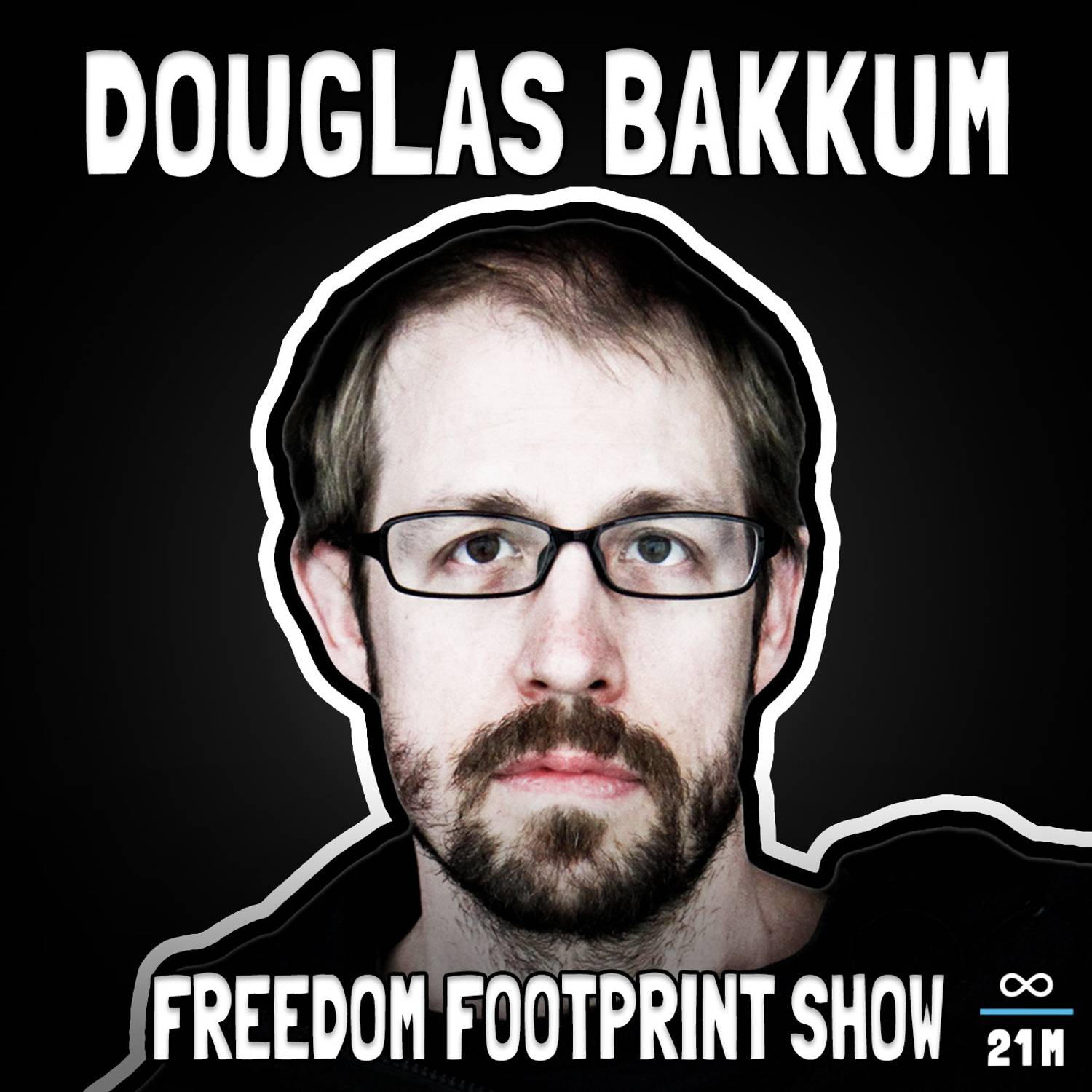
Inventing the BitBox Hardware Wallet with Douglas Bakkum - FFS #114


 Fountain

 YouTube

 Spotify

 Apple Podcasts

 RSS Feed
Douglas Bakkum, inventor of the BitBox hardware wallet, joins us to talk about why securing your Bitcoin keys is important, how he invented the BitBox, and more!
Key Takeaways:
🔹Douglas Bakkum's background in neuroscience and engineering led to the creation of the BitBox hardware wallet.
🔹The philosophy behind the BitBox's design emphasizes simplicity, privacy, and usability, setting it apart from other hardware wallets.
🔹The Bitbox offers advanced features for power users while maintaining a strong focus on security and user education.
Connect with Douglas and BitBox:
https://x.com/douglasbakkum
https://x.com/BitBoxSwiss
https://bitbox.swiss/freedom
Connect with Us:
https://www.freedomfootprintshow.com/
https://twitter.com/FootprintShow
https://primal.net/freedom
https://twitter.com/knutsvanholm
https://primal.net/knut
https://twitter.com/lukedewolf
https://primal.net/luke
JOIN US IN RIGA!
We're launching Bitcoin: The Inverse of Clown World, on Infinity Day, and we'll be in Riga for the launch party! Join us for the whole Riga Bitcoin Week! Use code FREEDOM for a discount!
https://baltichoneybadger.com/
Thanks to our sponsors - check out there websites for info:
BitBox: https://bitbox.swiss/freedom
Bitcoin Adviser: https://content.thebitcoinadviser.com/freedom
Orange Pill App: https://www.orangepillapp.com/
Support the Show:
If you value what we do here at the Freedom Footprint Show, consider sending us some value back. You can send us a boost or stream us some sats on Fountain. Check out https://www.fountain.fm/
You can support us directly with Bitcoin on Geyser Fund: https://geyser.fund/project/freedom/
The Freedom Footprint Show is a Bitcoin podcast hosted by Knut Svanholm and Luke de Wolf.
In each episode, we explore everything from deep philosophy to practical tools to emit freedom dioxide to expand your freedom footprint. This isn't a show for bitcoin news or analysis - we dig into the deep topics that are important to us and to our guests. Join us if you want to go deeper down the rabbit hole of Bitcoin and related freedom-go-up technologies and ideas!
The Freedom Footprint Show is a Bitcoin podcast hosted by Knut Svanholm and Luke de Wolf.
In each episode, we explore everything from deep philosophy to practical tools to emit freedom dioxide to expand your freedom footprint!
00:00 - FFS114 - Douglas Bakkum
00:00 - Welcoming Douglas Bakkum
01:19 - Inventing the BitBox
06:02 - The Intersection of Bitcoin and Neuroscience
10:37 - How BitBox was Built
17:43 - The State of Bitcoin
22:20 - What Sets BitBox Apart
25:38 - BitBox Roadmap
28:16 - Connections to Bitcoin Conferences
33:48 - Bitcoin's Regional Differences
41:31 - BitBox's Development Philosophy
44:57 - Security and Privacy
52:52 - Wrapping Up
0:00 Douglas, welcome to the Freedom Footprint show. Thanks for joining us. Yeah. Thank you very much for having me. Happy to be here. Happy to have you here, Douglas. Um, yes, for our, our listeners who don't know you, can you give us a little introduction about yourself? What's the TLDR on Douglas Backham? Yeah. Uh, I guess I've had multiple lives. My, my current life is, with the, uh, Bitbox hardware wallet. So, um, I'm the original inventor of the, the Bitbox01, that's now retired. We're on the Bitbox02, a hardware wallet for storing Bitcoin. And, um, yeah, at the beginning I kind of did it all. I have a technical background, but now I'm, uh, maybe by default got stuck as the CEO. And so I'm doing mostly, uh, talking to people.
0:43 And, um, yeah, before that, uh, I was actually, neuroscientist, uh, at the university here in, Switzerland, ETH. And, um, yeah, I have a PhD in, uh, neuroengineering actually. And before that, uh, mechanical engineering did robotics, AI. And so I kind of had the, Uh, from my mechanical engineering background, I guess I had some of the skills developed, like coding, hardware, embedded firmware stuff to kind of build a, build a hardware wallet. So somewhere in between rocket science and brain surgeon, Yeah, something. between rocket science and brain surgery, I should say. But yeah, so I'm curious, how does one invent a Bitcoin hardware wallet?
1:25 Like where, where does one start? Like, do you start with imagining? the software or the hardware and like do you tinker like what what goes on there explain the process Yeah, so, um, I guess when I first heard about Bitcoin, it was 2013. then after playing around a little bit, I, I, uh, started tinkering with hardware wallets around 2014, early 2014. And the concept had existed at the time, but there was nothing on the market. And, also at the same time, there's a lot of scams going around in hardware, in particular with mining equipment. Uh, and so there's a lot of, um, like mining equipment.
2:06 There's big pre orders you had to do, so you had to pool together a bunch of money, and then you could buy some mining equipment. but the problem was that some people started taking advantage of it and basically doing scams, so collecting big pre orders and then, uh, running off with the money, or even fake companies, um, just never delivering. And I didn't know if that would happen with hardware wallets also, uh, and so, I thought, okay, just make my own. And I know when I first bought Bitcoin, uh, given my technical background, I kind of had some ideas of the security issues involved. took me probably a good two weeks before I actually felt comfortable holding it. it myself, because I understood a lot of the risks involved with self custody.
2:49 And at the time, the most secure way to do it was to, you know, put your tinfoil hat on and go grab some old computer, rip out the, know, the networking parts of it, install like a minimal Linux on it, and put Electrum on it, and then do all your transactions on this offline computer. I'm like, okay, you know, and this, this This Bitcoin stuff, or at least the technology behind it, uh, I thought was super special, super powerful, but, you know, it's never gonna get anywhere if people have to do this, of course. And so HardwareWallet's, you know, it's basically a way to make offline computers, air gap computers, air gap system, uh, simple.
3:29 And so, yeah, I started building it. And, um, yeah, that was in my spare time. So my day job was still doing, um, yeah, neuroengineering, neuroscience experiments. Um, yeah, I was actually, I was a group leader at the time. So I had a little team, um, had a boss. Uh, he was pretty supportive of me also, uh, thankful to him. yeah, I was building some stuff and I guess the very first thing I did was, uh, try to understand cryptography. That's probably an important thing for, for this, this technology. Uh, and so I actually built my own, uh, cryptographic libraries to sign, uh, Bitcoin transactions, from scratch. It, it took a while, but it was, it was good for learning and they're very, very buggy, very, very slow.
4:14 Probably full of vulnerabilities, but, uh, has a good learning experience. And then, uh, I think had that as a base and then started doing, uh, yeah, the hardware design. and yeah, people think hardware is kind of complicated, but, it's getting simpler and simpler. So, for example, for 10, you can get, at least at the time, you can get 10 PCBs, In 10 days, uh, for 10, uh, from China. And so you can do pretty rapid, prototyping cycles, uh, with that. And, yeah, and started, started doing some, uh, coding on Embedded Firmware, pick out some chips. you know, PCB design is kind of like, uh, connect the dots. I guess when you're a kid in grade school, you, you know, connect the dots between the numbers.
4:55 It's kind of like that. You just have chips with pin numbers on it and you, uh, well, this one's for voltage. Okay, connect it to voltage. It's kind of a fun little thing. and lots of open source tools available. So, you know, anyone can really jump into it. And of course, you know, I'm, I'm simplifying it a lot. It takes a lot of work, a lot of, uh, uh, banging your head. There's probably a lot of times where I'm at night. I'm like, is this ever going to work? Um, but, you know, you keep fighting through it. I ended up getting a prototype and, um, yeah, I'm living in, um, uh, Basel at the time in Switzerland and, uh, went to some meetups in Zurich, Bitcoin meetups, really impressive, like a lot of big name, uh, people in the space were in the Switzerland area.
5:38 I got to meet them at the meetups, um, and, uh, got really good feedback. And my co founder, who I started the business with originally. Um, Jonas Schnelly is one of the maybe most famous people in the Bitcoin space, one of the original core, maybe not original, but former core developer. Uh, we happen to live in the same city. And so then, yeah, we decided, uh, started meeting up every week and said, hey, let's try nice and did you did you ever consider viewing Making a Bitcoin hardware wallet to be neuroscience. So let me explain that question a bit. Like that's, that's sort of our, our thing here on, uh, on the Freedom Footprint show is we view Satoshis not just as mere data, but that's something else since, You need a human brain to keep a secret from all other human brains in order for Bitcoin to work, right?
6:33 And if you think about it, every single aspect of the Bitcoin requires a human to do something deliberately. It's not just code, it's a guy running code. And the same goes for miners, and for node runners, and for users. It all requires, uh, human action and, uh, deliberate action. So, in a way, you could view, uh, keeping, uh, keeping the secret of where your hardware wallet is and, uh, the passphrase for it as Neuroscience, I guess, because it's a, it's a bridge between the human brain and, and the computer. Um, yeah, this is a bit hippie ish, I know, but yeah.
7:18 I would say there's some, there's some theories in, um, computer science, cognitive science, um, that talk about, uh, the importance of embodied cognition, and this was actually kind of part of my research, um, part of my PhD. where the theory is that you can't really separate the brain from the body from the environment. It all works together. Uh, and so, like, uh, if you want to study intelligence, it has to be, uh, in situ, in, in, um, in its natural environment, uh, in order for it, because it's designed to operate from your senses, it's designed to operate from, uh, the world around it, around it. And so, and in that sense, uh, I would say neuroscientists.
8:02 of them, maybe many of them, think that everything is, uh, part of the brain. You're saying everything is part of Satoshi. Neuroscience say everything is part of the brain. So maybe, yeah, I guess it fits together. Yeah. I love that. There's a lot of that, that kind of stuff in the, in the book we're writing currently. And like, because there's no, no one knows to which extent the brain creates reality and the, the, the objective subjective dichotomy might be entirely. You know, um, what's the word? Um, Fictitious. fictitious. Yeah, exactly. think, yeah, Philosophy 101, they teach you about the mind in a vat.
8:45 Uh, experiment, I think, where how can you tell if you're in the real world or if you're in a simulation? I think there's no answer. Yeah. Are you familiar with the concept called the Boltzmann brain? Not the name. I'm not sure. Uh, there's Ludwig Boltzmann from Boltzmann. I, I don't, I don't remember if there's a von there or not, but Boltzmann, uh, came up with the concept of, you know, since, um, quantum mechanics is a thing. A particle can just. theoretically pop up, uh, into being anywhere. And if the universe is truly infinite, then there would be a chance of, um, particles just popping up to, uh, by pure chance to form a brain somewhere in literal vacuum in outer space somewhere to exist for just a couple of nanoseconds.
9:37 But those nanoseconds will be enough for that brain to come up with an entire universe of its own. And there is no way of knowing if we're living inside one of those imaginary Boltzmann brain universes or the real thing. So, yeah, it's a very weird theory, but I love it because it's, it's so out there. And in there. Yeah, there was no question there. Luke, do you have a question in mind? Well, okay. So, I mean, this, this neuroscience topic is, is fascinating. And so, I mean, I guess that's the origins of, of, uh, of Bitbox, right? But, I mean, now, nowadays, uh, Bitbox is is up there with, you know, it's frequently cited as one of the easiest to use and the open source ethos of it.
10:31 I mean, I think that's what attracted us to it. It was really just all by reputation, basically. So how did you build? What was your philosophy, I guess, in building this company and Growing it into that. Now there's the, the bit box zero two and, um, I don't know, just the, the takeover, uh, so to say of this, uh, hardware wallet market. uh, first of all, a small tangent. Yeah. So, So, it came out of a neuroengineering neuroscience lab, um, so it, we actually were a spinoff of the university, believe it or not, I think it was just marketing for the university, and you have to have some kind of what they call technology transfer from academia to, to the business, and that was basically the, um, so I say neuroengineering, so the lab I was in would build, um.
11:25 New machines, new technology, including ASICs, uh, embedded stuff, uh, to study neurons, and I was using that to do experiments. And so the technology transfer was taking this, uh, like PCB design, embedded programming stuff, put it into a company and it completely different. Somehow that worked, so we got the label. then, um, besides that, I think there's probably no relation. I think with respect to, uh, this company, yeah, I guess, uh, I can't come from a small town, um, you know, modest upbringing, middle class family and in America.
12:06 So I'm living in Switzerland, but from America originally. So I guess, uh, yeah, people say it's dying, but I think there's still some of this pioneer spirit left, uh, like independence, uh, things like that. Um, and so what really attracted me, one of the big things that attracted me to Bitcoin was kind of this concept of. Taking power away from central agencies and giving it to individuals, to people, such that they have an opportunity to improve their lives, build a better life for themselves. And I think anytime you take power away from the people or power to the people, if it's from centralized agencies or, you know, whatever it is, you know, fire, giving that to individuals.
12:47 you can, you don't know what the future holds, but usually it's, uh, a better life for the whole world, in my opinion. and so I think Bitcoin, um, has this capability and I was really interested in contributing to it in some way. yeah, I didn't, with my neuroscience, um, uh, career, the next step would be academia. Um, didn't know if I wanted to do that. Um, didn't think anyone in Bitcoin would give me a job. Uh, so yeah, okay, can make a company, uh, give myself a job. That's, that's one aspect. And then particularly to this, um, like I mentioned before, it took me two weeks to get comfortable holding coins. And so I wanted to make it easy for people.
13:28 Uh, and so equip people with the tools they need, um, empower them to participate in this, uh, ecosystem. give them the security they need and try to make it as easy as possible such that they can be comfortable as many people can, uh, if they want, um, jump in and, um, do something for themselves. how did you come up with the slick design of the, of the bitbox? Because those little touch buttons that aren't really buttons at all, you just Touch the thing. Like, uh, I really like that. Um, so how do you come up with that? Yeah, um, personal philosophy, I guess.
14:11 I've always been more of a minimalist. Type of person. Um, it's like kind of like a, a zen minimalist kind of, um, aesthetic has always attracted me. And so when I was designing, um, the original bit box and also the bit Box O2, uh, one thing we had in mind was to, um, kind of keep it discreet. Keep it simple, keep it really smooth, slick. and I think people appreciate that, uh, because, you know, if, if you have your life savings on one of these, you don't want people to, hey, I know what that thing is, you know. Um, so try to keep it looking kind of like a USB stick, uh, basically. and that also means, um, kind of hiding the user interface, so the touch buttons, like the Bitbox01 also had, um, A single touch button with an LED, but buried beneath the plastic, you wouldn't see it unless you plugged it in.
15:01 Um, the Bitbox02 has the, yeah, call it invisible touch sensors on the side. Uh, also the screen, you wouldn't even notice it has a screen until you plug it in and it lights up. and then, of course, we want it to look pretty. I can't say how that happened. It's luck, or if there's some kind of innate, uh, providence or, yeah, probably luck. No, but it's super cool. And I'm like, yeah, I see all the other hardware wallet companies, build these flashy things with, uh, big screens and color screens and tons of buttons and stuff, and like, I just want my, uh, hardware wallet to be as simple as possible, like I want it to be the bare minimum, I don't want it to do anything else.
15:44 But then, then sign transactions. That's, that's all. Yeah, so, uh, I guess part of our core philosophy is to make things as simple as possible. Again, so, you know, anyone can join. And, um, you know, it has to do with the whole UX, um, how you deal with it, how our app We also try to make our app really simple and minimal. besides that, we also think privacy is extremely important. and so a lot of things we do is with privacy in mind also. And so we don't have any labels of Bitbox on the hardware wallet itself. when we ship packages, we don't mention Bitcoin, um, don't mention hardware wallet, things like that. Um, and lots of other examples.
16:26 And I guess you don't keep a database of all of your customers addresses for a hacker to hack, which allegedly happened to some other hardware wallets that we shall not mention. yeah, you can see our privacy policy on our website, but basically, um, yeah, we need to, like, we collect user information in the shop. Uh, we need to keep that until your order gets shipped out and maybe for, you know, a few weeks after, uh, in case you have any issues with shipping or you want to return it or whatever. Uh, but then we anonymize everything after about a month. And, uh, yeah, even we even talked to the Swiss government and they say, okay, yeah, you can anonymize your invoices too.
17:07 That's, that's okay. That works. Um, and so, yeah, we try to minimize as much as possible. Yeah, we do have a newsletter. Um, so we have, uh, but we collect the minimal amount of information, just your email address and your, your name can be whatever you can use anonymous stuff. Uh, and I would say that, um, yeah, unfortunately with. Um, mailing newsletters, you kind of, kind of have to use a centralized entity to do it. Um, and so you, you should just expect with us or with anyone that if you put data on a newsletter, it's probably going to get hacked at some point. But we try to minimize the exposure. Good to hear. So speaking of privacy and things like that, like, what's your view on the current state of Bitcoin?
17:51 Do you think we're in a healthy state or not at the moment? yeah, I, I don't really think of healthy or not. I think just early. I think it's early. I think there's still going to be bumps in the road. Um, There's still going to be bumps in the road that we don't foresee, you know, right now some bumps in the road that people do see is with government regulation, things like that. Maybe some use cases for Bitcoin, how people are using the protocol itself, putting extra data in it, whatever. To me, I don't really focus on it too much because I think the technology itself is so superior that it's going to win out in the end anyways. Of course, you know, it's good that people do pay attention to this.
18:33 They do bring up awareness and they do fight for the cause in whatever field they're in. If it's legal or coders keeping things legitimate, things like that. So I'm I'm not too worried about it. I think in general, um, I would judge maybe the health of it more based off of adoption and knowledge. and I think even there, we're still pretty early. So now, compared to 2014, you know, when almost no one knew about it, I think a lot of people in the world have at least heard about it. Although I think most of the people in the world still don't understand it.
19:16 And so it's baby steps, right? And I think it's an ongoing educational thing and I think it takes people a different amount of time to figure it out. But I'm pretty confident in the direction. Yeah, good to hear. Uh, yeah, there's one thing that there that I'm, I'm, Myself, I'm conflicted about, and that is, uh, if I prefer a pro Bitcoin politician or an anti Bitcoin politician, because there's, there's a dilemma there because if, if you need a politician to allow you to use Bitcoin, then, then what's the point? It doesn't really work in that case. So maybe an anti Bitcoin politician would even be preferable because it would push people into best practices.
20:00 So do you have any views on that? No, I think how you state it is nicely done. It's a debate I don't think I have an answer for. Maybe one thing I could say is another analogy to my academic career. is, um, oftentimes you see, like science is all, some people think science is like a fix, people know facts and stuff like that, but it's not at all, especially in the brain, people really don't know anything. They have theories and stuff like that, but they get proven wrong every, every decade. And so oftentimes, not only in neuroscience, but in any field, when someone comes with a new idea that challenges the existing dogma, There's always pushback.
20:45 And usually what happens with scientific revolutions is actually the pushback ends after, you know, a generation or two of scientists retire. And then the new scientists who come up have a more open mind, they read the research, like, oh, this makes a lot of sense. Oh, this makes a lot of sense. And so you get new people coming, they understand it. And then within a few generations, then you have a new scientific theory that's established and accepted. And probably it's going to be the same for, for Bitcoin. And so I think, yeah, you know, right now around the world, especially in America, there's a lot of, um, politicians who are maybe should be retired, but they're not.
21:28 Transcribed And I think, you know, in a matter of time as, um, new generations come and they understand the technology better, they understand the impacts better, that's probably how the change is going to happen. Yeah, they're, they're regarded rather than retired anyways. So, uh, yeah, that's, uh, that's your explanation there that to me, that's the difference between science and the science, which is, uh, what most people think is science, but it really isn't. If, uh, if you can't question it, it's not science. Like nothing is ever, never, ever, uh, fully established okay, so go. Going back to going back back to the bit box itself a little bit, um, what is the, uh, uh, the.
22:15 Uh, the, the, the privacy, the privacy aspect is, is great. I'm glad you touched on that. Uh, what are the other things that sort of set Bitbox apart from the other options out there? Because there, there are plenty of hardware waltz to choose from. Why, why would someone pick the Bitbox? yeah, thank you for asking. I guess when it comes to hardware wallets, there's two main concepts. One is, um, Security, of course, another is usability. I think privacy kind of fits into security. and I, in my opinion, of course, I'm biased. I think the Bitbox outshines the competition in both aspects. Although I would say security now, um, you probably can't go wrong with any major hard rule.
22:56 Right now, um, they're all, they're all pretty secure, so it's more kind of nitpicky in the details, although I think we have some, more advanced concepts that kind of, kind of do put us ahead, such as, um, anti klepto, um, stuff for, Some really, really tangential security on how you do signatures, encrypted RAM, um, yeah, some things like that. But I think where we really shine, is in usability. so one thing we're really proud about is oftentimes we hear people say, Hey! The bid box is the hard role that I will give to my, my partner or my family. and I, I think, you know, that really makes me feel, feel nice because that was kind of the goal, you know, to get more people involved.
23:36 And if bid box is the, the harder role, the choice that they make to, uh, get other people involved that they think should be involved, uh, yeah, that, that feels good. And so. Um, yeah, we have the, the touch sensors, um, which, uh, allows for, um, you know, I think, unique, fun experience, but also functionally allows for faster input. it's very, very new, very novel, so it takes a little while to get used to, but once you're used to it, you know, a couple of tries, then you'll Um, I think it's a pretty nice experience. one thing that we did from the very beginning was, um, adding a micro, onboard micro SD card slot. I think we're still the only one who does this, uh, in terms of backups and recovery.
24:19 Uh, and so one thing, um, if you're used to software wallets or hardware wallets, you, when you make a backup, when you first create the wallet, You have to write down this word list. It's 12 or 24 words called a mnemonic seed, and we call it mnemonic anxiety, where, you know, it can take 20 minutes, 30 minutes to do this on a hard wallet, because then after you write it down, you have to reenter it to make sure you didn't make any mistakes. It's quite stressful because if you make one typo, you could be locked out of your funds if you ever try to recover. and what we do is, uh, try to eliminate that. So, uh, we use a onboard microSD card such that when you set up the wallet, um, all this stuff happens instantly.
25:03 uh, as a backup onto the micro SD card. So instead of spending 20 to 30 minutes in a very stressful way, you can just take, you know, a few instances, uh, in a stress free way, in a way people understand also, that's important. People don't really understand why they're doing this, uh, where this, what the meaning is, what I need to do with it. Uh, and I, I think, um, that, that's another nice example. And I, of course, mentioned the app again. Uh, we do a lot to, you know, keep it clean, uh, basic and functional. Yeah, the app is great. I mean, the whole functionality of the thing is very slick and very, very nice to use. So what's, what's on the, for lack of a better word, roadmap?
25:44 What's in the future for Bitbox? Bitbox. yeah. So. I always hesitate to to, to give timelines or deadlines or things like that because it always takes longer than expected. But I guess in general, uh, one thing we're really interested in, yeah, we're doing a lot of development both at hardware and software. One thing we're really interested in is user feedback. Uh, and so yeah, just maybe quickly, first I'd say anyone listening out there. We used a Bitbox. If you have any feedback, we're really, really happy to accept that feedback, to take it when we're trying to build new products. And so, yeah, we're working on new hardware versions. The Bitbox02 is not going to go away.
26:25 We're planning that to continue, but we're working on complementary versions. Hardware wallet versions, too early to go into details, uh, but then also, uh, continuously spending a lot of time on the app itself, trying to make it more and more user friendly, uh, try to add in functions that people, uh, request. Uh, so I think one really nice thing about the Bitbox, uh, we have a partnership with another Swiss company called Pocket, uh, which allows, um, buying Bitcoin, like dollar cost averaging, uh, things like that. Really nice thing is that based in Switzerland, uh, there's a law where there's no extra KYC, so they need to know your bank account, of course, when you send in money, but that's it.
27:06 And there's no extra KYC, and you can buy a Bitcoin for a thousand euro, about a thousand francs a day, uh, without any extra KYC. And I think, really nice thing is if you're getting into, um, the Bitcoin space, you don't know where to start. Uh, one thing you can do is just simply buy a Bitbox. Uh, you don't need any crypto to begin with, any Bitcoin to begin with. And, um, just. Set up your wallet, and then inside the app itself, we have an integration with Pocket, where it's like really, really simple just to get started and buy some, buy some Bitcoin. and we're going to implement, uh, Cell soon. That's coming. Um, we've been working on, um, some Lightning stuff.
27:49 still kind of experimental, but hopefully that will happen. That will come out sometime later, working on, yeah, just, you know, small bug fixes, things like that. I recently came out with a watch only wallet, thinking about, um, you know, easier ways to import, export notes, uh, you know, a bunch of small things that, uh, basically, You know, we try to listen to our users and try to implement their feedback and then make a better and better product. Nice. And, and yeah, there's a lot going on in Switzerland. I was in Switzerland two weeks ago, uh, in Lugano on the other side. Uh, so do you have any collaborations there with, with the Plan B or, or anything like that?
28:31 I'd say no, no close collaborations, but we, we talk to them all the time. Um, so we're, we've always been, um, uh, part of their conferences that happen in the fall, which are excellent, excellent conferences. and yeah, go there, help with, um, the agenda, give talks, give workshops, um, sponsor, have a booth. Um, it's a beautiful, beautiful, beautiful city. It's really nice. Um, I, like my experience there is that everything is five star. It's a five star town in a five star, uh, country. And it's a five star conference. I mean, Lugano Plan B is great.
29:11 Uh, yeah, uh, all aspects of it is just phenomenal. Yeah. So in speaking of conferences, uh, we, we actually, we all met for the first time on, on Madera, and that's where we, where, where we first, uh, I guess we, we heard the, the a, a bit of the roadmap from the, the bit box side. And we ended up spending, uh, uh, some time in the, the line waiting for the, the plane. Uh. Uh, off of, off of Madeira, I think to our, to our first, uh, layover back home. But, uh, um, so it's just great to, to catch up to, uh, with Bitcoiners in person. I guess one question is what did you think of the, uh, the Madeira conference, Bitcoin Atlantis? yeah, Madeira was great. Uh, yeah, I didn't really have any expectations going in.
29:56 It was their first conference. Um, But it got there a really beautiful location also, really amazing location, really fun conference, uh, in a, in a football stadium, which is really interesting and, um, great, great speakers. They attracted, like, really nice speakers, not in, in Europe. Sometimes you don't get all of the, um, I guess North American speakers to come. Uh, but they're all there, so a really nice mix of both, uh, the European and the North American communities. Um, really great vibes. Uh, yeah, quite, quite loved it. I'm very happy to hear that, and yeah, we'll see when the next one will be, uh, But, uh, yeah, it's a great, we have some great conferences in Europe, uh, Madeira and, and, uh, Logano and, uh, Prague and Riga come to mind, uh, the, all, all, uh, super high signal events.
30:51 Exactly. Yeah. That's how we want it. Yeah, we're going to be going to Prague just around the corner here. This episode will be out just after Prague. But yeah, any anything special planned there? yeah, so we'll have a booth, um, yeah, it'll come out after the conference, but otherwise I'd invite you to come, come hang out and meet us. but I'm actually gonna have a talk on the main stage, um, about customer support. Thank you. And how interesting stories from customer support and how that shapes our product development. Yeah. Um, well, uh, you can, you're going to Riga too, right?
31:32 very likely, yes. Obi and Yeah. So, so, so well, everything we say about Prague now, uh, applies to Riga too, I guess, or most of it. Yeah. Riga, very, very likely. And then also, uh, Lugano, very, very likely in the fall. Yeah, our promo code works for Riga too, by the way, uh, the code Freedom, and maybe it works for Lugano too. I haven't spoken to those yet, but like, we'll see. Can you give us a little bit of a preview of your, your, your talk and, uh, Yeah, maybe a little behind the scenes for those who don't manage to make it to Prague. yeah, I mean, it's still in progress, but, uh, the general concept is, um, you're in the space for a while, oftentimes you have trouble seeing the forest for the trees.
32:24 Um, so, For the Merkle trees, yeah, yeah, or yeah, if you're that deep, yeah, um, and so, you know, as oftentimes what comes into us in support, uh, can surprise us. like, oh, we had no idea that this was an issue, that this was coming, things like that. And so, maybe go through some interesting stories there. Also, um, you know, maybe remove a little bit of the stigma, because we're not aware of anyone actually talking about their own customer support. Because, you know, people maybe want to hide, um, supports all, like, bad things and problems and things like that. So maybe people want to kind of it away, don't know.
33:07 And so we thought it would be interesting to kind of put this front and center, also highlight or emphasize, you know, like, we really care about support. We have a really great support team. They get, like, five star reviews, like on Trustpilot and so on. And so we're proud of that. And, um, yeah. I guess, uh, kind of, kind of bring, bring to people's attention that, you know, customer support's, uh, important, something we take very seriously, and it can also, uh, help improve your, your product design if you use it as a, uh, part of your product development. Yeah, sounds great. And I mean, again, this is another one of those things that I think, yeah, shows off why Bitbox is a bit, a bit different.
33:48 Now, I've got another, I've got another, um, sort of angle on this, um, that, that everything we're talking about, we're, we're all Europe, And I think the, the Bitbox, uh, correct me if I'm wrong, but I think, I think has a, has a bit of a more European, um, customer base as well. what do you, what do you think is sort of the, the difference between kind of the, the European community and market versus North America, Asia Pacific, uh, all that? well, we're trying to figure it out. So yeah, we're, we're, we're doing pretty well in Europe. quite, quite comfortable in Europe. trying to figure out ways to, you know, get a little bit awareness in America, but I think probably one of the big things is distance.
34:30 Um, and so it's always, it's harder for us to get to America. It's farther away, costs more money, budgeting, things like that. there's a wider, probably a wider, or a lower signal to noise ratio. Um, and, Um, then a lot of, uh, European content, especially local language, European content. So it might be harder to break through that, that noise. Uh, and I, I think, you know, really to, to really get moving there probably needs some feet on the ground in America, um, to go and, you know, talk to people and maybe like a little grassroots campaign, things like that. Um, I think, you know, from, from the Bitcoiners I see, um, I think we're kind of all on the same page.
35:12 But then it's a question of what is the, the broader market. So we hear some rumors that in America, you know, maybe there's a bit more crypto, uh, rather than Bitcoin only. Uh, I think Europe, uh, especially, uh, what we're aware of, like the German speaking regions, um, there's a, a bit more understanding of, like, why, uh, Bitcoin is unique, why it can distinguish itself from other coins. And I think that spreads through most of Europe. Um, and also thanks to the, these wonderful conferences that you had mentioned before, I think this is a big part too. And, you know, podcasts like, like you guys also, I think, yeah, some things in, um, Asia Pacific, yeah, I've visited, uh, a few times, uh, talked to some local people there, and from what I hear, uh, from them is that, crypto altcoins really kind of a thing.
36:03 Yeah. Uh, have more of a, more of a dominance over there, and a big reason for that is, um, uh, from, from what I hear, from what they tell me is that Bitcoin doesn't have a marketing department. There's no marketing budget, whereas every other altcoin, including Ethereum, um, they have marketing, uh, budgets. Uh, and what happens is a lot of the, the content does get translated into Asian languages. thanks to these marketing budgets, but, uh, with Bitcoin, um, that kind of fell behind. There's no one pushing it, no money there to do that, so it really has to be individuals doing it.
36:44 And because of that, you get, um, yeah, an oversaturation of information, uh, leaning more towards altcoins. it makes sense to me. Uh, and so again, it's going to be an education, uh, kind of issue, uh, just learning experience kind of issue. People will learn in time. you know, I think myself included, I think most people in the space, maybe not you guys, but most people in the space, when they first get started, uh, they are tempted to try to find, oh. Bitcoin's been around. What's the next best Bitcoin? What, what's the, Bitcoin must be MySpace, right? And, uh, this new shiny coin is, uh, Facebook, right? but you know, it's, it's, it's not a good analogy.
37:27 Um, the better analogy is like, uh, the wheel, the wheel, or the circular shape as being the optimal shape for constructing a wheel with. Like, there are triangular shapes and hexagonal wheels, but yeah, Bitcoin is the circular shape. Yeah, that's a good one too. I was thinking like, I think Andres Antonopoulos was talking about it, how Bitcoin is more like, like internet, base layer of internet. It's a foundational thing. That base layer hasn't really changed so much, but things have been built on top of it to give us this, uh, Yeah, to allow us to do these, um, podcasts over the internet right now.
38:09 and so, uh, yeah, it'll take people some time to figure that out. Yeah, I love that you keep your cool so much in all of this and just, I just want to tinker with my little invention here and like, don't worry about the noise. It will sort itself out sooner or later. We're more like on the barricades here and trying to like, because like, don't get me started about this, you know, both in, in And so Asia, both in Asia and in North America with the, the shit coiners and the shit coinery and marketing being the thing. And it's, it's all, you know, you can't have a nothing burger without word salad. Um, that's basically the, uh, All, all there is, and it annoys me so much, uh, and it makes me proud to be European because like, this is a more, a higher signal to noise ratio continent in, in, in terms of Bitcoin adoption, we might not have favorable politicians and the EU is a, is a bureaucratic cancer that is, you know, annoying us all, but, uh, But still, the German community, the Dutch community, the Swiss community, the Czech community, it's all great.
39:24 So many people and so many high signal people, it's fantastic. So I guess you notice it also in North America and Asia, um, a lower signal to noise ratio. Yeah, yeah, absolutely, absolutely I do. Especially Uh, yeah, I should name names here. Uh, . But, uh, but, but that definitely is because I think in, I mean, in Asia there's a gambling culture, right? Uh, and in North America there's a marketing culture. Like everything is marketing. Uh, so. Uh, and I think here we're maybe more grounded, uh, maybe I'm biased here, but yeah. Luke, what's your, what's your, uh, general feeling there?
40:06 Yeah, I mean, coming from Canada, I think the Canadian community is a little different from the American one. a little. It's, it's super based, uh, in the comparison to the U. S. Uh, like, Canadian community is one of the best in the world. Yeah, totally. But the thing is, I left Canada before I got connected with the Bitcoin community. And so it's really been the the American one that that I've had exposure to. And I think it's the same that That there's, there's just so many, there's so many things, uh, people are trying to, to find the, the thing that's going to hit and, um, see, see an opportunity to, to make money. And, uh, yeah, I mean, comparing it to sort of say that, that one region of the world has the, the, the situation better or, or not.
40:50 I mean, maybe that's unfair. There's, there's fantastic Bitcoiners all over the world. And I think it's sort of a case where maybe the local culture influences the community, the community growth, and local regulations I think also play a part certainly, right, because that if a country is I Really unfriendly to, to Bitcoin and really aggressively attacking it. I mean, I think American Bitcoin culture is extremely political right now. They're, they're really invested in, in their election, uh, coming up here. And, uh, maybe that noise just isn't quite so loud, uh, over here on, on this side of the pond.
41:31 no, but this is a, this is a good discussion, I think, uh, uh, kind of the, the nature of building a, a Bitcoin company, right? Because, I mean, I think, I think one thing that we've been getting into a little bit on, on this show is that, is that maybe the, maybe the Bitcoin protocol itself be really, really, really cool. cautious with that. There's a lot of room to build on top of Bitcoin and build things that make the Bitcoin process easier. And I mean, my experience with using the Bitbox the first time, I tried to plug it into basically all of my own workflows. I'd been using the Sparrow app a lot, just for my own management, creating different wallets, multisigs and things like that.
42:13 Bitbox worked perfectly right out of the box. I loved it. I tried the app as well, and I mean, I'm leery personally of kind of, um, the hardware wallet that has its own app coming from the, um, uh, well, the aforementioned, uh, company that, that got hacked. They've, they've, they've got all of their, uh, they send all your data, uh, back to that They had it on a ledger, I think. Yes, exactly. I have it on a ledger. Uh, but, but the, uh, the, um, uh, the Bitbox app, it's, it's also fully open source, right? And, and it's, it's, uh, uh, you can know exactly what's, what's going on with that. So that put me at ease. Um, and, and, so, I mean, I really get the feeling that it's, it's, uh, um, It's, it's made to be easy to use, but also have the features and functionality for the So-called Power users who really know what they're doing and wanna do something a specific way.
43:07 So was was that part of the, uh, the idea or like, uh, like, I'm, I'm impressed by the, the, the flexibility of it. Like the, the ability that the, the platform that you, you have to be able to add the things that people are requesting. There was, there was some, um, script functionality I think we were talking about on, on Madera that had just been requested by someone and then it's added like that. That's impressive. So yeah, how did, how did that kind of, uh, uh, get developed in your, your development philosophy? yeah, I guess one of the ideas is, um, yeah, we want to want to be the place for, I guess, We call it the Crypto Curious, um, to kind of, uh, come and be comfortable.
43:49 And part of that is, you know, hiding all these details. Uh, but they're still there. Yeah. We have expert settings. And so all the expert settings are there. Coin control can connect your own node. Um, you're talking about mini script? Uh, probably. Uh, and so yeah, we, we have some engineers who've, um, yeah, contributed to Bitcoin core and so they kind of. their weekend hobbies will be to implement it because they want it. that's kind of how, how all the, all these things get stuck in there. Of course, we do listen to users. And so, we do want the Bitbox to be not only like your, your starter, but it can grow with you. It can educate you.
44:29 We have like in app, in our app itself, we have in app guide. contextual guides to kind of show you about different functions and teach you things. Uh, we spend a lot of time with blogs and our knowledge base to educate people. and so we're, we're happy to also kind of, you know, grow, grow together, grow with you, help you, help you on your, your path. And that means, uh, being exposed to some of these more advanced, uh, uh, features that, you know, can be, can be important in different times. And how does that relate to also the security? Because none of these features on top of that compromise the core security of the wallet, right? Yeah. So, um, when it comes to security, we try to, we try to implement it.
45:14 Uh, under the hood, I would say, and so I had mentioned this, um, uh, anticlepto, uh, thing before, um, and so that's really all under the hood and it's, um, it's basically, yeah, we also kind of have, um, yeah, security in depth kind of field, uh, where part of our philosophy is, um, try to minimize the amount of trust you need to be, you need to put into any one aspect of Of course, if you buy hardware, there's always gonna be some level of trust, but, you know, open source, uh, so we can have some accountability. So if something does happen, you can trace it back to where it did happen. and, uh, you know, community, uh, we have a bug bounty program, so people are welcome to go and hack the code and try to find, uh, issues, which we very much welcome.
46:01 yeah, the anti klepto part is actually, um, if you don't trust the hardware wallet itself. and so, uh, for example, So, uh, when you do cryptographic signatures, like really, really important aspect is randomness. It's called entropy. Um, and so it's not only when you first create your wallet, it's also when you do signatures. And so, um, there's a way to do it deterministically that works really well. Um, but if you don't trust that that's happening in the hardware wallet, you can supply external entropy, external randomness, in addition, in a really clever way that's provable that it was actually used. Um, in the signature, and so, um, we have the, our app itself, um, also does some sanity checks on the hardware wallet itself.
46:51 Uh, so in this aspect with respect to signatures, in another aspect where we have, um, what we call an attestation key, which is basically, um, a secret loaded in the secure element that, um, can detect if there's a counterfeit device, and so the app will send a challenge, It should get the right, um, response back using this, uh, private key in the secure element, uh, in order to detect counterfeit devices. And so, yeah, we do a lot of these things. Um, if you're a user, you don't have to worry about all of it. Just, you know, if a warning pops up, read it, um, basically. and then a lot of the, like, the optional features, the expert features, I would say those are probably more related to privacy, uh, than security.
47:34 Um, and so coin control, for example, you can choose which coins to, uh, spend from so that you don't mix coins together for, uh, tracking on chain analysis, things like that. You can connect your own full nodes, so you can be confident that no one else is peeping in on your transactions, and so on and so on. I that's great. I remember back in the day when, when paper wallets was sort of still a thing. I, I don't, I don't hear anyone using paper wallets anymore, but there were these websites where you could create your own, um, paper wallets. And the thing you did was you went offline and then just moved your mouse and that added the entropy, Uh, it's pretty cool.
48:17 Uh, yeah. I wonder if those are ever coming back as a, as a thing. don't think so, basically because with a paper wallet, you think it's on a piece of paper, so it's offline, but the problem comes when you want to spend your coins. So there's, as far as I understand, there's really no way to manually sign a transaction because it's so complicated, so computationally intensive. Uh, and so you need some kind of tool to do that. And so if you have a paper wallet and you want to spend those coins, you need to load up your secret into some type of device in order to spend it. You need to swipe it. It's the terminology, you need to swipe it. And so if you're using a computer or a phone, it's going to be on your computer and phone, uh, after you swipe it.
49:02 So, that kind of defeats the whole purpose. Of course, you minimize the time it's exposed, but, you know, malware is getting smarter and smarter if it detects it, it's going to take it. And so you still, you need a harder wallet to spend it. I'll, I'll have to see if there I have any paper wallets left in a drawer somewhere. Yeah, so the security discussion is fantastic. I mean, device security is such a difficult area these days. As you say, the adversaries are getting more and more sophisticated. And when we're talking about money, Bitcoin. Uh, yeah, it's just an incentive to just take whatever is possible. So yeah, keeping, keeping the, uh, so called keys separate from the, the, um, from the computer.
49:50 Very, very important. And maybe this is sort of a philosophical question, sort of in the hardware wallet space or idea. What do you think of the term hardware wallet? Should we be using a different term, such as signing device or keychain or something like that? yeah, semantic question. Harder wallet. I know a lot of people are calling it cold wallet now as opposed to hot wallet, which I think kind of makes sense. But yeah, the term wallet itself. Yeah, it's a misnomer, of course, um, you know, talking about customer support questions. Um, a lot of it comes around this, the, the term wallet, where people are saying, oh, they assume their bitcoins are in the wallet.
50:38 You know, we have this micro SD card for backups. They think every time they make a transaction, they need to stick the micro SD card in in order to backup the transaction, but you don't. and they think, yeah, for example, If they're receiving coins, they need to keep the hardware wallet plugged in until the coin, the transaction is confirmed because otherwise it's not going to get into the hardware wallet, into their wallet, and so that's not true also. So there's all these misconceptions around it that probably could be solved with a different name like, yeah, a keychain, because it's basically a chain of keys that give you access to the coins. Whereas the coins themselves are stored publicly on the blockchain, and your wallet, if it's a hardware wallet or software wallet, is just there to access those coins.
51:26 Use the private key, so on your keychain, and unlock it so you can send it somewhere else. So yeah, maybe that would save our support staff some time. Yeah. Speaking of support, like, uh, yeah, I just remembered where I put all my paper wallets and they, they were on the boat that sank, uh, fortunately, but, but say if you had a paper wallet and you wanted to swipe it, uh, using the bit box, how would you go about it? Would you use Electrum? Would you use like the, your app or how would you do that? Like this is a. Pretend I'm a customer support customer here. Yeah, um, I used to do customer support, I don't do it anymore.
52:11 But, um, the Bitbox app does not support sweeping. I'm at the moment, at least. So you'd have to use some third party app if it's Electrum or Sparrow or whatever. Um, and then what we would always recommend is, uh, once you sweep into that wallet, always to immediately send those coins to a hardware wallet because the The private key you swept is now hot. Consider it radioactive. Well, that sounds easy enough. Is there anything else we haven't talked about, Douglas or Luke? Like, is there anything else you want to bring up?
52:52 I think we've covered quite a bit here, uh, so, uh, yeah, uh, Douglas, where, where can we direct our listeners to? I guess to the, to Bitbox, of course, and, uh, uh, everything there, but, uh, is there anywhere else you want to send our listeners? yeah, so, I mean, if you're interested in hearing more, um, we're happy to hear from you. If you have any feedback, if you want to read more, you can come to our website, bitbox. swiss. and you can find a bunch of links to our social media. So, we're on Twitter, we're on LinkedIn, Telegram channel. and we're happy, happy to hear from you. And of course, use bitbox. swiss slash freedom or use code freedom for a 5 percent discount.
53:33 Absolutely. Well, yeah, Douglas, uh, any, any last, anything else you want, want to mention, I'll just reiterate that, um, from Knut. no, I think, um, it's been fun talking to you guys. So, really appreciate, um, You're having me on. I appreciate the hard work you guys are doing. Keep it up and best wishes for everyone's financial sovereignty, I guess. Fantastic. Well, thank you so much for, for joining us, uh, for making this fantastic product, uh, yeah, making people's lives easier in securing their Bitcoin. So that's fantastic. So looking forward to seeing you again, it's after this episode is out, but looking forward to seeing you and, uh, Uh, not even really, I guess a couple of weeks here in, or a week, a week even in A week.
54:19 Yeah. Fantastic. time flies. Time flies. Or time fries. Yeah. Any last words, Knut? Any last words? Yes. Spadoinkle. This has been the Freedom Footprint Show. Thanks for listening.